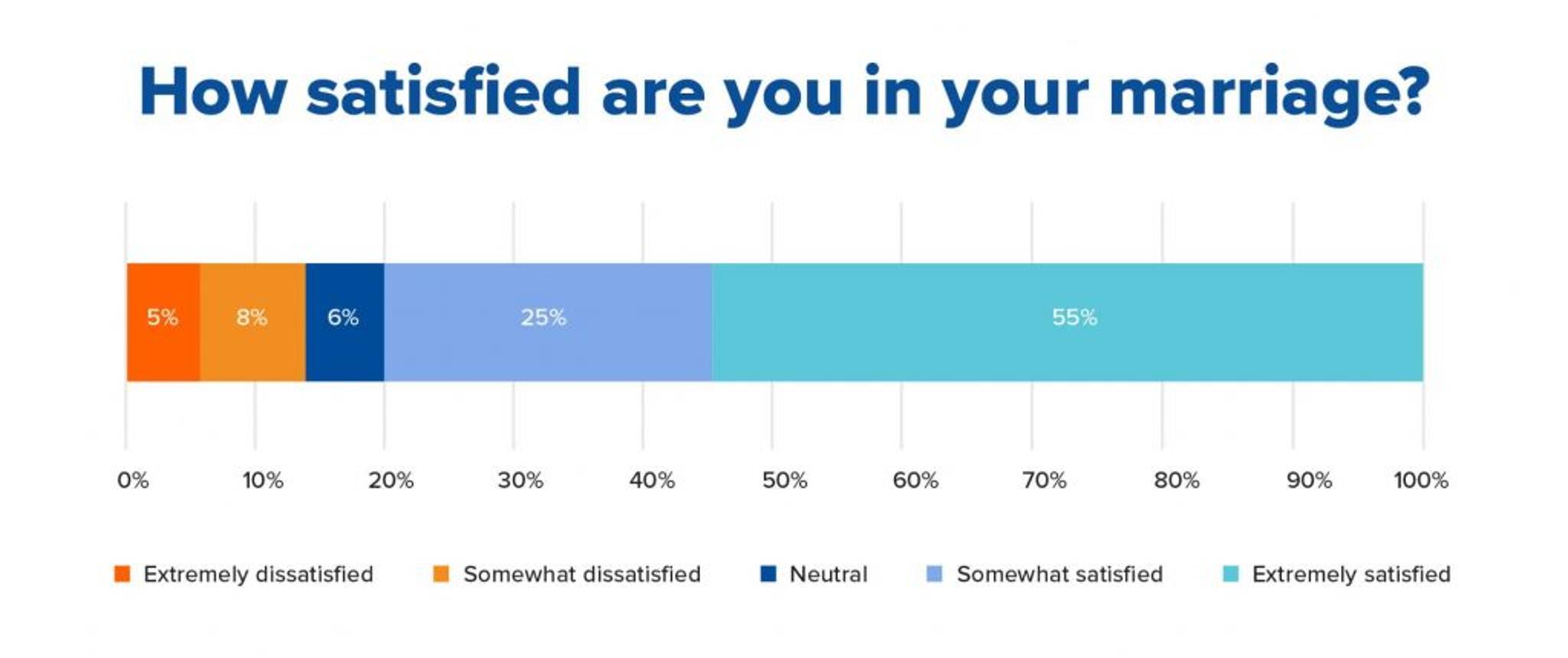
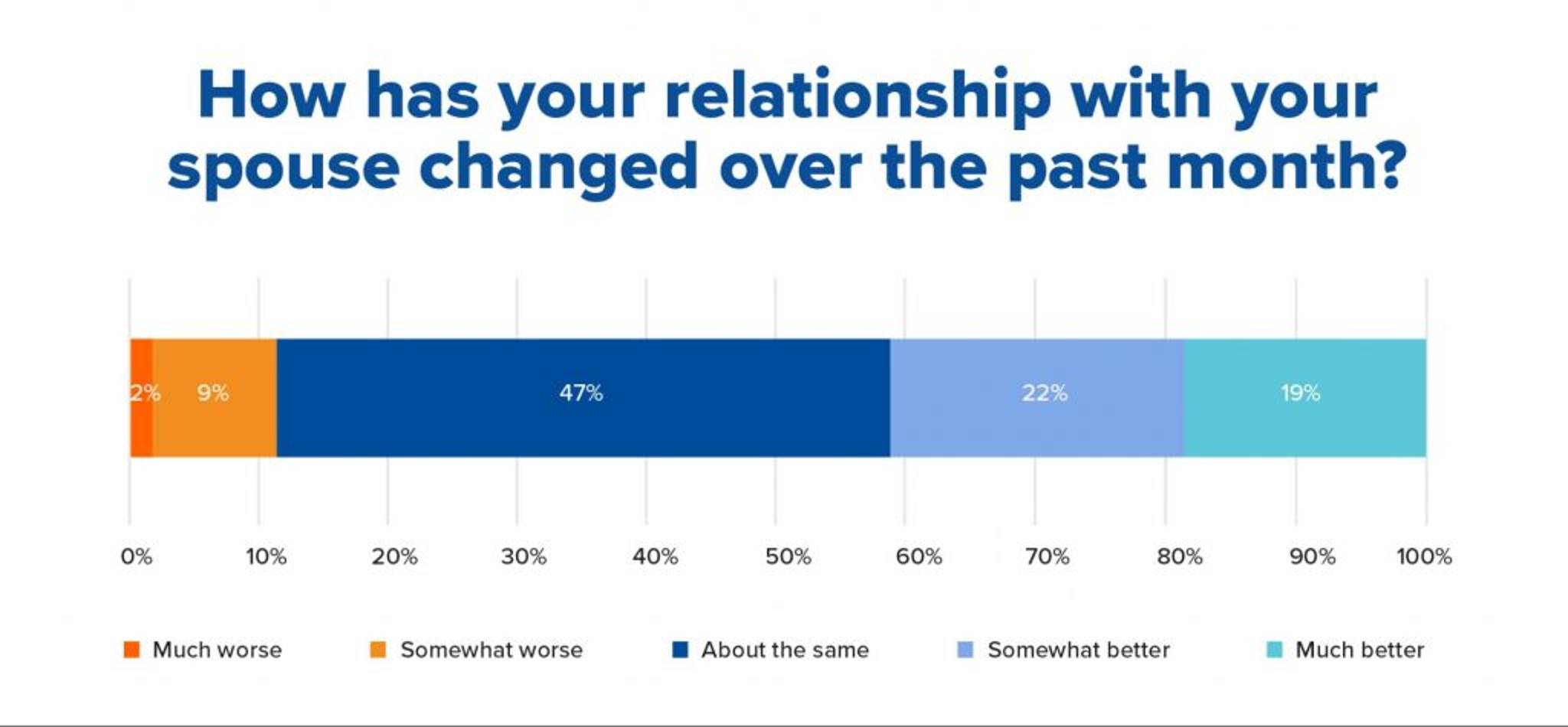
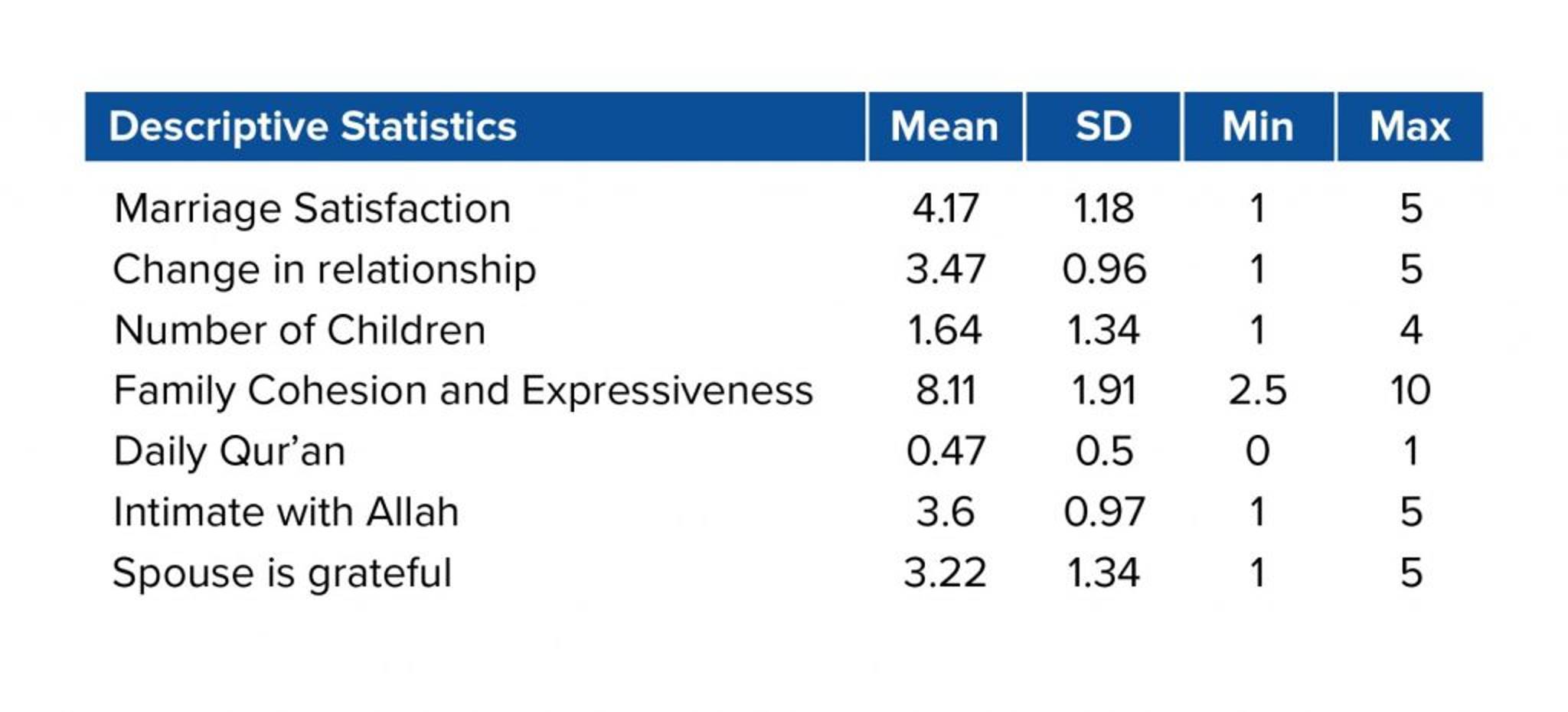
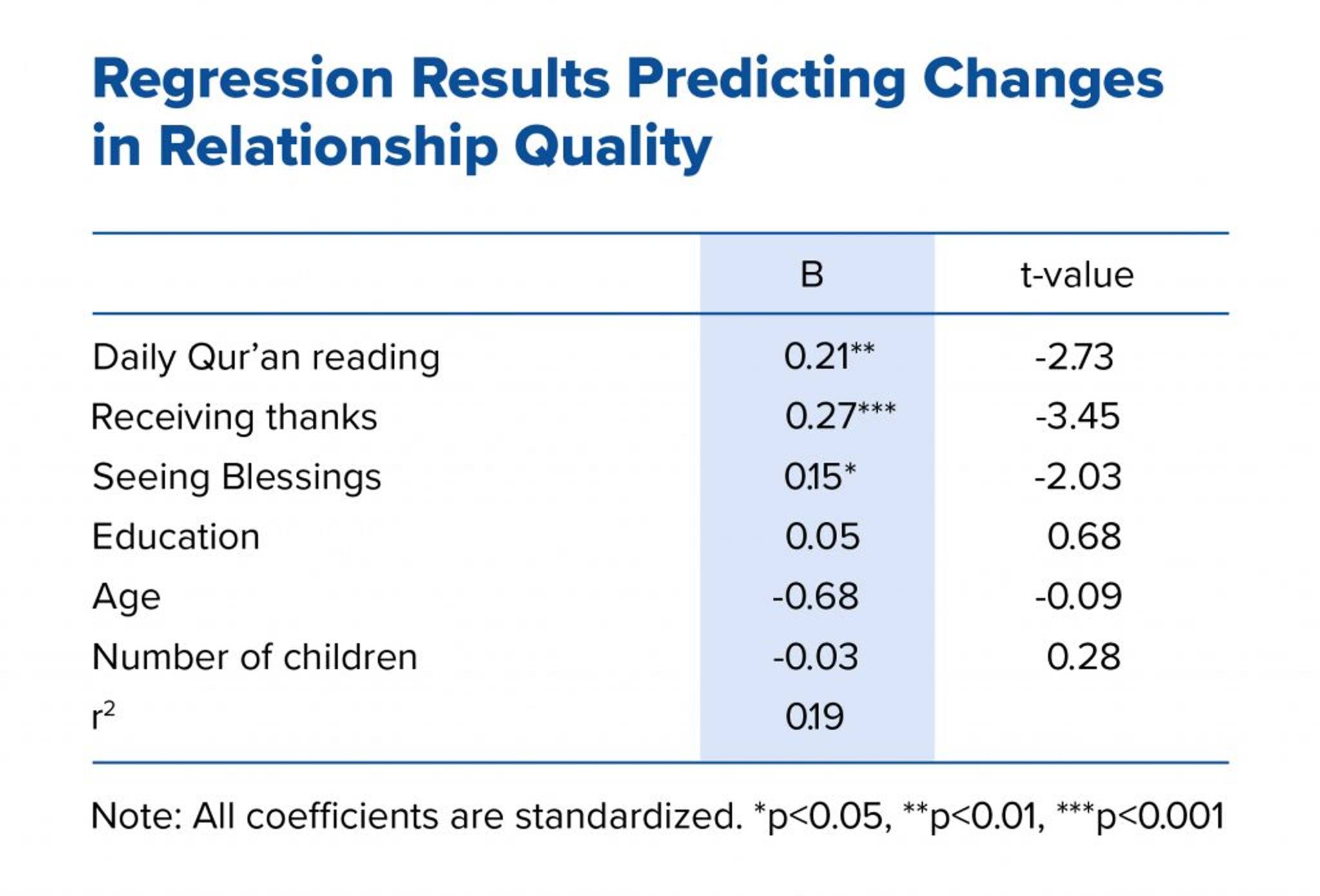
This study surveyed 169 Muslims to investigate the correlates of marital satisfaction and improvements in marriage during social isolation. Although marriages are susceptible to being shaken when major life stressors arise, they can also grow and thrive during times of difficulty with the proper mindset and behaviors.
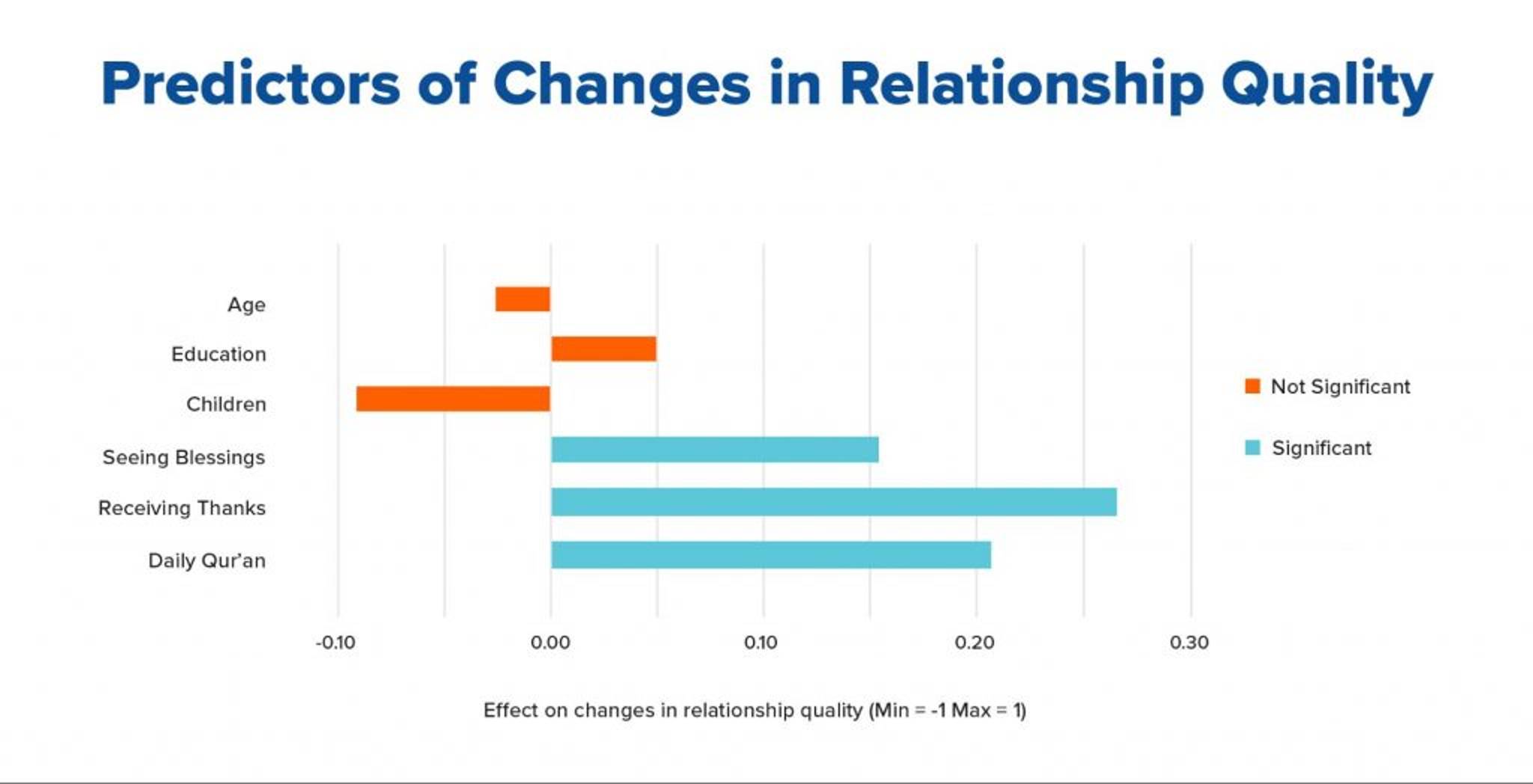
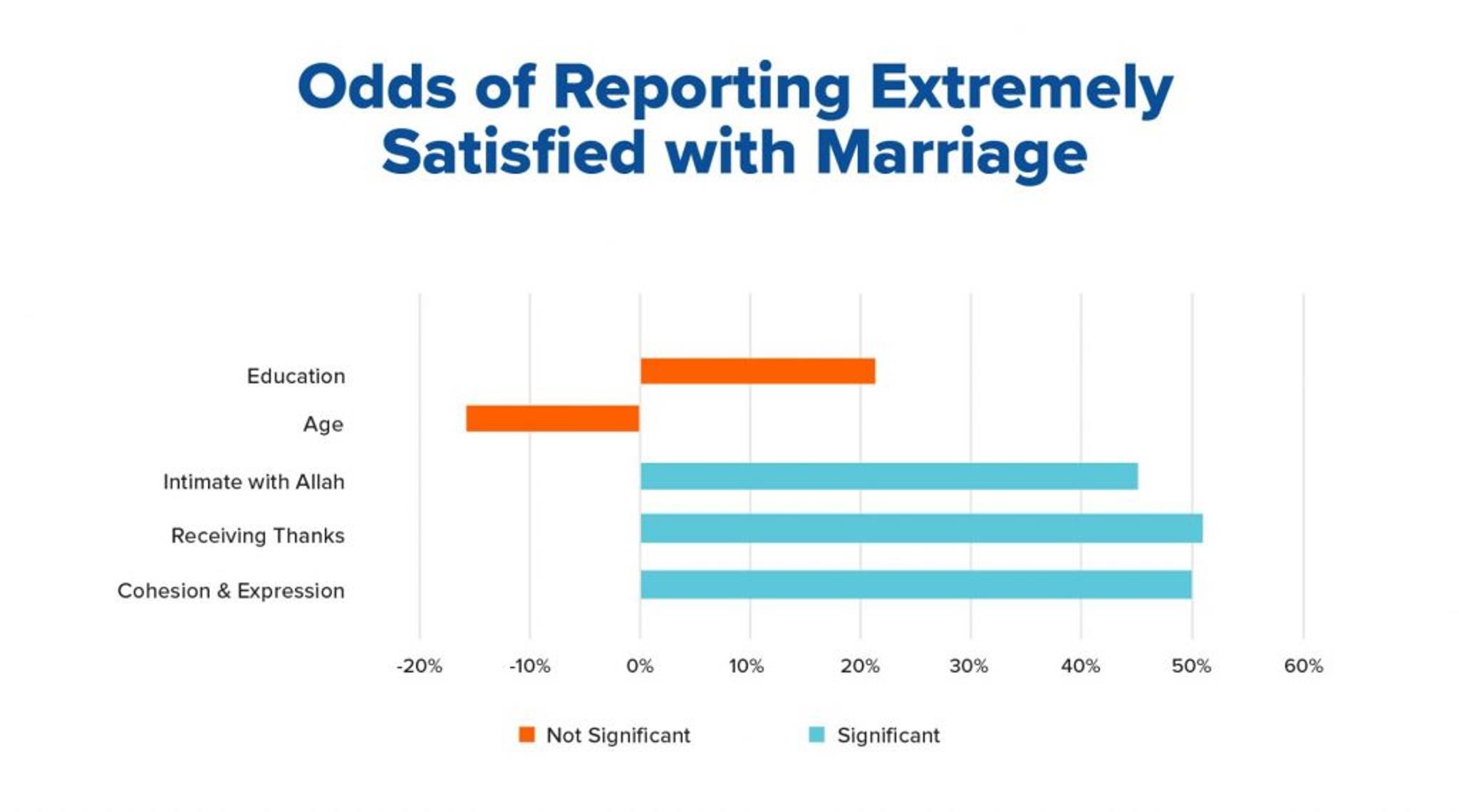
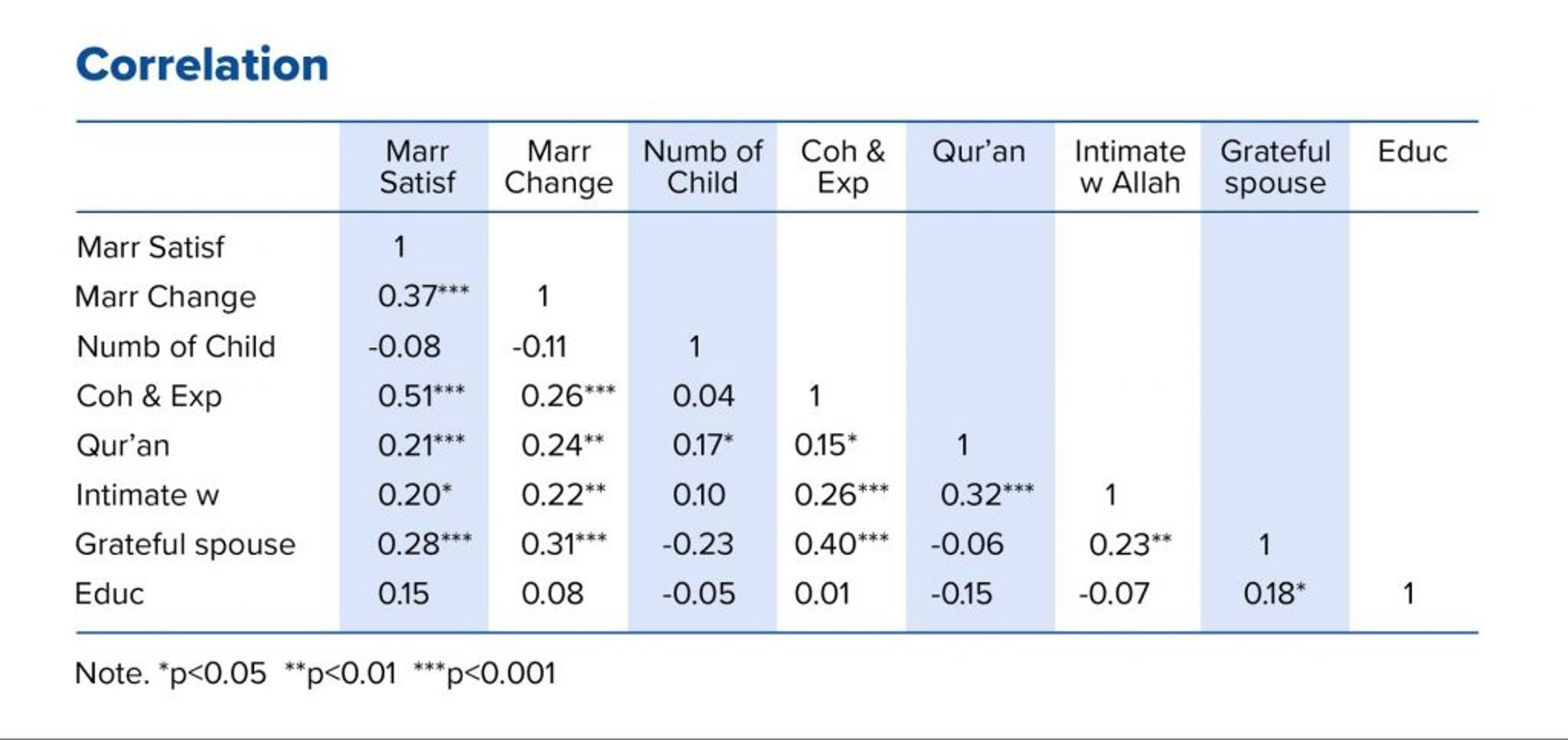
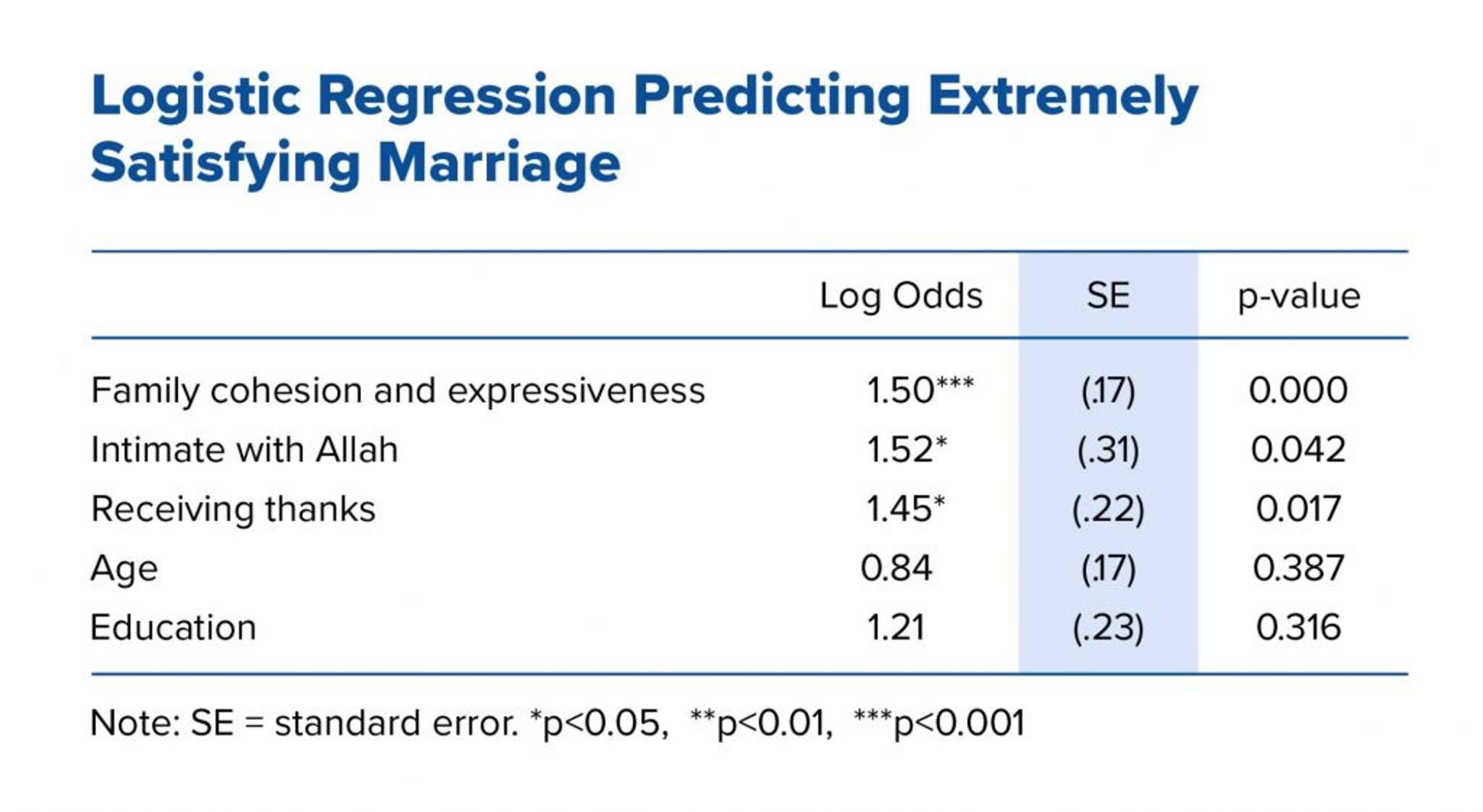
Our findings reinforce the Qur’anic prescriptions of safety, love, and mercy as requirements for tranquil and peaceful marriages. In the context of our study, acts of love included feeling appreciated by one’s spouse and reporting one’s family as helping and supportive. Safety and mercy were manifested in the facilitation of open communication that allowed for discussing personal problems. Allowing one’s spouse the opportunity to express whatever concerns are in their heart is part of empathy and compassion. The other component of successful marriages that our study highlighted was the importance of having a strong attachment to Allah. People who reported reading the Qur’an daily reported improvements in their marriage during social isolation and those who reported having an intimate relationship with Allah were more likely to have extremely satisfying marriages. Additionally, the ability to see blessings during difficult times, which has been found to be correlated with reading the Qur’an more often,
was related to improvements in marriage during social isolation. Thus, maintaining a close relationship with Allah appears to be a central ingredient in perceiving one’s marriage as successful.
Based on our findings and current research on marriage, we suggest the following practices to enrich an already healthy relationship or to rebuild a troubled relationship due to heightened stress or feelings of disconnection.
Know yourself
Each one of us comes into marriage with an attachment style, a way of relating that is grounded in our upbringing. When we are under stress, it is likely that we will default to our old ways of coping. For some, this might mean intuitively pulling away and distancing from others. Those who are more anxious may be more sensitive to their spouse’s availability and may be prone to feeling abandoned. Individuals who have a secure attachment will likely engage in more problem-solving behaviors when under stress.
Irrespective of attachment style, as we near our threshold for stress, we need to engage in introspection and be aware of how we relate to those closest to us during this time. We have to be aware of when we go from being calm and capable of communication to reactive and agitated or shutting down. This switch can happen within a fraction of a second and impacts our perception of our spouse as well as our ability to properly take in information. Being mindful and aware of when and how one may switch from a calm to angry state is important in preventing further problems. Furthermore, having a repertoire of self-regulation strategies that one can go to when on the verge of losing their cool is vital. Self-regulation strategies can include, but are not limited to:
- Deep breathing and mindfulness practices
- Progressive muscle relaxation
- Exercise
- Looking at nature
- A hands-on activity that produces something, such as knitting or gardening.
Have a conversation to understand each other’s needs.
Each one of us has a particular way in which we handle stress. What works for you may not work for your spouse. For example, you might seek connection and want to engage in conversation when you experience stress, whereas your spouse may dive into work mode and avoid the conversations that you are desperately looking to have. Discuss current life events and pay attention to how this pandemic is impacting each of you differently, while recognizing that both of you are coping with difficult changes and may be feeling unsettled. Come to the conversation with curiosity, openness, and a desire to understand your spouse. The attitude with which you approach the conversation will determine the level of safety that is felt by your spouse. Questions that spouses can ask each other during these conversations include:
- How can I support you during this time?
- How can we manage this reality together?
- What routines and expectations can we establish that will allow both of our needs to be met?
- How much alone time does each of us need?
If your goal is to work on your marriage, you’ll have to spend some time learning how to calm the storm that makes effective communication and intimacy difficult. You’ll have to take a deeper look at your own baseline of anxiety, whether that means attending to older wounds or understanding the part of yourself that yearns for connection and fears its loss. When we can move into a space of mindfulness and curiosity (both towards ourselves as well as our partners), it turns on the parts of our brain that allow for rational thinking and intimate contact.
The two steps above are meant to create a sense of safety, love, and mercy within the relationship. They will require diligence and a willingness to shift our mindset and behaviors. How you feel about your partner will manifest not in what you say but how you say it. Most of our communication lies in the body-to-body connection. What is going on beyond the words? The tone of voice, the facial expression, the tension in the throat, the furrowed brow, or the glazed look in the eyes might be enough of a trigger to switch you or your spouse from being receptive to reactive.
If you can become more aware of these nonverbal behaviors, both in your display of them as well as how you’re impacted by your spouse’s nonverbal communication, you become more capable of naming and regulating them. This will allow for more intimate contact and receptivity within the relationship that can lead to growth. There’s more to a marriage than knowing your problems and working through them. With the increased time that spouses are spending together, the question to ask is: How can we each give to, and receive nourishment from, one another? When the Prophet ﷺ described his relationship with his wife Khadījah رضي الله عنها, he said, “I was nourished by her love.”
This statement demonstrates just how fulfilling a healthy marriage can be. Here are some ways to nurture that love.
Infuse the relationship with gratitude. Lots of it.
Whoever does not thank people has not thanked Allah.
As simple as this sounds, many couples who are struggling in their marriages will find that expressing gratitude to each other is rare to nonexistent. It may be especially difficult to show gratitude if resentment has been building over time. Try to begin and end each day by looking for things to thank your spouse for. Keep count and try to thank your spouse for at least ten things each day. Even if they are small, mundane things that you feel they “should” be doing, expressing appreciation can never hurt. Appreciation makes a person feel genuinely seen and acknowledged. As we shift from our fast-paced lifestyles and are forced to slow down, take the opportunity to pay more attention to what your partner is doing right.
Schedule times for connection
If you are juggling work, children, and household responsibilities, your marriage may default to being last on the list. That’s all the more reason to intentionally fulfill its rights upon you. The Prophet ﷺ is known to have visited each of his wives on a schedule despite his role as prophet, leader, friend, to name a few. He would block off times after
ʿAṣr and after
ʿIshāʾ prayer to spend quality time with them.
Regardless of how busy he was, he not only set aside specific times to visit them, but was astute in recognizing how they were doing emotionally. It’s easy to get overwhelmed with all that’s happening. To ensure that your relationship doesn’t get lost in the process, sit together and decide when and how you’ll make time for connection. Doing so will allow each of you to set appropriate expectations.
Some things to schedule include:
- Intimacy.
- A “date” in whatever way is available to you in the current circumstances, whether it's having a cup of tea together, working on a project together, or sharing a meal.
- Conversations: Perhaps the larger more difficult conversations can be set aside for now, and time and space can be made for conversations that will contribute to growth.
Topics of conversation can include:
- Your pasts: As mentioned previously, our personal history becomes more relevant in times of stress. Be mindful of your assumptions and default responses so that you can approach a conversation with curiosity. Look at how your past may impact your current choices. How have past struggles shaped how each of you navigates crisis situations? How did your family of origin respond to difficulties?
- Your patterns: Couples often get stuck in negative patterns that prevent them from being able to connect. Check in with your partner if the pattern that you both engage in entails blaming, criticizing, pushing away, or withdrawing. If you’re able to sit down and look at the exchange of words and emotions that typically takes place (without engaging in criticism or blaming), you will be able to notice the repetitive nature of the arguments and intentionally choose to stop the pattern when it arises in the future.
- Your vision for the future: Where would you like to see your relationship once this time has passed? What is your vision for your emotional, financial, and spiritual future? How do you hope to develop more resilience as a couple? Look at the difficulties that you have already successfully gotten through and pinpoint the strengths that made that possible.
- What you’re currently stressed about (outside of your relationship): Research has found that “the stress-reducing conversation” is the defining part of relationships that are resilient and thrive against the odds. This practice includes each partner listening to his/her spouse with genuine interest, empathizing with his/her emotions, and steering clear of unsolicited advice. Once the first person finishes sharing whatever is on his/her mind, the roles are reversed and the speaker then becomes the listener.
Raḥmah is an essential component in all of these conversations. During these stressful times, it’s likely that most of us won’t be showing up at our best in our relationships, especially if there has already been strain in the marriage leading up to this. Recognize that you and your spouse are both doing the best that you can. Be aware of speaking to your spouse in ways that will further chip away at him/her and therefore at your marriage. Dr. Gottman outlines what he terms as “The Four Horsemen of the Apocalypse,” which his research has shown are frequently present in relationships that do not last. These are:
- Criticism: Putting down your partner’s character rather than confining your feedback to a particular behavior (“You are lazy” vs. “I wish you would have taken out the garbage”).
- Defensiveness: Playing the victim or blaming your partner rather than acknowledging your partner’s upset and taking some responsibility for it.
- Contempt: Approaching your partner in a belittling and demeaning manner from a position of superiority. This can show up as sarcasm, mocking, eye-rolling, or name-calling.
- Stonewalling: Tuning out so that it appears not only as a disconnect but a lack of caring altogether.
These behaviors undoubtedly hurt the recipient but, over time, cause the relationship to deteriorate. When the relationship becomes riddled with these horsemen, safety is inevitably lost. Abū Mūsá al-Ashʿarī (may Allah be pleased with him) reported: I asked the Messenger of Allah ﷺ,”Who is the most excellent among the Muslims?” He said, “One from whose tongue and hands the other Muslims are secure.”
Building an attachment to Allah
During the Prophet’s marriage sermon, he would recite the verses in the Qur’an about having
taqwá (God-consciousness). Thus, he established the importance of God-consciousness in a marriage. There are many ways to build an intimate relationship with Allah, which our study has shown is related to marital satisfaction. The first step is to have the proper God-image, which means to see Allah how He describes Himself. He describes Himself as Near, Loving, Forgiving, Kind, and Merciful. If you feel that Allah dislikes you or has abandoned you, this is likely due to internal turmoil.
Three practices to build a stronger secure attachment with Allah include the following:
- Reading the Qur’an - Regularly reading the Qur’an in a language you understand is essential in getting closer to Allah. It is through the Qur’an that Allah has elaborated His majestic names and attributes. Additionally, through repeated engagement with the Qur’an, one is able to see Allah’s wisdom in the different events that occur in life and connect them to one’s own lived experiences.
- Having an intimate conversation with Allah (munājāh) - In addition to regularly making duʿāʾ and seeking forgiveness, having an intimate conversation with Allah about your life builds a personal bond with Allah. Take your concerns, fears, and joys to Allah and discuss them with Him. Allow yourself to be vulnerable with Allah to get closer and more intimate with Him.
- Ṣalāh - Prayer is the consistent connection that keeps Allah near to our hearts. In addition to the five daily prayers, meeting Allah for additional sunnah prayers continues to strengthen our attachment to Him.