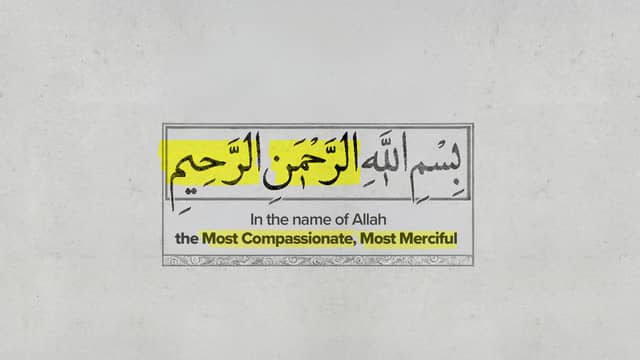
In the name of Allah, the Most Merciful, the Grantor of Mercy
All praise be to Allah, who guides those who seek Him to their aims, and grants us insights about the fundamentals of His Book and its subtleties. May salutations and peace be upon our master, Muhammad, and upon his family, companions, and supporters. To begin:
Among the sciences of the Great Qur’an are the correlations between how its sūrah(s) begin and end. I have previously explained that in al-Itqān, and also in the book Asrār al-Tanzīl. It has also been mentioned by the muḥaqqiqūn (critical verifier scholars), such as the author of al-Kashshāf, his teacher Maḥmūd ibn Ḥamzah al-Karmānī (the author of al-Burhān fī Mutashābih al-Qurʾān and al-Gharāʾib wal-ʿAjāʾib) in his book on tafsīr, Imam Fakhr al-Dīn [al-Rāzī] (d. 606H/1209), and al-Aṣbahānī (d. 430/947), among others. In this short treatise, I have chosen to demonstrate this [correlation between how sūrahs begin and end] in the chronological order of the sūrah(s), based on my own personal reflections (except where I expressly cite others). I have named this work Marāṣid al-Maṭāliʿ fī Tanāsub al-Maqāṭiʿ wal-Maṭāliʿ (Capturing the Beginnings: The Correspondence of Chapters’ Endings and Beginnings).
Al-Baqarah
Al-Iṣfahānī said, “Its end matches its beginning in terms of identifying the qualities of the believers, and then alluding to the qualities of the disbelievers.”
Āl ʿImrān
It begins by mentioning the Qur’an being sent down, and the Torah and Evangel prior to that. It then concludes with that as well, in His words, “Indeed, there are some among the People of the Book who truly believe in Allah and what has been revealed to you [believers] and what was revealed to them.” (3:199)
Similarly, it begins with,
“Allah does not break His promise.” (3:9) and concludes with,
“You never fail in Your promise.” (3:194)
4Al-Nisāʾ
It begins by mentioning how creation (and childbirth) began and concludes with the rulings related to death.
5It also begins with the verses of inheritance and kalālah (when the deceased leaves no parents or children) and concludes with the same theme.
Al-Māʾidah
It begins with the prohibition of hunting while in iḥrām (a sanctified state), and [by mentioning] the sacred months, the sacrificial animals, and the qalāʾid (those adorned for sacrifice), and concludes with that as well.
It also begins with declaring grazing livestock permissible, and ended with lamenting those who prohibited some livestock which Allah never prohibited.
Also, in its beginning: “Allah made a covenant with the Children of Israel.” (5:12) In its end: “Indeed, we took a covenant from the Children of Israel.” (5:70)
Also, in its beginning:
“Indeed, those who say ‘Allah is the Messiah, son of Mary’ have disbelieved.” (5:17) In its end is something similar.
6Al-Anʿām
It begins with, “Yet the disbelievers set up equals to their Lord.” (6:1) and ends with “and set up equals with their Lord.” (6:150)
It begins with, “Have they not seen how many [disbelieving] people We destroyed before them? We have made them more established in the land than you. We sent down abundant rain for them and made rivers flow at their feet. Then We destroyed them for their sins and replaced them with other peoples.” (6:6) And its ending is: “He is the One Who has placed you as successors on earth.” (6:165)
Al-Aʿrāf
In its beginning: “As a reminder to the believers.” (7:2) and in its end: “They remember [their Lord] then they start to see [things] clearly.” (7:201)
In its beginning: “Follow what has been sent down to you from your Lord,” (7:3) and in its end: “Say, I only follow what is revealed to me from my Lord.” (7:203)
In its beginning: “And do not take others as guardians besides Him,” (7:3) and in its end: “But [the devils] persistently plunge their [human] associates deeper into wickedness, sparing no effort.” (7:203)
Likewise, it begins by describing
Iblīs (Satan) as being arrogant and concludes by describing the angels as not being too proud [to worship Allah].
7Also, in its beginning: “Call upon your Lord in humility and secretly,” (7:55) and in its end: “Remember your Lord inwardly with humility and reverence.” (7:205)
Al-Anfāl
It opens with His statement, “It is they who are the true believers. They will have elevated ranks, forgiveness, and an honorable provision [from their Lord],” (8:4) and is sealed with His statement, “…they are the true believers. They will have forgiveness and an honorable provision.” (8:74)
Barāʾah (Al-Tawbah)
It opens with His statement, “But if you turn away, then know that you will have no escape from Allah,” (9:3) and concludes with His statement, “But if they turn away, then say, [O Prophet] ‘Allah is sufficient for me.’” (9:129)
Yūnus
In its beginning, “…that We have sent revelation to a man from among them,” (10:2) and in its end, “And follow what is revealed to you.” (10:109)
Hūd, Yūsuf,8 Al-Raʿd, Ibrāhīm, Al-Ḥijr
All of them commence and conclude by mentioning [the Qur’an].
9Al-Naḥl
It begins with a prohibition of being hasty (16:1) and ends with a command to be patient. (16:127)
Al-Isrāʾ
It begins with tasbīḥ (glorifying Allah) and concludes with taḥmīd.
Al-Kahf, Maryam, & ṬāHā
They all open and conclude by mentioning the Qur’an and
dhikr (remembrance).
10Al-Anbiyāʾ
In its beginning, “The [time of] people’s judgment has drawn near,” (21:1) and in its end, “And [when] the true promise (i.e., the resurrection) has neared.” (21:97)
Al-Ḥajj
It begins by mentioning the Hour (22:1), and is sealed with His statement,
“… so that the Messenger may be a witness over you, and that you may be witnesses over humanity” (22:78)—and that occurs on the Day of Resurrection.
11Al-Muʾminūn
Its start:
“Successful indeed are the believers.” (23:1) Its end:
“Indeed, the disbelievers will not succeed.” (23:117) This was noted by al-Zamakhsharī.
12Al-Nūr
In its beginning, with regard to women,
“Let them draw their veils over their chests, and not reveal their [hidden] adornments.” (24:31) Then, in its end, with regards to
al-qawāʿid (elderly women past the age of marriage),
“there is no blame on them if they take off their [outer] garments, without revealing their adornments.” (24:60)
13Al-Furqān
It begins with “Blessed [is the One],” (25:1) and ends with that. (25:61)
Al-Shuʿarāʾ
It begins by mentioning
“The Book” (26:2) and concludes with His statement,
“This is certainly a revelation from the Lord of all the world.” (26:192)
14Al-Naml
It begins by mentioning the Book, and it being Guidance (27:1-2) and concludes with His statement, “‘…and to recite the Qur’an.’ Then whoever chooses to be guided, it is only for their own good.” (27:92)
Al-Qaṣaṣ
In its beginning, “I will never side with the wicked,” (28:17) and in its end, “So never be an aid to the disbelievers [in their disbelief].” (28:86) Also, it begins with the migration of Moses from his homeland and then his return to it, and in its end is the Prophet’s ﷺ migration from his homeland and his return to it. (28:85)
Al-ʿAnkabūt
It was sealed with migration and jihad, due to His statement in the beginning,
“Do people think once they say, ‘We believe,’ that they will be left without being put to the test?” (29:2)
15Al-Rūm
It starts with,
“On the Day the Hour will arrive, the wicked will be dumbstruck.” (30:12) And it ends with,
“And on the Day the Hour will arrive, the wicked will swear…” (30:55)
16 Luqmān
It begins with, “…and scattered throughout it all types of creatures. And We send down rain from the sky,” (31:10) and in its end, “He sends down the rain, and knows what is in the wombs.” (31:34)
Al-Sajdah
In its beginning, “… to warn a people to whom no warner has come before you,” (32:3) and in its end, “So turn away from them, and await! They too are waiting.” (32:30)
Al-Aḥzāb
It begins with His statement,
“O Prophet, [always] be mindful of Allah,” (33:1) and in its conclusion is an address to his wives,
“And be mindful of Allah.” (33:55)
17Sabaʾ
It begins with the unseen world (34:3), and concludes with the Knower of the Unseen. (34:48)
Fāṭir
In its beginning, “As for those who plot evil, they will suffer a severe punishment. And the plotting of such [people] is doomed [to fail],” (35:10) and in its end, “But evil plotting only backfires on those who plot.” (35:43)
YāSīn
It begins with describing the Qur’an [as wise] (36:2) and ends with that as well in His statement, “We did not teach him poetry.” (36:69) It also begins with His statement, “It is certainly We Who resurrect the dead,” (36:12) and concludes with establishing the proof for that by Him saying, “And they argue with Us— forgetting they were created—saying, ‘Who will give life to decayed bones?’” (36:78)
Al-Ṣāffāt
Its beginning is
“By those lined up in ranks,” (37:1) and they are the angels. The ending is also about them:
“We are indeed the ones lined up in ranks [for Allah].” (37:165)
18Ṣād
Its beginning is “Ṣād. By the Quran, full of reminder!” (38:1) and it ends with, “It is only a reminder to the whole world.” (38:87) This was stated by al-Karmānī.
Al-Zumar
In its beginning, “So worship Allah [alone] being sincerely devoted to Him,” (39:2) and in its end, “Rather, worship Allah [alone].” (39:66) Also, its opening is the beginning of creation (39:6), and its ending is the Hour and Resurrection (39:68-75). Also, its opening describes how the heavens and earth were created with ḥaqq (rightful purpose) (39:5) and its conclusion describes the very end of the resurrection, “Judgment will conclude with ḥaqq (fairness).” (39:75)
Ghāfir
In its beginning,
“Have they not traveled throughout the land…” (40:21) and in its end,
“Have they not traveled throughout the land.” (40:82) Also, in its beginning,
“So call upon Allah with sincere devotion,” (40:14) and in its end,
“Your Lord has proclaimed, ‘Call upon Me.” (40:60)
19Fuṣṣilat
In its beginning,
“Yet most of them turn away,” (41:4) and in its end,
“…they turn away, acting arrogantly.” (41:51)
20Al-Shūrā
In its beginning, “And so you [O Prophet] are sent revelation, just like those before you,” (42:3) and in its end, “And so We have sent to you [O Prophet] a revelation by Our command.” (42:52)
Al-Zukhruf
In its beginning, “If you ask them [O Prophet] who created the heavens and the earth, they will certainly say, ‘They were created by the Almighty, All-Knowing,’” (43:9) and in its end, “If you ask them [O Prophet] who created them, they will certainly say, ‘Allah!’” (43:87) Also, in its beginning, “Ṣafḥan (fully overlooking)” (43:5) and in its end, “Faṣfaḥ (So overlook) them…” (43:89)
Al-Dukhān
It begins by mentioning the Qur’an (44:2) and concludes with that as well. (44:58) Also, in its beginning, “Wait then [O Prophet] for the day [when] the sky will be veiled in haze, clearly visible,” (44:10) and in its end, “Wait then! They too are certainly waiting.” (44:59)
Al-Jāthiyah
In its opening,
“And whenever they learn anything of Our revelations, they make a mockery of it,” (45:9) and in its end,
“This is because you made a mockery of Allah’s revelations.” (45:35)
21Al-Aḥqāf
It begins by mentioning the creation of the heavens and earth (46:3), and concludes with that (46:33) as well.
22Al-Qitāl (Muḥammad)
It starts with the command to fight (47:4) and ends with it. (47:38)
Al-Fatḥ
It begins with describing the Prophet ﷺ and the believers and what they were promised (48:1-5). It concludes with a similar motif as well. (48:29)
Al-Ḥujurāt
It begins with the prohibition of proceeding ahead of Allah and His Messenger (ﷺ)(49:1), and concludes with the prohibition of mentioning your favor to Allah and His Messenger (ﷺ)(49:17). It also begins with describing Allah as fully knowing (49:1), and ends with that as well. (49:18)
Qāf
It begins by mentioning resurrection (50:3), and concludes with that as well. (50:44)
23Al-Dhāriyāt
It begins with His statement, “Indeed, what you are promised is true,” (51:5) and concludes with His statement, “Woe then to the disbelievers when they face their Day which they are warned of!” (51:60)
Al-Ṭūr
It begins with His statement, “Indeed, the punishment of your Lord will come to pass,” (52:7) and concludes with, “Also, the wrongdoers will certainly have another torment before that [Day].” (52:47)
Al-Najm
It begins by speaking of al-najm (53:1), the star, and ends with a reference to al-shiʿrā (53:49), which is also a star (Sirius).
Al-Qamar
It begins with the hour “drawing near” (54:1) and ends with, “Better yet, the Hour is their appointed time….” (54:46)
Al-Raḥmān
It begins with the Majestic, Divine Name of Allah (55:1), and concludes with it again in His statement, “Blessed is the Name of your Lord, full of Majesty and Honor.” (55:78)
Al-Wāqiʿah
It begins by mentioning the three categories of the creation: those of the right hand, those of the left hand, and the forerunners. It concludes with those [three classes] in His statement, “So, if [the deceased] is one of those brought near [to Us]...” (56:88)
Al-Ḥadīd
It begins by describing Allah (57:1), and concludes with that as well. (57:29) Also, in its beginning, “Believe in Allah and His Messenger,” (57:7) and in its end, “Fear Allah and believe in His Messenger.” (57:28) Its opening (57:6) and its ending (57:28) both mention light.
Al-Mujādilah
At its beginning is the mention of those Allah heard of His allies (58:1), and at its end is Allah’s pleasure with those He loves. (58:22)
Al-Ḥashr
It starts, “Whatever is in the heavens and whatever is on the earth glorifies Allah. For He is the Almighty, All-Wise,” (59:1) and ends, “Whatever is in the heavens and the earth [constantly] glorifies Him. And He is the Almighty, All-Wise.” (59:24)
Al-Mumtaḥanah
It starts, “O believers! Do not take My enemies and yours as trusted allies,” (60:1) and ends, “O believers! Do not ally yourselves with a people Allah is displeased with.” (60:13)
Al-Ṣaff
It starts, “Why do you say what you do not do?” (61:2) which was revealed about jihad, and it ends with mentioning the Anṣār (Supporters) of Allah from among the followers of Jesus (as) who partook in jihad. (61:14) Also, it starts, “Surely, Allah loves those who fight in His cause in [solid] ranks,” (61:4) and ends with “and fight in the cause of Allah,” (61:11). Also, in its beginning is “…and giving good news of a messenger,” (61:6) and its end states, “Give good news [O Prophet] to the believers.” (6:13)
Al-Jumuʿah
It begins with describing Allah, the Glorified, (62:1) and concludes with that as well. (62:11)
Al-Munāfiqūn
In its beginning, “...so they hindered [others] from the Way of Allah,” (63:2) and in its end, “Do not let your wealth or your children divert you from the remembrance of Allah.” (63:9) Also, in its beginning, “When the hypocrites come to you,” (63:1) and in its end, “…yet the hypocrites do not know.” (63:8) Also, in its beginning, “And surely Allah knows that you are His Messenger—but Allah bears witness that they hypocrites are truly liars,” (63:1) and in its end, “And Allah is all aware of what you do.” (63:11)
Al-Taghābun
In its beginning, “For Allah knows best what is [hidden] in the heart,” (64:4) and in its end, “[He is the] Knower of the seen and unseen—the Almighty, All-Wise.” (64:18)
Al-Ṭalāq
In its beginning, “And count it accurately” (65:1) and His statement, “You never know, perhaps Allah will bring about a change [of heart] later,” (65:1) and its end, “And Allah certainly encompasses all things in [His] knowledge.” (65:12)
Al-Taḥrīm
It begins by mentioning the Prophet’s ﷺ wives, and concludes by mentioning his wives in Paradise: Āsiyah bint Muzāḥim, the wife of Pharaoh, and Maryam bint ʿImrān.
24 Also, in its beginning is the collaboration of his wives against him, and its end describes the betrayal of Nūḥ and Lūṭ by their wives to caution and frighten the Mothers of the Believers.
Al-Mulk
It begins with mentioning His great power, (67:1) and concludes with the same concept—namely the creation’s inability by asking, “Who [else] could then bring you flowing water?” (67:30)
Nūn (Al-Qalam)
It begins with His statement, “By the grace of your Lord, you [O Prophet] are not insane,” (68:2) and concludes with, “And they say, ‘He is certainly a madman.’” (68:51)
Al-Ḥāqqah
It begins with “Al-Ḥāqqah (The Inevitable Truth),” (69:1) and concludes with “And indeed, this [Day] is the absolute truth.” (69:51)
Saʾala (Al-Maʿārij)
It begins by promising the Day of Resurrection, and concludes with that as well. (70:44)
Nūḥ
It begins by threatening “a painful torment,” (71:1) and concludes with this by stating, “They were drowned, then admitted into the Fire.” (71:25)
Al-Jinn
It begins with the Revelation (72:1) and concludes with mentioning it by stating, “Except messengers of his choice. Then He appoints angel-guards before and behind him.” (72:27)
Al-Muzzammil
It begins with the night prayer (73:2) and concludes with that as well. (73:20)
Al-Muddathir
It begins with a warning (74:2) and concludes with another warning:
“Now, what is the matter with them that they are turning away from the reminder?” (74:49)
25Al-Qiyāmah
It begins by mentioning the dead being returned to life (75:1-4) and concludes with that as well. (75:40)
Al-Insān
It begins by mentioning those grateful and those ungrateful, (76:3) then concludes with that [same dichotomy] by stating, “He admits whoever He wills into His mercy…” (76:31) to the end of the verse.
Al-Mursalāt
In its beginning,
“Surely, what you are promised will come to pass,” (77:7) which implies it will occur soon, and how little they will stay [in this life], and in its end,
“Eat and enjoy yourselves for a little while.” (77:46)
26ʿAmma (Al-Nabaʾ)
Its end, “Indeed, We have warned you of an imminent punishment,” (78:40) which is the “Momentous News” that He deemed close in His statement, “But no! Sa-yaʿlamūn (They will soon come to know).” (78:4) This is because the sīn (س) indicates the near future , unlike sawfa (سوف).
Al-Nāziʿāt
It begins with al-Rājifah (the Quaking Blast), (79:6) and is sealed with al-Ṭāmmah (the Supreme Disaster). (79:34)
ʿAbasa
It begins with a facial description, “He frowned,” (80:1) and ends with another description of faces: “On that Day [some] faces will be bright, laughing and rejoicing.” (80:38-39)
Al-Takwīr
Its beginning, “When the sun is put out,” (81:1) and its end, “So what [other] path would you take?” (81:26)
Al-Infiṭār
Its beginning, “When the sky splits open,” (82:1) and its end, “For all authority on that Day belongs [entirely] to Allah.” (82:19)
Al-Muṭaffifīn
Its beginning, “Woe to the defrauders,” (83:1) and its end, “Have the disbelievers [on this Day] been paid back for what they used to do?” (83:36)
Al-Inshiqāq
It begins with mention of the skies, (84:1) and concludes with that in His statement,
“You will certainly pass from one platform to another.” (84:19) If you recite it with
fatḥ al-bāʾ (لتركبَنَّ), it would be referring to the Prophet ﷺ, climbing one sky after another on the Night of al-Isrāʾ.
27Al-Burūj
It begins by mentioning “the sky full of constellations,” (85:1) and ends with “in a Preserved Tablet,” (85:22), which are both from the upper worlds. Also, in its beginning, “And the promised Day [of Judgment],” (85:2) and in its end, “But Allah encompasses them from all sides.” (85:20)
Al-Ghāshiyah
Its beginning is a discussion on al-Ghāshiyah (the Overwhelming Event), (88:1) which is the Resurrection, and its end mentions the “return” (85:25) and “reckoning.” (85:26)
Al-Balad
In its beginning, “And by every parent and what they birthed!” (90:3) and in its end, “those who have faith,” (90:17) and “those who deny Our signs,” (90:19) which comprise the two types of people.
Iqraʾ (Al-ʿAlaq)
Its beginning,
“Read [O Prophet] in the Name of your Lord,” (96:1) and its end,
“Prostrate and draw near [to Allah].” (96:19) It is no secret what a wonderful connection there is between these two.
28Al-Qadr
It begins by mentioning the night (97:1) and ends with the emergence of dawn. (97:5)
Alhākum (Al-Takāthur)
It is no secret that “takāthur (competing for increase)” in this world (102:1) is pleasurable. For this reason, it was sealed with His statement, “Then, on that Day, you will definitely be questioned about [your worldly] pleasures.” (102:8)
Al-Humazah
It starts with
“wayl (woe)” (104:1) which is the name of a valley in the Hellfire,
29 and ends with
“al-Ḥuṭamah (the Crusher)” [another name of Hellfire] and descriptions of it. (104:4-9)
Al-Ikhlāṣ
It begins with “aḥad (one and only),” (112:1) and also concludes with “aḥad.” (112:4)
Al-Nās
It begins with “the people” (114:1) and concludes with “the people.” (115:6) Also, this term is repeated five times in this [sūrah], with different meanings, and hence it is considered among the examples of tajānus (homonymy).
From Allah comes all success. This is the conclusion of the book, and all praise be to Allah, Lord of the worlds. May the salutations and peace of Allah be upon our leader and master, Muḥammad, and upon his family, and all his companions.