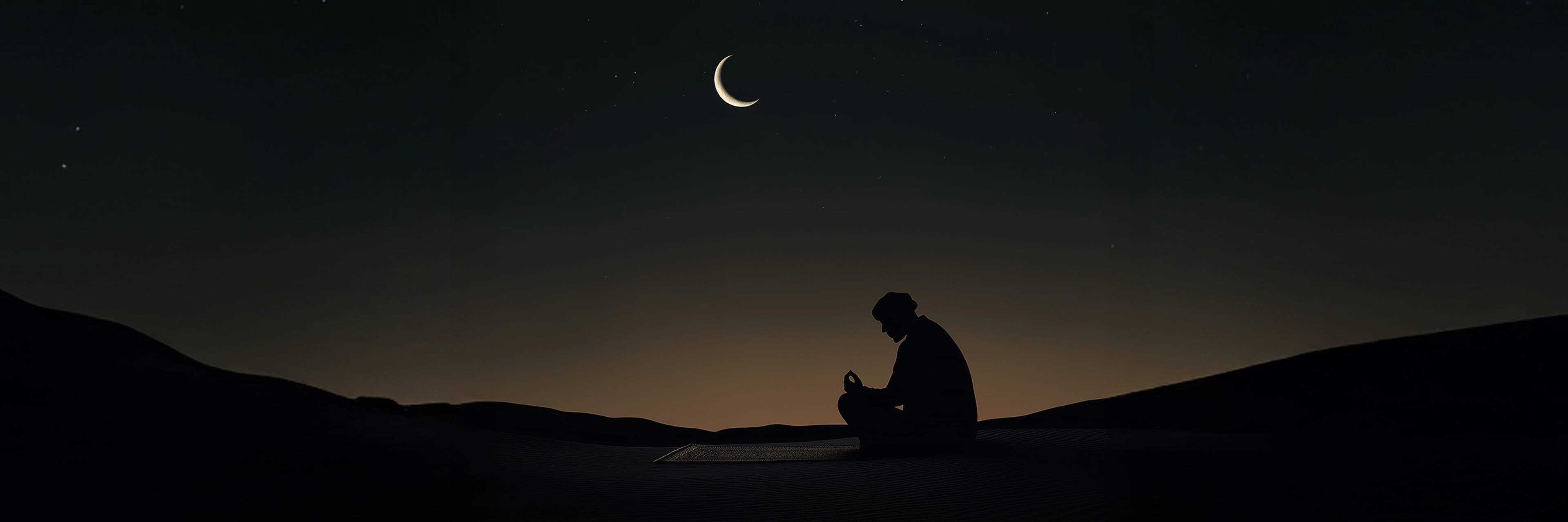
The year is 1346 Hijri, known to some as 1928 AD. The American writer and naturalist Henry Beston has just published The Outermost House, chronicling the year that he spent on the sand dunes of Cape Cod.
“With lights and ever more lights, we drive the holiness and beauty of night back to the forests and the sea,” he writes, deep in its pages. “The little villages, crossroads even, will have none of it . . . Today’s civilization is full of people who have not the slightest notion of the character or the poetry of night, who have never even seen night.”
1I remind you, again, that the year is 1346 Hijri, otherwise known as 1928 AD. Kerosene lamps are still used to light homes in the countryside, and nearly half of American households lack electricity.
Streetlights, headlights, flashlights, spotlights, floodlights—a century later, there’s scarcely a type of light we haven’t yet invented to help us hide the night. If Beston’s civilization was full of people who have never seen night, then ours is full of people who will never see it and in fact do not want to see it. General Electric, that multinational monument to energy, is the name of modern life. General Electric: everywhere, at every time, at every price.
At some point we lost the night, and then forgot that we lost it. The price we paid for enslaving the electron was scrubbing the sky of its stars. We traded the planets for power plants and the galaxies for grids; we traded wonder for wealth, and the night for neon. This is life after the Electric Apocalypse—it happened too slowly to stop, and too quickly to remember. So now, when 80 percent of Americans can’t see or have never seen the Milky Way,
2 the question we have to ask ourselves is, how do we live after losing the night?
In this time, the time of the Gaza genocide and the Trump democide, the question of light pollution may not seem especially urgent. But I insist. To insist otherwise, I think, is to not really read the constellations of modern life—to not draw the shapes suggested by the dots of Gaza, Trump, General Electric, and everything in between. This illiteracy, too, is symptomatic of our nightless condition.
We should reflect on what it means to live in a 24-7 civilization; we should acknowledge the phenomenological difference between a humanity that every night looked up into the expanse of eternity, and a humanity that every night looks down into the blue glare of pocket megacities. We should consider that losing night doesn’t just mean losing a pretty view; it means losing an entire dimension of human existence and spiritual experience. It means, in some deep sense, losing reality.
In the Qur’an, we read,
إِنَّ فِى خَلْقِ ٱلسَّمَـٰوَٰتِ وَٱلْأَرْضِ وَٱخْتِلَـٰفِ ٱلَّيْلِ وَٱلنَّهَارِ لَـَٔايَـٰتٍۢ لِّأُو۟لِى ٱلْأَلْبَـٰبِ ١٩٠
Indeed, in the creation of the heavens and the earth and the alternation of the night and the day are signs for those of understanding. (Qur’an 3:190)
This ikhtilaf, this contrast, between night and day is a central motif of the Qur’an, and the tragedy of the twenty-first-century (sub)urbanite is that she cannot experience the visceral truth of this ayah, not in the way its first listeners could. Night and day acquire identity relative to each other; but modern life, which fetishizes perpetual light and perpetual activity as the metrics of civilization, has made the night a grayer shade of the day—and so we no longer apprehend either.
It is a great irony, indeed, that the modern city takes as ideal what the Qur’an delivers as warning:
قُلْ أَرَءَيْتُمْ إِن جَعَلَ ٱللَّهُ عَلَيْكُمُ ٱلنَّهَارَ سَرْمَدًا إِلَىٰ يَوْمِ ٱلْقِيَـٰمَةِ مَنْ إِلَـٰهٌ غَيْرُ ٱللَّهِ يَأْتِيكُم بِلَيْلٍۢ تَسْكُنُونَ فِيهِ ۖ أَفَلَا تُبْصِرُونَ ٧٢
Say: “What do you think? If Allah made the day permanent for you till the Day of Rising, what god is there other than Allah to bring you night to rest in? Do you not then see?” (Qur’an 28:72)
We in fact do not see, because for the permanence of day—for its washed-out glare and burned-out stare, its humdrum droning and labored heaving, its shuffling and scraping and squalling and squawking—for all this day, we pay with our sight. Day every hour, day every day, day forever—isn’t this the future? What greater testament is there to our wealth, our brilliance, our omnipotence, than the day without end? Day without end, work without end, expense without end.
So however much we squint and search, we can’t find night in the sky, and we can’t find it among ourselves, the disfigured products of productivity. This is always the trap sprung by light on those who do not respect it—that it takes sight as often as it lends it. Light is not the antithesis of blindness; here it is its source.
“It is not for the sun to overtake the moon nor for the night to outstrip the day,”
3 but we’ll have nothing to do with such temperance; with our light-emitting diodes and metal-halide lamps and mercury vapor, we summon the sun into the night. Light upon light!
4 But what a perverse interpretation of light this is. It’s a brutish kind of light, harsh, lacking in grace, and vaguely obscene. How else to describe this gorging on radiation, this guzzling of photons? We’re confident that one can amass too many pounds, but too many lumens? Surely not. Surely gluttony is not a class of crime committed with light. Surely we can never rediscover luminosity as obesity. Overconsumption is a strictly fleshy affair.
Again, the nightless do not know how to read constellations.
The nightless do not know many things, and what the nightless know least is that they are without night. Their ignorance of their ignorance is masked by their preoccupation with the idea of night, by the doggedness with which they try to keep it at bay. It seems to me that nightless society tells itself at least three major stories about the night:
- In the first story, the night is bedtime, unless one is working a night shift to make ends meet or cramming for an exam or indulging in revenge bedtime procrastination.
- In the second story, the night is a slumber party, a Bacchic carnival for letting loose and going wild. It is the enemy of sleep and the partisan of sin and the keeper of secrets.
- In the third story, the night is danger and death—it is where ghosts glide and serial killers hide and secret police lie, in haunted forests and dark alleyways and unmarked vans.
So when I ask, how do we live after losing the night, I am not asking how we might lobby our local representatives to pass anti–light pollution ordinances, though that would be laudable (for evidence that city and night can coexist, search Flagstaff, Arizona). No, I am asking what it would mean to restore night in its transcendent meaning as a way of life, and what that would mean for us at this historical moment.
The insan forgets what he knows—and the answer to this question, of how to live after losing the night, he does know—and Ramadan returns to remind him. It does so by testifying that Islam is the deen of night. Ours is a nocturnal faith, one in which night is a gateway to the numinous, and nowhere is this truth more sharply illuminated than in the month of the fast, the month of the Qur’an, the month of Laylat al-Qadr.
We find out when Ramadan is (re)visiting by consulting the Moon, that celestial sign by which we count our days and on which we hang our calendar. We begin our fast when the night ends and end the fast when the night begins. We rest at night with tarawih and we keep vigil with tahajjud. We eagerly anticipate not the last ten days, but the last ten nights. The centerpiece of that anticipation is Laylat al-Qadr, the night that the mission of the Prophet ﷺ began, the night when the Final Revelation descended, and the night when the divine decree is issued.
Ramadan testifies that night is not merely a physical reality. Night is a spiritual state, and a state of being. Night is stillness and silence, and, though we might not think it, it is light and life. Even though we fast during the day, the defining experiences of Ramadan follow nightfall, as they must. It is said that the Prophet ﷺ, when the last ten nights came, would tighten his waist belt and, through his worship, “give life to the night.”
5 Ramadan is all about the nightlife, albeit not in a sense intuitive to
Homo luminous.
In other words, Ramadan, and the Islamic tradition more broadly, relate a story about the night quite at odds with the ones we enlightened moderns tell around our campfires. Against the night as bedtime, the night as slumber party, and the night as nightmare, Islam gives us three counterstories.