Jump to:
Lecture
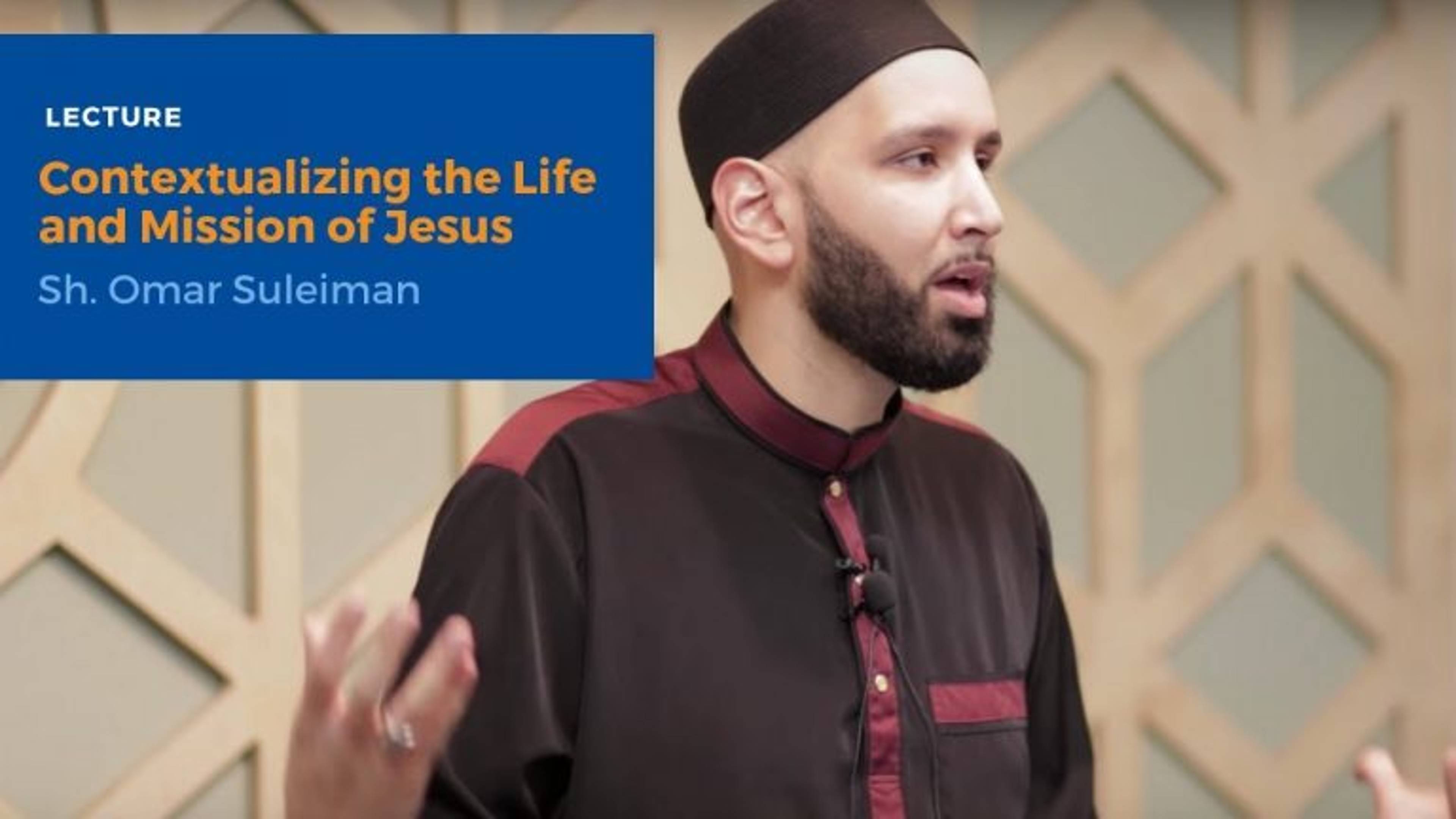
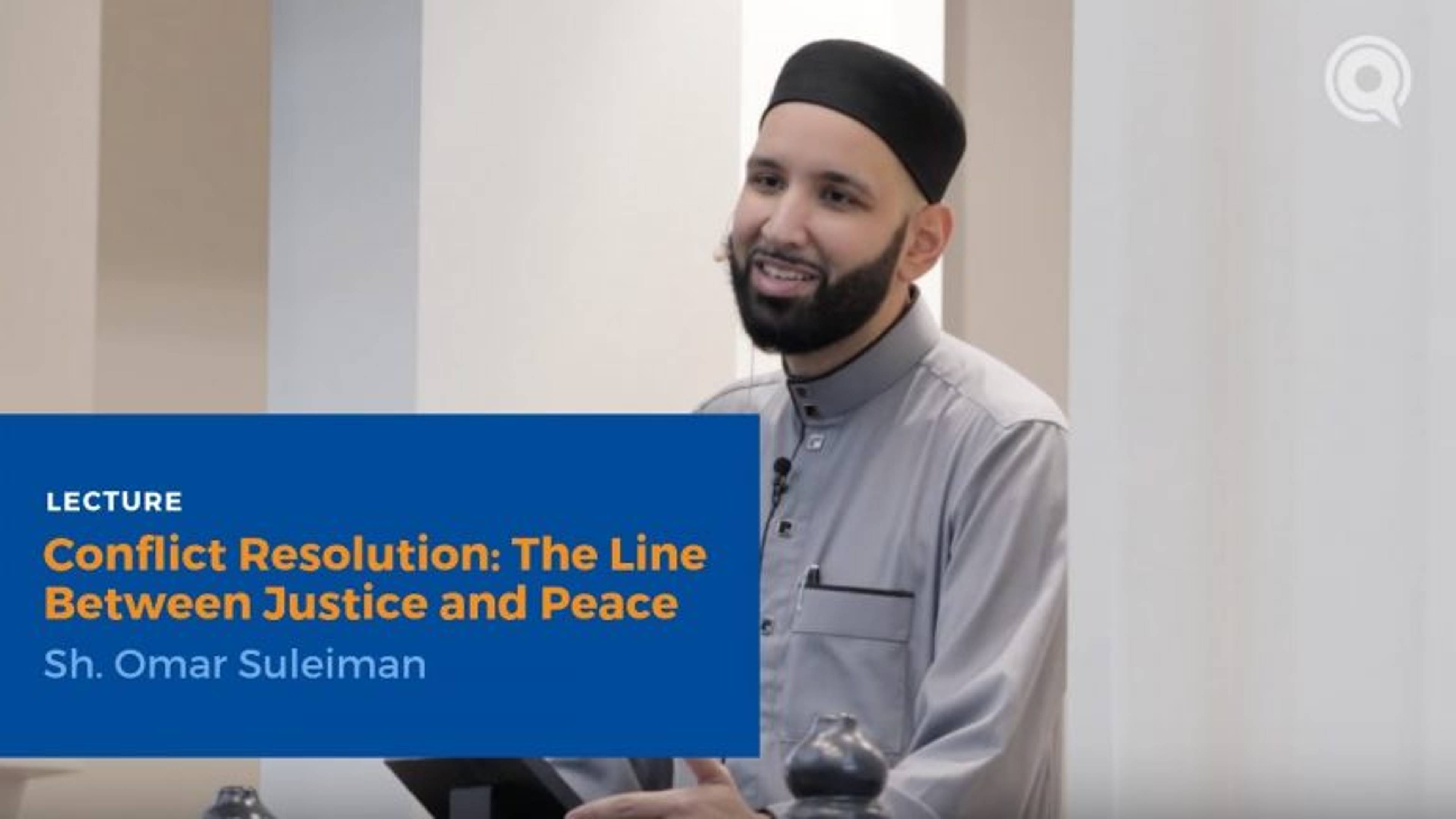
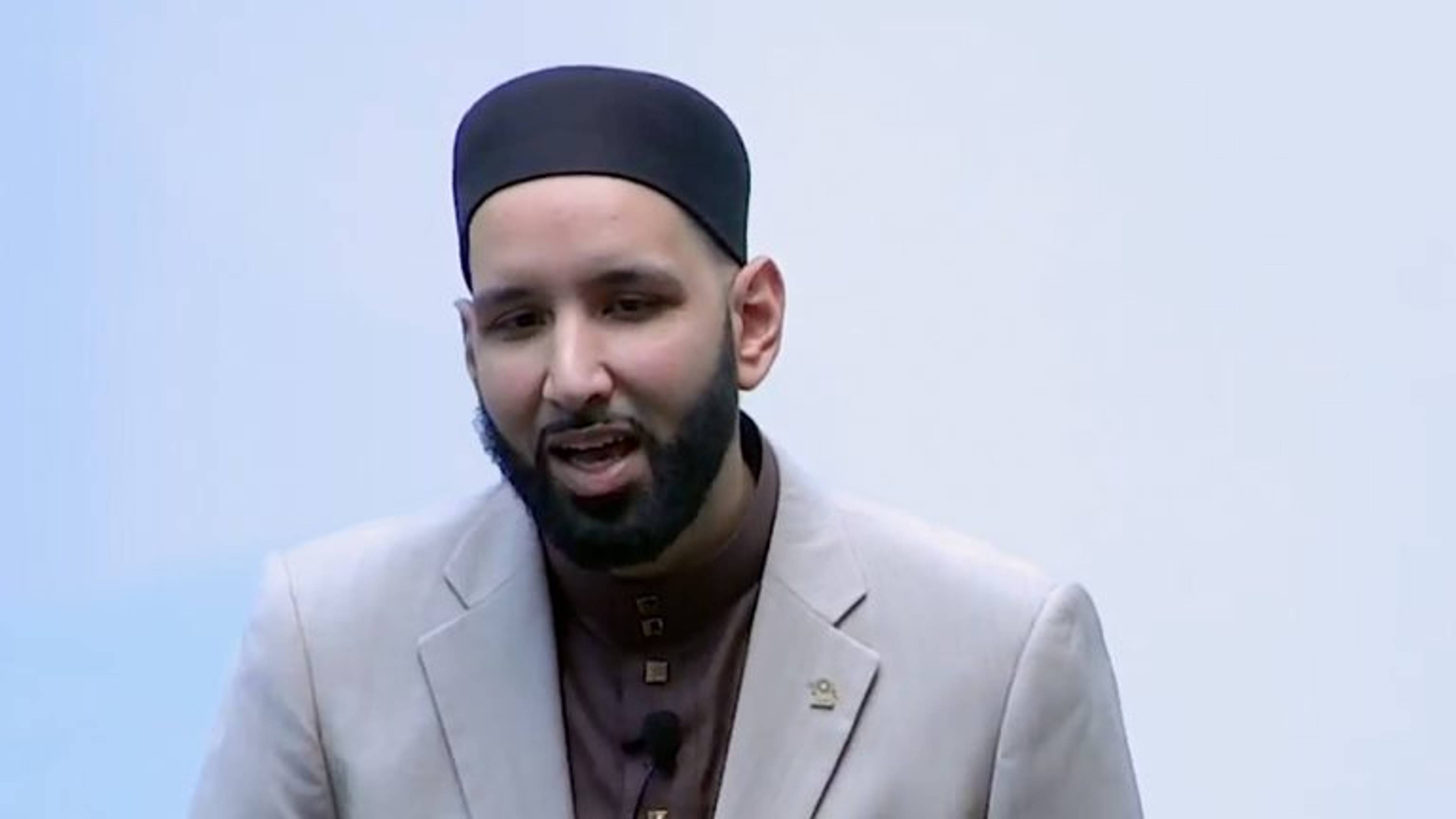
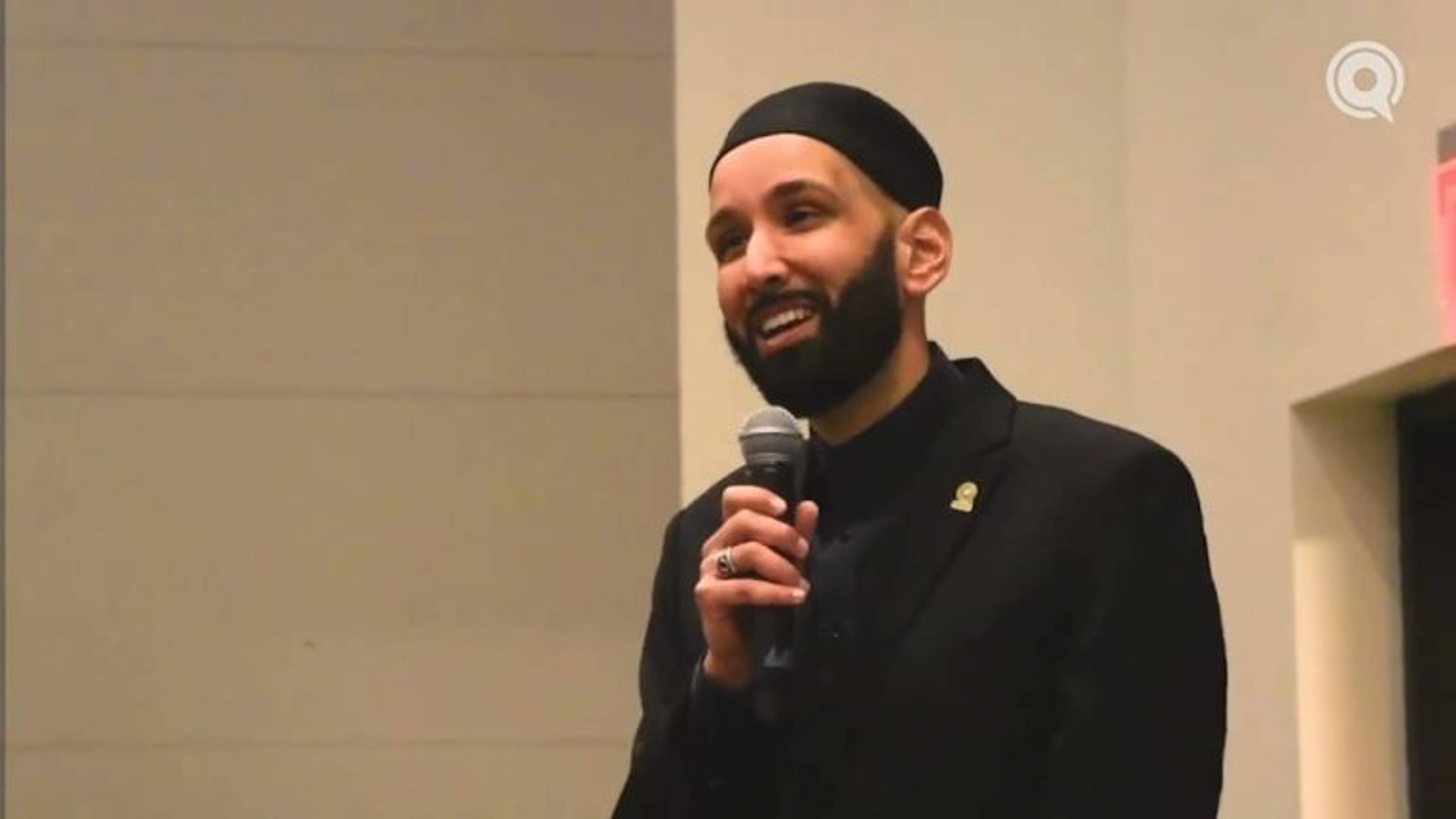
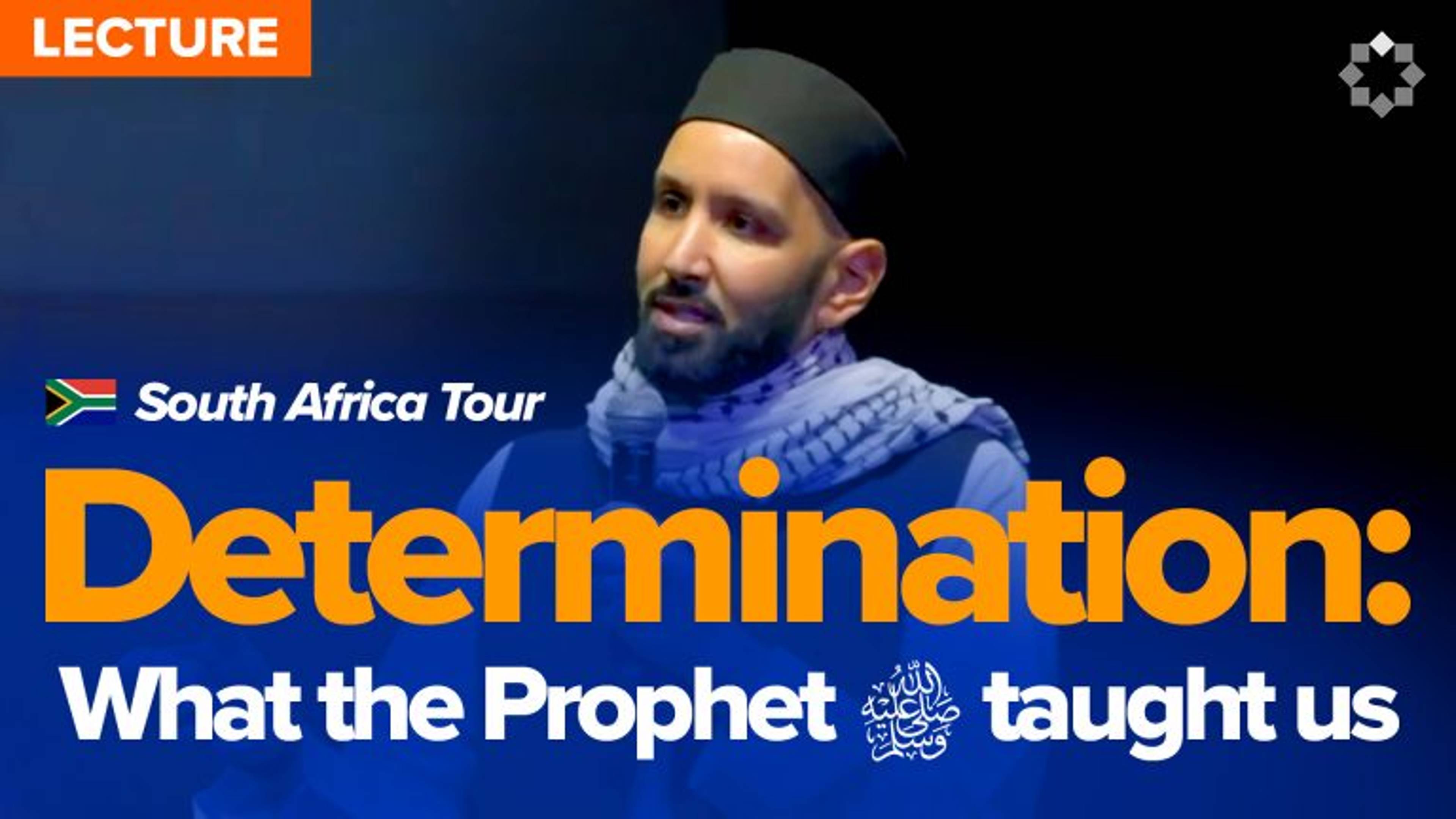
This Is What Made The Prophets Unstoppable | Lecture by Dr. Omar Suleiman
What does it truly mean to be a determined Ummah? In this Lecture, Dr. Omar Suleiman reflects on the legacy of the Prophets — from Nuh (AS) to Ibrahim (AS), Musa (AS) to Isa (AS), and our beloved Muhammad ﷺ — and how they never settled for survival alone. They carried the mission. They never compromised. From the defiance of Gaza to the silence of global powers, this Lecture is a reminder: our strength lies not just in patience, but in purpose.
This transcript was auto-generated using AI and may contain misspellings.
00:00The Unstoppable Prophet ﷺ Dear brothers and sisters, I wanted to speak about a very specific topic though, bi-idhnillahi ta'ala, as we go forward.
00:13What is the meaning of a determined ummah? Everything that we hope to embody as an ummah is a manifestation of what we have been taught
00:26by our beloved Prophet ﷺ. He sets the bar in every regard. And we are ummah Muhammad ﷺ.
00:38We're not Muhammadans, but make no mistake about it. We are ummah Muhammad ﷺ. And a nation that is led by Muhammad ﷺ will never be defeated.
00:51And the people of Palestine are the cream of the crop of ummah Muhammad ﷺ.
00:59And so as we expand our ethos from his sunnah ﷺ, there's something very particular that I wanted to highlight about his character
01:11and how we see that playing out and how we can manifest that. And that is the determination of the Prophet ﷺ that before we can understand what it means to be a determined ummah, we have to understand what it means to be a determined prophet.
01:26What do I mean by that? Allah ﷻ says in the very last verse of Surah Al-Ahqaf, فَاصْبِرْ كَمَا صَبَرَ أُولُو الْعَزْمِ مِنَ الرُّسُلِ
01:39Be patient as those who possessed determination from the messengers before you were patient. Remember this sentence.
01:52To give you a context, Surah Al-Ahqaf is the surah of the heights.
01:57It refers to the final calls that are initiated from the prophets to their peoples.
02:07It gives us the vivid image of Hud (عليه السلام) speaking to his people and warning them one more time. It gives us the vivid image of a parent speaking to their child
02:21and pleading with their children to hold on one more time. And Allah ﷻ speaks to us of the pain of rejection.
02:33And Surah Al-Ahqaf starts off with the pain of rejection from the Prophet ﷺ where they say, اِفْتَرَىٰ, he manufactured this.
02:44They called him a sahir, they called him a magician, they called him a sorcerer. They wanted to kill him ﷺ. And Allah ﷻ makes it a point to say in Surah Al-Ahqaf in many verses
02:58that the presence of the Prophet ﷺ is your saving grace and you want to kill your salvation in the messenger of Allah ﷺ.
03:07And Allah ﷻ mentions, شَهِدَ شَاهِدٌ مِن بَنِي إِسْرَائِيلَ عَلَى مِثْلِهِ فَآمَنَ وَاسْتَكْبَرْتُمْ That you will reject this messenger ﷺ
03:19and a witness from Bani Israel will believe in him. And he believes and you show pride. And that is about Abdullah ibn Salam (رضي الله عنه), the chief rabbi of Medina who would embrace Islam.
03:33And Allah ﷻ takes us through these images of rejection after rejection after rejection after rejection. Prophets being rejected, parents being rejected, peoples being rejected.
03:45And Allah ﷻ summarizes with this message to the messenger of Allah ﷺ to be patient as those who possessed great determination,
03:58from the messengers were patient before. The ulema speak about this ayah in various ways. Who are ulul azmi min al-rusul?
04:11And what does it mean to be people of azm, people of determination? Some of the ulema said all of the prophets and messengers are ulul azmi min al-rusul. Each one of them possessed great determination.
04:23Some of them said all of them with the exception of Yunus (عليه السلام) when Allah ﷻ says to the prophet ﷺ
04:32So be patient as those that came before you with the promise of your Lord
04:44and don't be like Yunus (عليه السلام) at that time when he called out to Allah ﷻ from the belly of the whale. Meaning that there was a time where Yunus (عليه السلام) relinquished too early.
04:57Yet still Allah ﷻ elevated him beyond where he was in the first place. So some of the scholars they said all of the prophets and messengers, some of them said with the exception of Yunus (عليه السلام). And then you have a rich discourse
05:11where the companions of the messenger of Allah ﷺ and the earliest scholars exert themselves to this meaning of ulul azm.
05:22So some of them said perhaps it's speaking about the prophets who faced the most aggression from their people.
05:31And so Nuh (عليه السلام) and Ibrahim (عليه السلام) and then Lut (عليه السلام) and Salih (عليه السلام) and Hud (عليه السلام) and Shu'aib (عليه السلام).
05:41So they mentioned prophets that had a particularly violent reaction from their people. And then some of them said that when Allah ﷻ says,
05:53that Nuh (عليه السلام) was patient for 950 years with the rejection of his people.
06:03That Ibrahim (عليه السلام) was patient with the fire that he was thrown into.
06:11That Ismail (عليه السلام) was patient with the sacrifice. That Yaqub (عليه السلام) was patient with the loss of his son.
06:25That Yusuf (عليه السلام) was patient with the loss of his father and the loss of his freedom. That Ayub (عليه السلام) was patient with the loss of his health. And so they start to go through the very unique ways
06:38in which these prophets maintain patience with the difficulties that they faced. But there is one more definition.
06:49And this is the definition that I want us to sit with today. And it's the one that became the most predominant opinion amongst Ahlus Sunnah wal Jamaah.
06:59May Allah ﷻ unite the people of Sunnah wal Jamaah as they were meant to be united. And that is what Ibn Abbas (رضي الله عنه) said. He said,
07:10ulul azmi min al-rusul is not referring to those who were patient with hardships.
07:16Ulul azmi min al-rusul are those who received the mighty legislations and were patient in pushing through with the message that Allah gave to them.
07:30And who are they? Nuh (عليه السلام), and Ibrahim (عليه السلام), and Musa (عليه السلام), and Isa (عليه السلام), and Muhammad ﷺ.
07:44Do you understand when you pay attention to this? When you hear who are the greatest messengers, you will hear this definition. That Nuh (عليه السلام) is the first Rasul of Allah.
07:57The first messenger of Allah. Because he's the first one who came with a particular Risalah. And he's the first one to face rejection from his people in accordance with that Risalah.
08:09Prophets were tested before Nuh (عليه السلام) with their wickedness. Nuh (عليه السلام) was the first one that was tested with shirk. With actual idolatry. Where the people fundamentally altered the entire purpose of their existence.
08:23And the foundation of their revelations. Nuh (عليه السلام) is that. He had to face that. And then after Nuh (عليه السلام), Ibrahim (عليه السلام), Abu al-Anbiya, the father of the prophets.
08:36Ibrahim (عليه السلام) had to be patient. With so many different things, but at the end of the day, Ibrahim (عليه السلام) is the one who sets the standard for what it means to be a Muslim.
08:50He is the one who chose you and named you Muslim. Some of the scholars say Ibrahim (عليه السلام). That this name is most exemplified by him.
09:03And Ibrahim (عليه السلام) stayed the course with the message. That Ibrahim (عليه السلام) did not just try to survive what his father put him through.
09:13That Ibrahim (عليه السلام) did not simply seek to escape the tyrant in Egypt. Or to escape the tyranny of the people that he faced in any land.
09:24That Ibrahim (عليه السلام) was concerned with pushing the message through. Rabbana li yuqeemus salat. My Lord, so that they establish the prayer. So that they remain upon Tawheed.
09:37So that they remain upon the oneness of Allah. He pushed through with a message (عليه السلام). And at no point did the pain that he was under
09:49take him away from the perspective of his prophetic call. He pushed through with the message.
09:55Musa (عليه السلام) understood that his goal on earth was not just to survive the genocide of the Pharaoh. He had loftier goals than that.
10:07Otherwise after he parted the seas and the Fir'aun drowned. Musa (عليه السلام) would have said, khalas, I'm done. We did it, right? This was victory, right?
10:17But how much pain did Musa (عليه السلام) face after the drowning of the Fir'aun? In fact, it seems like those are the lengthier treatments of pain.
10:29When Allah ﷻ says, la takoonu kalladheena aadha musa. He's not talking about Fir'aun. Don't be like those who harmed Musa (عليه السلام). fabarraahu allahu min ma qalu.
10:39Allah ﷻ cleared him from what they said about him. He's talking about the harm that came after the drowning of the Pharaoh. Musa (عليه السلام) stayed the course.
10:51He didn't celebrate the victory and say it's over. He stayed the course.
10:57Isa (عليه السلام), despite the betrayal of his own and the pursuit of his enemy of the Romans. The betrayal from within, the nearest quarters to him.
11:09The plot to kill him and crucify him (عليه السلام) in the ugliest of ways to make an example out of him. Isa (عليه السلام) just watched as Yahya (عليه السلام) was martyred.
11:21He was aware of the beheading of Yahya (عليه السلام). Of the slicing of Zakariya (عليه السلام) into two in a tree. Of the murder of the prophets that called. And Isa (عليه السلام) still stood.
11:35And didn't just pursue the performance of miracles. He stayed the course of the mission.
11:43So much so that Allah ﷻ held him in the heavens until the completion of that mission takes place with him. His job wasn't to survive a crucifixion.
11:56Musa (عليه السلام) job wasn't to survive a genocide. Ibrahim (عليه السلام) job wasn't to survive being thrown into a fire. Nuh (عليه السلام) job wasn't to survive a flood. It was greater than that.
12:09Rasulullah ﷺ, his job was not to survive the plot of the Meccans that was cooked up in Dar al-Nadwa. To kill him from every direction.
12:22That wasn't why he was here. Ulul azm. People of azm, people of determination. By this definition, are people that push forth with a message.
12:35And that don't lose sight of that message or that mission at any part or any point of the process. You know why that's so important?
12:46Before we get into the specific context of Palestine, of Palestine and what is happening today. But what this means for an ummah. Sabr, as the scholars mentioned, patience is reactive.
12:59Wasbir ala ma asabak. For the most part, it refers to difficulties that come your way and you are patient. And the prophets were exemplars of patience.
13:09When we struggle in life, when Allah ﷻ tests us and we respond with sabr. We are manifesting something incredibly beautiful.
13:19And that only a few people in humanity can actually live up to. May Allah ﷻ make us amongst them. Allahumma ameen. When we respond to harm with patience.
13:30Wallahi, you see these people in Palestine, you see these people in Gaza. The clarity of thought when they are facing the ugliest mechanics of slaughter.
13:42Is absolutely incredible and mind-boggling. I listened to that recording as I'm sure many of you did. Of one of the paramedics whose name was also Rifat. Like Rifat al-Arir, the poet.
13:56Rahimahullah. And the clarity that he had when he was repeating the shahada. The clarity that he had when speaking to his mother.
14:07The clarity he had when speaking about his mission to save the people. He was only 24 years old. 24.
14:21How do you have that type of clarity at the age of 24 years old? Being shot at and burned. And he's a paramedic.
14:31How many ripped bodies has he dealt with before his body was ripped itself? How does that 9 year old in Gaza have the clarity that he has? Of mission and purpose?
14:44It's not just patience with the pain. It's patience with the perspective that's so admirable. Sabr refers to the reactive component of when difficulty comes to you.
14:57Azm, as the scholars mention, is the proactive component of determination of going forward with your mission.
15:05Azm, in fact, as the scholars of language mention, is even more comprehensive than the word hazm. I don't want to get you all lost, subhanallah, in these words, but they're rich.
15:17Hazm is to hold yourself as you're moving forward. Azm is to fuel yourself.
15:30It's like when the Prophet ﷺ says, There's an element of moving forward and there's an element of keeping the balance.
15:38Azm is moving forward with patience, with perspective, with purpose, with mission. You're not just here to survive.
15:49One of the ways that we lost ourselves in many non-Muslim majority countries is we got so busy fighting.
15:59Islamophobia that we forgot that we're supposed to also be teaching people about Islam and living Islam. It got so defensive about who we aren't that we forgot to tell people who we are.
16:13It became so much about trying to survive hate that we forgot to teach people the love of what comes from our beloved Messenger ﷺ.
16:25We took on the element of survival without mission, survival without purpose. It still can happen to where some of us could start to say,
16:39you know what the goal is just to be able to pray, to be able to say la ilaha illallah, to be able to go out and be ourselves and not get killed in the street.
16:51Is that our purpose as an ummah? Is that all? To just survive? I tell you dear brothers and sisters,
17:02if the people of Gaza understood their purpose on Earth to just survive, we've already seen the plans.
17:13They could be built beautiful settlements outside of their lands,
17:18of all the buildings and the care that they want while the devils do what the Holy Land, what they want to do.
17:28But they say, no, no, we're staying here. Not because of the land,
17:38but because of the Lord of the land who commanded us to be here. And if the ummah has forsaken its responsibility to Al-Aqsa, we will not forsake our responsibility to Al-Aqsa.
17:52If the ummah has turned its back, 2 billion can't do anything, then 2 million will stand up for it. We're not going anywhere.
18:03That's not normal to someone who doesn't understand faith. But this is not a matter of survival. This is not a matter of physically making it through. This is a matter of pushing it through.
18:18That's why if you think about subhanallah, our messenger ﷺ. The Prophet ﷺ was given many comfortable arrangements.
18:31To forsake some of his message. What do you know, they wish you'd compromise on Muhammad ﷺ. They would willingly compromise.
18:43You see the way that a bully works is that they make your life so miserable, so unbearable that you have no choice but to come back to the bargaining table
18:57and bargain for less than what speared your existence in the first place. And so they wanted to break the Prophet ﷺ.
19:09Boycott and starve the Prophet ﷺ and his people for three years. Sound familiar? Put them under siege. We won't let a single ounce of aid go in to She'ba bi Talib. Does it sound familiar?
19:22We'll make it so difficult for them that some of them will have to do hijrah to a land that's not theirs and go into the great unknown to Abyssinia. Does it sound familiar? And hopefully if we break him enough ﷺ
19:36and then offer him something sweet at the table, bring him in and say, hey, look, what do you really want? You've been starving. You want to be a king?
19:48We killed your wife Khadija (رضي الله عنها) died due to the circumstances of the boycott. You can have any woman in Mecca that you want. You want money? We'll give you money. You want power? Right now,
20:02you can't even walk out in the streets without being harassed. We'll give you power. But you've got to let go. That's why he's ulul azm. That's what makes the Prophet ﷺ a person of great determination.
20:17That he never forsakes his mission ﷺ. He never forsakes his message. Despite the pain that's being inflicted upon him. He will not concede on anything that will fundamentally undermine his message.
20:31By the way, it's the difference between the moments of torture that the Prophet ﷺ faces in Mecca versus Surah Hudaybiyyah.
20:44A person that wants to compromise on the religion will Hudaybiyyah themselves out of anything. Use Hudaybiyyah to justify normalization with the Zionist entity. Use Hudaybiyyah to justify every single concession of faith.
20:58Use Hudaybiyyah to justify this. The Prophet ﷺ compromised. The Prophet ﷺ compromised. There's a difference here. In Mecca,
21:07when they told the Prophet ﷺ that you worship our gods for one day of the year. This is nihayatul kalam, the end of the contract, the end of the compromise. Just worship the idols for one day a year.
21:21We'll worship your God for the entire year. From a pragmatic perspective, you could have argued that,
21:29hey, I mean are people really going to worship Allah and listen to the Quran every day of the year and not become Muslim? But the Prophet ﷺ knew that this condition was so batil, was so false,
21:41was so negating and invalidating at the start that it had the potential to compromise the fundamental of the message
21:49and he rejected it ﷺ, despite being in a much more vulnerable position than he was in Surah Hudaybiyyah. When bin Muammar bin Musa came to the Prophet ﷺ and said, listen, everybody else is rejecting you.
22:02And the chief of the tribe said, I could eat the Arabs with this man. Prophet ﷺ has leadership qualities. I could take him and I could eat the Arabs with this man. There's so much potential in this man.
22:14He said, listen, we'll take you in and believe in you, but you have to transfer power to us when you die. Al-ardu lillah yurithuha mayyasha wa al-aqibatu lil-muttaqeen. Absolutely not. That's an invalid condition.
22:28It has at its core something that could compromise the principle of my message, which is so contrary to elitism and tribalism at its core that you want me to submit that when I die,
22:42you get to take over, that your tribe has power. The earth belongs to Allah. Allah gives it to whom he wills.
22:50And victory belongs to the pious. Hudaybiyyah, when they're doing the sulh, when they're doing the compromise,
23:02the treaty of Hudaybiyyah. And Suhaib ibn Amr says,
23:09Bismillah ar-Rahman ar-Rahim. He said, I don't recognize ar-Rahman ar-Rahim, erase that. Muhammad Rasulullah, Muhammad ibn Abdullah Rasulullah ﷺ,
23:21I don't recognize Rasulullah, erase that. We know Ali (رضي الله عنه) did not want to erase. The Prophet ﷺ said show it to me and he himself removed it.
23:31Why? Because at that point, removing it from the document would do absolutely nothing at the practical level
23:41or to compromise the message because it was so written in the hearts of those people that were with the Prophet ﷺ that you couldn't stop it now.
23:51And that's why when these Zionists fly their flags and they draw their maps and they use their names of falsehood
24:01and they try to steal everything from our land to our olive trees and even claim our cuisine.
24:10We say you fools, Palestine has been drawn so deeply in the hearts of people around the world
24:17that you are so lost and deluded as deluded as the Pharaoh that you act like to think that you're actually going to win this battle.
24:29It's here. It's here. It's not going anywhere. Nothing fundamental is being lost. Nothing is going to be compromised here.
24:40It's too late. You've lost the battle not because the ummah deserves it. But because there was a group of the ummah that refused to let go of it.
24:52That did their job and that inspire the rest of us with their resilience and look at how the Prophet ﷺ is being spoken to. Faspir kama sabara ulil azmi min al-rusul. The Prophet ﷺ is mukhatab.
25:05He's the one who's being spoken to here. Be patient like your brothers who came before you. When Aisha (رضي الله عنها) and the wives of the Prophet ﷺ were given the choice
25:17about the difficulties of the life of the Messenger of Allah ﷺ to either continue living in those difficult situations or not. The Prophet ﷺ says, Ya Aisha,
25:28This dunya la tan baghi bi Muhammad ﷺ wa aali Muhammad. It's not befitting to Muhammad ﷺ or his family.
25:39The material life is not befitting to Muhammad ﷺ and his family. Rather, I will be patient upon the hardships and the difficulties and upon the message. Kama sabara ulil azmi min al-rusul.
25:53The way that those who came before me were patient and steadfast and determined upon that which was given to them. It's not befitting. We have a higher goal. We have a higher purpose. That strength,
26:07that dignity, that determination, that's ulil azm. And let me tell you something, dear brothers and sisters. SubhanAllah, at some point, every determined individual is looked at as being deluded by those that are around them.
26:22You listen to these NBA players or these NFL players or whatever it is, successful in so many ways, and they'll always tell you about the doubters around them. People used to laugh at me. People used to say, ha ha, you'll never do this.
26:37People used to say, you should think about something else. But I kept at it. People that succeeded in the worldly sense, they had azm, just not for the thing that we're talking about, the matter that we're talking about.
26:49But every determined person is mocked as deluded by those that are around them at some point in their pursuits. But the message is potent enough to keep moving them forward.
27:01And they don't see your mockery because they're so deep in their mission. They don't see the obstacles because they already see the outcome as promised by Allah subhanahu wa'ta'ala.
27:14And so when the Prophet ﷺ is in Mecca, Abu Jahl and Abu Lahab and these elites, they never thought in their lifetimes, like their limit,
27:27their domain of power was running the affairs of Mecca. Like they were not thinking to be on the same level in the conversation with the Roman Empire, and the Persian Empire, and that their idolatry of Quraysh would spread throughout the world.
27:41No, they're playing in a little arena here, in the grand scheme of things. And here you have the Prophet ﷺ saying, in the midst of his devastation, his vulnerability,
27:52by the way, not only is Allah azawajal going to give me victory here, but this message will reach every single home in the world that the sun has risen or set upon. Can you imagine the laughter and the mockery?
28:06But here's what happens. As time goes on, they started to realize something is special about this man ﷺ.
28:18You see, he was ﷺ, not just Nabi ur-Rahma or Nabi ur-Tawba, the Prophet of mercy and the Prophet of repentance.
28:27He was Al-Mahhi, the eraser, who Allah azawajal erases disbelief through. And Allah put the fear of the Prophet ﷺ in his enemies hearts,
28:40not because the Prophet ﷺ would resort to tactics of terrorism or evil, or would do things that would cause them fear because he was willing to descend
28:51in terms of the norms of society in the tactics of war. To the contrary, the Prophet ﷺ was setting standards of morality that weren't just unknown to the Arabs, but unknown to the world,
29:06in terms of how you treat people. While they mutilated our prisoners, the Prophet ﷺ freed them, for teaching people how to read.
29:17Look at the difference between how Badr looked and Uhud looked. And even after Uhud, how Khandaq looked, how Fath Makkah looked.
29:28So you can't even say Badr was a test case. The fact of the matter is that the Prophet ﷺ, Allah azawajal put in the hearts of his enemies,
29:40the fear of him ﷺ. Because they knew something was different about him. And that's why, when they started to see how Allah was giving him victory ﷺ
29:52through all of these trials and tribulations, while they spoke with confidence in the public arena, in their hearts they knew they were losing the battle.
30:04They pounded their chests around the Kaaba and said we're winning. But in their hearts they knew they were losing. They talked about how they had crushed the Prophet ﷺ.
30:16And the public discourse was that we ran him out to Medina. The private discourse was that what he's becoming in Medina is far greater than anything we would have ever anticipated him becoming in Mecca.
30:30We're losing. The public discourse was we're crushing his message. The private discourse was, oh my God, my son is now Muslim. I have to keep him in the basement of my house in prisons, so that people don't find out.
30:45The public discourse and the private discourse were very different. And when you saw the Prophet ﷺ, it was the calm and the tranquility, the sakina, the steadfastness.
30:56He spoke without his voice shaking ﷺ. He didn't have to frown and lose his smile for you to be afraid of what he was saying.
31:07Not because he was going to do anything evil ﷺ, but because he was so determined upon the truth that Allah gave him. And you knew your falsehood did not stand a chance against him.
31:21That's why. Ulul azm. He's different ﷺ. And they knew he was different. And so I want you to recognize something.
31:33Don't think our enemies aren't afraid of the child in Gaza who's now missing arms and legs,
31:44but somehow speaks with more clarity than a Columbia professor does now. They know it.
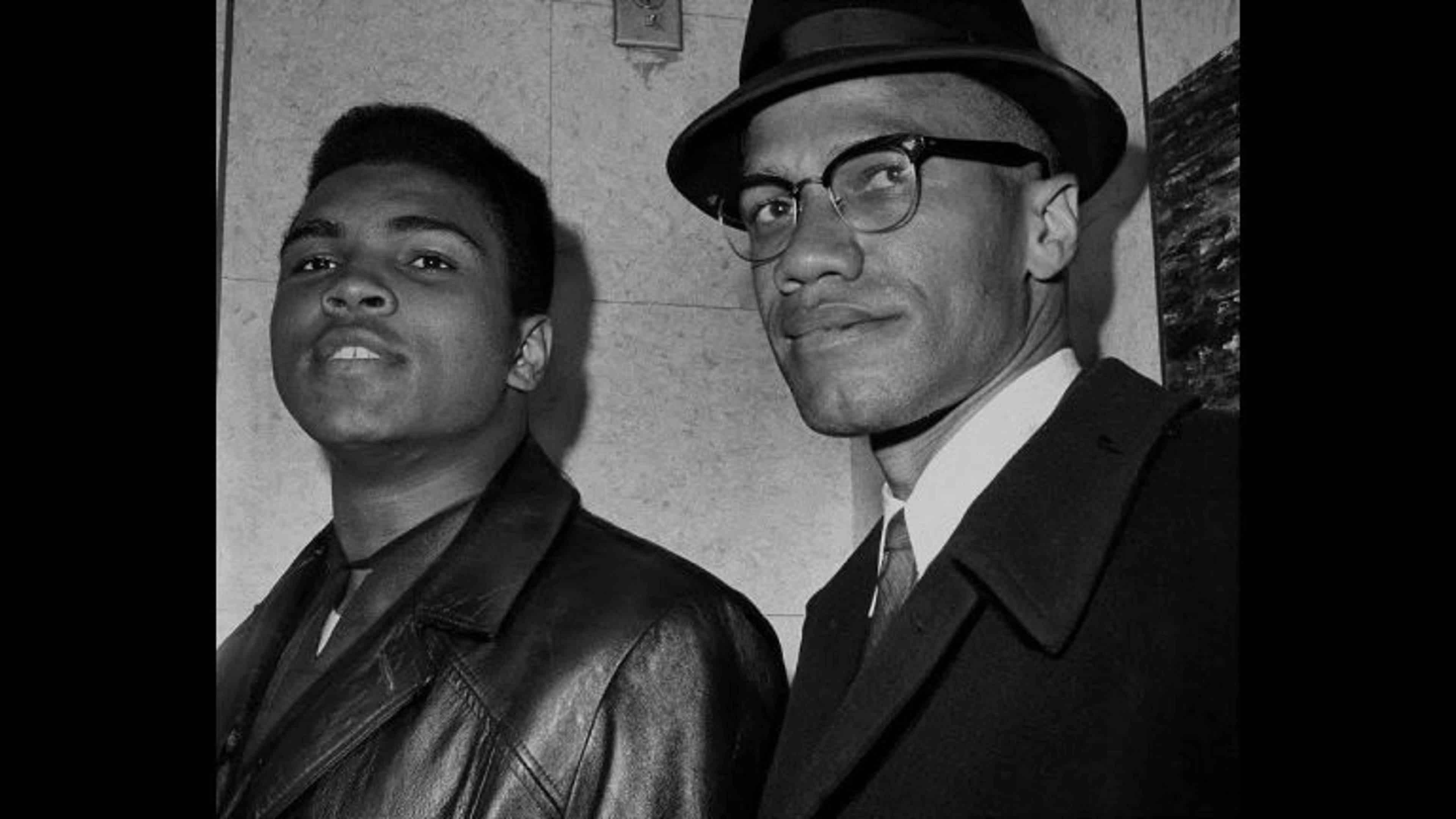
31:56They see azm, determination. This Malcolm X of Hajj, Malik Shabazz, rahimahullah ta'ala.
32:05I remember coming across an interview that he did in 1964 after he embraced Islam and its purest sense. And Malcolm rahimahullah was asked about his journey with Islam. And he said something that completely blew my mind.
32:19Subhanallah. He said, you know, the real reason for my adopting Islam. He said when I was in prison in the 1950s. So I was looking for any seerah book about the Prophet ﷺ.
32:33Can you imagine by the way, the literature that we have now? What seerah book was around in the 1950s when Malcolm was in prison? What would you have given him to read about Muhammad ﷺ?
32:44So he was catching bits and pieces about the Prophet ﷺ. And the nobility of the Prophet ﷺ in Fath Makkah, in the conquest of Makkah.
32:56Where the messenger of Allah ﷺ did not let his enemies turn him into one of them. Because he was a man with a message ﷺ. If he wasn't, he would have massacred Makkah.
33:09And let all of that hurt and pain manifest in revenge rather than continue to be molded by revelation. But the Prophet ﷺ was different. So he said I read about these bits and pieces of the Prophet ﷺ in Fath Makkah.
33:24Then Malcolm says I read about Salahuddin. Imagine Malcolm X, 1952 sitting in a prison cell,
33:34reading about Salahuddin al-Ayubi rahimahullah from what he could find in the books in the library in prison. And he said and I realized that there is a dignity about this religion
33:48and a strength about this religion that I wasn't able to find in anything else. And he says that was the real reason why I embraced Islam.
33:58That there was a power, a strength, a dignity in it that I didn't find anywhere else. I told one of the most famous converts to Islam who still hasn't announced his Islam.
34:14He embraced Islam privately because of Khalid Nibhan rahimahullah ta'ala. Ruh al-Ruh and you have a mural of Khalid Nibhan here rahimahullah. May Allah azawajal gather him with Reem and Tariq and all of the shuhada of Gaza.
34:28Allahumma ameen. When he took his shahada with me, I told him now that man that you love so much, you can hope to be in Jannah with him as well. Subhanallah.
34:41tilkal ayaamu nudawiduhaa bayna al-naas. The days will cycle dear brothers and sisters. The days will cycle. But be patient as ulul azm minal rusul.
34:53As you learn from your messenger ﷺ, the ultimate determined prophet to be a determined ummah. And do not accept humiliation for yourself. And do not accept humiliation for yourself.
35:09And do not accept the abandonment of your first qiblah. And do not accept that it is normal for you and I as the ummah of Muhammad ﷺ
35:22to sit every single day and open our phones as soon as our eyes open to see another set of slaughtered kids and crying mothers and complaining fathers. This is not normal.
35:38We don't accept this for ourselves. And so embrace what the prophet ﷺ brought us with the mission in full. And may Allah subhanahu wa'ta'ala make us steadfast upon this affair.
35:54Until all of what has been taken from us is freed. And until people are freed from the shackles of their false ideals that allow for these atrocities to happen in the first place. May Allah subhanahu wa'ta'ala guide us and guide through us.
36:09May Allah subhanahu wa'ta'ala rectify us and rectify through us. May Allah subhanahu wa'ta'ala give victory, victory, victory to our brothers and sisters in Palestine. May Allah not only allow them to survive but allow them to thrive.
36:24May Allah azza wa jalla allow us to pray alongside them in Masjid al-Aqsa without the boots of occupation and only with the feet of the righteous believers. May Allah subhanahu wa'ta'ala wake this ummah up from its sleep.
36:38From the east to the west, the Muslims who live as minorities and the Muslims who are suffocated by leaders who have abandoned them. May Allah subhanahu wa'ta'ala allow us as an ummah to come together,
36:48to live up to the noble promise and to the noble quality of a'zm that the prophet ﷺ manifested. Allahumma ameen.