fbpixel
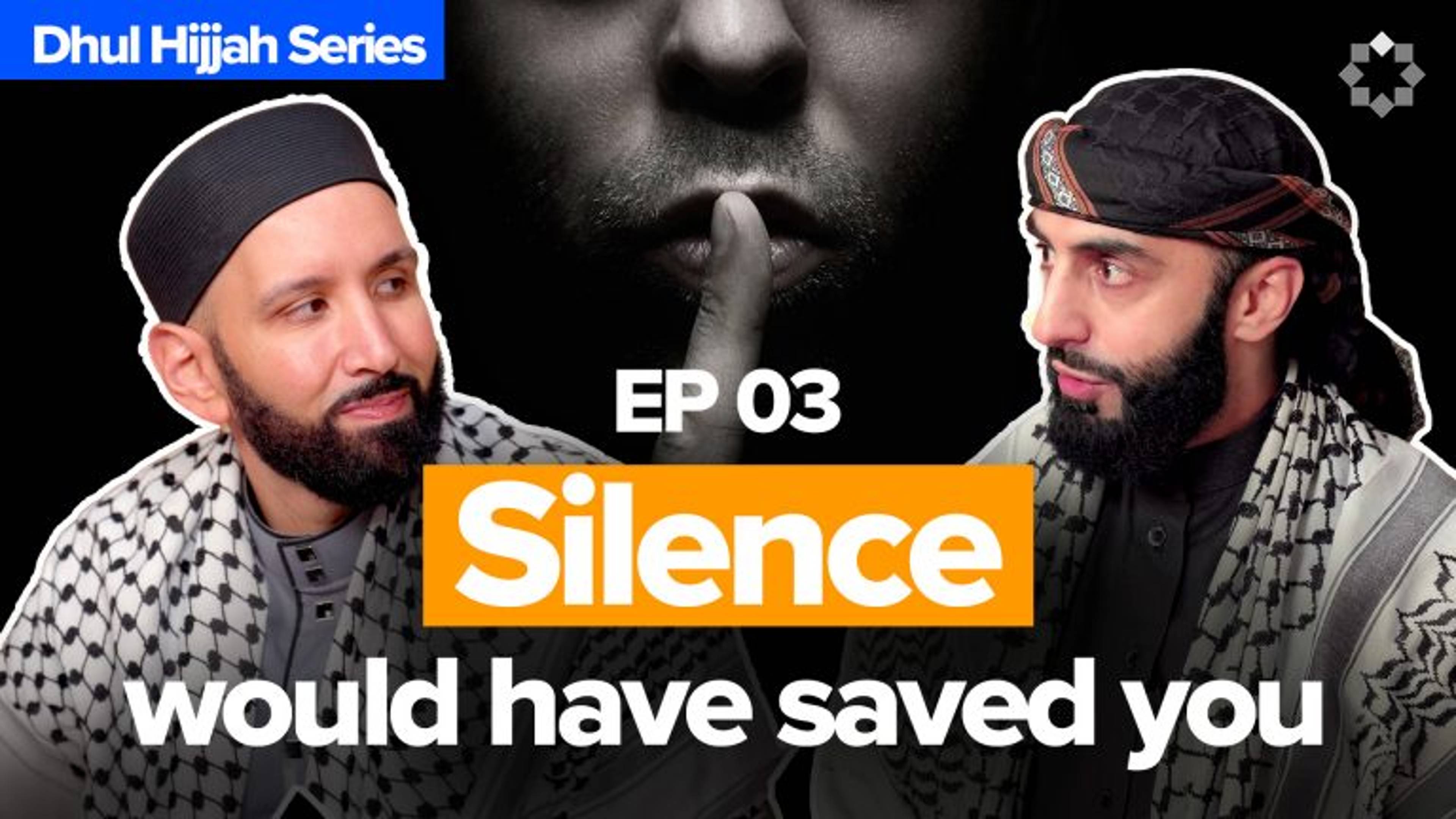
Ep.8 How to Have Jannah Pray for You | Dhul Hijjah Series | Dr. Omar Suleiman & Sh. Ali Hammuda

The Book of Heart Softeners Dhul Hijjah 2026

Ep.8 How to Have Jannah Pray for You | Dhul Hijjah Series | Dr. Omar Suleiman & Sh. Ali Hammuda
This transcript was auto-generated using AI and may contain misspellings.
00:00Life is a creation, death is a creation. So that thing that lurks in the corridors of every hospital, terrorizes people on the battlefield,
00:16visits people in their car crashes, may Allah protect you and your family, that idea of death appears on Yawm al-Qiyamah in other narrations.
00:26The description is death will be brought in the form of a black and white speckled ram.
00:35That this is not a moment, this is now who you are, this is the life that you've constructed for yourself, this is what you are going to live in and live with forever now.
00:56Bismillah wa alhamdulillah wa salatu wa assalamu ala Rasulullah wa ala alihi wa sahbihi wa man wala. Ibn Umar radhiallahu anhuma qala, qala Rasulullah salallahu alayhi wa sallam,
01:08idha saara ahlul jannah ila aljannah, wa ahlul nari ila alnaar, ji'a bilmawti hatta yuja'ala bayna aljannah wa alnaar.
01:18The Prophet salallahu alayhi wa sallam said that when the people of paradise have entered into paradise,
01:23and the people of the fire have entered into the fire, death will be brought between them and placed between the fire and paradise. Thumma yudhabah, and then it will be slaughtered.
01:37Thumma yunadi munadin, ya ahlul jannah la mawt, ya ahlul nari la mawt. And then it will be called out, O people of paradise, there is no more death.
01:51And O people of the fire, there is no more death. Fayazdadu ahlul jannah farahan ila farahihim, wayazdadu ahlul nari huznan ila huznihim.
02:04And so as a result of that, those who have entered into paradise will be increased in their joy. And those who have entered into hellfire will be increased in their grief.
02:15Subhan'Allah, there is this concept of, you know, you only get one chance to get this right in this journey. There is no turning back. At this point now, the consequence is there, and there is no turning back.
02:27But Shaykh Ali, just take us through the vivid imagery of this, and what this means for us. Alhamdulillah wa salatu wa assalamu ala Rasulillahi wa ala alihi wa sahbihi man wala.
02:39A question that we will all be wrestling with at some point or another in our lives is one of two. Let's begin with the first. What does forever actually mean?
02:50You think about something that is continual on and on and on with no hope of it ending or you emerging from the situation that you're in. What does it actually look like in reality?
03:03When we say forever or khuld, eternity, this is not a pain that eventually numbs or a love that begins to fade
03:16or a difficulty that slowly disappears or a prison sentence, but with parole. That's not forever.
03:23Forever is the idea of a door being locked from the inside out with no hope of that door ever opening again.
03:32Today, our understanding of how we engage with death is more of an experience. You see from our wording how we talk about death.
03:43It's almost like it's an abstract idea that takes us by surprise. So somebody dies and it was just an unexpected moment.
03:53So death is an unexpected moment or death is a tragedy or death is something that came early or death is something that separated me from a person that I love.
04:05That's how we engage with death today. On Yawm al-Qiyamah as what Shaykh Omar just read for us, this idea of death which is abstract in our minds to some extent is given a living form.
04:19So death as we know it today or as we should know it today is actually one of Allah's creations. We're not talking about the angel of death whom we all accept and are familiar with. We're talking about death itself.
04:33Al-mawt is a creation of Allah. That's how Allah speaks about it in the Qur'an. What does He say? الَّذِي خَلَقَ الْمَوْتَ وَالْحَيَاةَ لِيَبْلُوَّكُمْ
04:45He was the one who created death and life. Life is a creation. Death is a creation.
04:52May Allah protect you and your family. That idea of death appears on Yawm al-Qiyamah in other narrations.
05:04The description is كَهَيْئَةِ كَبْشٍ أَمْلَحَ Death will be brought in the form of a black and white speckled ram.
05:14And it will be situated on a fence between paradise and hell. And an announcement will be made to the people of Jannah. O people of Jannah.
05:28هَلْ تَعْرِفُونَ هَذَا فَيَشْرَئِبُونَ وَيَنظُرُونَ They will crane their necks when they are called. And they will look. They will be asked, do you know this? And they will say yes, this is death.
05:41At this moment, the people of Jannah have been situated with their spouses and they're drinking from their wine. And they're seeing pleasures that no mind could ever fathom. But there's something in the heart that lingers, that itches at them.
05:55Will I ever be in a situation where I will be out of this? Will this continue forever? Is this a call where everything is going to come to a grinding halt?
06:08Do you know this? And they will say yes, this is death. And then the second announcement, يَا أَهْلَ النَّارِ O people of the fire. The other narration says,
06:23فَيَشْرَئِبُونَ وَيَنظُرُونَ They will crane their necks and they will look. And at this point, the screams of the people of hell would be echoing all throughout the universe. Having experienced pain that no words could really capture.
06:35When there is a hope in their heart, maybe this is the announcement, maybe this is the relief, maybe this is the news that we will be exiting, maybe it will all come to an end. Do you recognize this?
06:49And they will look and they will say yes, that is death. And then it will be slaughtered. What has been slaughtered, brothers? Death has been slaughtered.
07:01And then it will be said, يَا أَهْلَ الْجَنَّةِ خُلُودٌ فَلَا مَوْتٌ O people of paradise, it is now eternity, no more death. And O people of hell, this is eternity, there will be no more death.
07:12The fear of disappearing from Jannah, alhamdulillah, will disappear from their hearts. They will celebrate. And the hope of ever emerging from the hellfire,
07:24this horror, this nightmare of coming to an end, that will also disappear from their hearts. And that is why the Prophet ﷺ, he recited the ayah from the Qur'an, which confirms this meeting after he mentioned this hadith,
07:38and he recited, وَأَنذِرْهُمْ يَوْمَ الْحَسْرَةِ إِذْ قُضِيَ الْأَمْرُ And warn them of the Day of Regret, when the matter will be decided. That is the moment of regret. Warn the people of the day of regret.
07:51إِذْ قُضِيَ الْأَمْرُ When the matter will be decided. وَهُمْ فِي غَفْلَةٍ But now they are in a state of heedlessness. وَهُمْ لَا يُؤْمِنُونَ And they are refusing to believe. And al-Tirmidhi, he narrates on the authority of Abu Sa'id,
08:03that the Prophet ﷺ, he said, وَلَوْ لَأَنَّ اللَّهَ قَضَىٰ لِأَهْلِ الْجَنَّةِ الْحَيَاةَ وَالْبَقَاءَ لَمَاتُوا فَرَحًا
08:11وَلَوْ لَأَنَّ اللَّهَ كَتَبَ لِأَهْلِ النَّارِ الْحَيَاةَ وَالْبَقَاءَ لَمَاتُوا أَسَفًا
08:19He said, if it wasn't for the fact that Allah has decreed that the people of paradise will live forever, at that moment of the announcement,
08:31they would have died from happiness. And if it wasn't for the fact that Allah had decreed for the people of hell that they will endure and live forever, at that moment they would have died from misery.
08:43Subhan'Allah Shaykh, there is this idea that you want to know that what you're working for is real and worth it. That you're investing in something that's real.
08:54And this is the promise of Allah. وَعْدَ اللَّهِ The promise of Allah means that the one that is working for an unseen reward knows that the unseen reward is greater than anything else that he sees right now.
09:06وَعْدَ اللَّهِ When you say the promise of Allah, the oppressor should shiver and know that the unseen punishment that awaits you will make any pleasure that you derive from your oppression not worth it.
09:19وَعْدَ اللَّهِ And there are so many times in the Qur'an that you come across an ayah that has the opposite effect on people based on their circumstances. وَلَا تَحْسَبَ أَنَّ اللَّهَ غَافِلًا عَمَّا يَعْمَلُ الظَّالِمُونَ
09:33Don't think Allah is unaware of what the oppressors do. The oppressed hears that and finds relief. The oppressor should hear that and find fear that I will be caught.
09:43I will be compensated, I will be caught. And so the fact that the single act of death being killed has such an opposite effect on people is really something.
09:56But I want you to remember something very important here that there are two things that will happen in this moment on the Day of Judgment that will make it all worth it.
10:08Number one, the intensity. The intensity of the experience. I don't know if any of you have ever had like a cold plunge, right? The intensity of the experience.
10:21So when the Prophet salallahu alayhi wa sallam says that on the Day of Judgment the person who had the most difficult life will be dipped into paradise one time and asked
10:31هَلْ رَأَيْتَ بُؤْسًا قَطّ Have you ever seen any hardship? Have you ever seen any misery? And that one plunge into paradise, that dip,
10:43I don't even know what hardship is anymore. I don't even know what sadness is anymore. I don't even know what sadness is anymore. The intensity of the plunge, the intensity of the experience will make it all worth it.
10:55The heat of this world will all go away. On the other hand, the Prophet SallAllahu Alaihi Wasallam said that a person who has a very easy life will be dipped into hellfire one time. Have you ever seen any happiness?
11:08I don't even know what happiness is. I don't even know what joy is. So the intensity of the experience and the longevity of the experience is that this is not a moment.
11:20This is now who you are. This is the life that you've constructed for yourself. This is what you are going to live in and live with forever now.
11:31And so temporary choices become permanent realities. Temporary life becomes eternal life. And that's something that you're starting to grapple with
11:42as you're entering into that new dimension, that this is forever. And there are moments in the initial phases here where you're wondering; that feeling is there.
11:52In fact, Allah Azza wa Jal tells us about this moment in the Qur'an where someone actually realizes, "Afa-ma nahnu bi-mayyitin?" "Wait a minute, we're not going to die again?"
12:05"Like this is for real and this is forever?" This is for real and this is forever? "Illa mawtatana al-ula" "Except for the first death?" "And we're not going to be punished?" "Inna hadha la-huwa al-fawzu al-adheem."
12:19"Verily, this is the great success." Like this is it. This is for real and this is forever. Temporary choices become permanent realities. You only get one chance to get this right.
12:32That is a serious reality. And so temporary joy becomes permanent and regret becomes eternal. And this is where we have to ask ourselves,
12:44where do we want to find ourselves on that day? They say that the key to success in the future is being able to envision it in the present to the point that you can work for it
12:57as if it is the present. You can see it play out. This is where I want to be in 10 years. I can see myself in 10 years in this place. I've already played it out.
13:05Like in the sense of worldly victory. It's like Nur ad-Din Zengi, rahimahu Allah ta'ala, having a minbar that he built for Masjid al-Aqsa even as the Crusaders were demolishing the Muslim world.
13:17The one that Salah ad-Din, rahimahu Allah, will put back in Masjid al-Aqsa. May Allah Azza wa Jal liberate it once again. Like you have envisioned it. Like one Shaykh told me, he said, I told my kids,
13:27pick out the outfit that you will wear for the day that Masjid al-Aqsa is liberated for our celebration.
13:32You got your Aqsa thawb ready. You have your moment ready for that. Like I can envision that future so vividly that it makes me work for it in the present in a very inspired way.
13:45So temporary choices become permanent realities. Shaykh, I have to ask you, a doubt that comes to people's minds: eternal punishment, right?
13:57We are between Allah's mercy and Allah's justice. When Allah talks about His grace, "jaza'an min rabbika 'ata'an hisaban," that verily it is a reward from Allah Subhanu wa Ta'ala and it is expansive. It is far beyond anything that you deserved.
14:12When Allah talks about punishment, "jaza'an wifaq," it is exact punishment. So you are between the mercy and the justice of Allah on the Day of Judgment. How do we deal with the concept of justice from this hadith?
14:22Yeah, so the common question is, to really reframe it: is the idea of an infinite punishment as a consequence of a finite sin.
14:33So this person will say, I disobeyed Allah Almighty for X number of years. It can be quantified. How does that necessarily tally up with an eternal punishment?
14:43Surely I should be punished according to the duration that I rebelled against my Lord. That would seem to be just or fair.
14:52First of all, let's frame this or answer this under several subheadings. The first of them could be that justice, according to the Qur'anic narrative, cuts both ways.
15:04It's a door that swings in both directions. But we focus on one more than the other.
15:10So in the case of Hell, yes, the Qur'an speaks at least in three places: "khalideena feeha abada," they will stay in it forever.
15:20And the Qur'an says, "khalideena feeha madamat al-samawati wa-al-ard," they will stay in it so long as the heavens and the earth endure. That's an Arabic expression to say: it's "li-al-ta'bid," it is forever.
15:34But hold on a minute. Is it just the punishment of the sinners that stays forever? Or is it also those who do good? Paradise is also forever.
15:44So the consequence of our morality is not hinged purely upon an eternal punishment. It stands on equal footing; there is also an eternal reward.
15:54So why is it, just before we get into any other answer, that we will focus on the question of why should they suffer forever, instead of the question of why should I enjoy paradise forever?
16:04Because the latter suits us. It's great to be in paradise forever for part-time worship, but the other one, it's a little bit more difficult to understand.
16:13So that's the first thing. It's a door that swings both ways and eternity stands on equal footing. That's number one.
16:20The second is that there is the concept of the gravity of a crime over the duration of the crime itself.
16:29In every courtroom in the world today, no one will say that a person's punishment should equate to the duration of the crime.
16:37So a murder that may take 45 seconds—no man will ever say, no judge will ever say that you should be in prison for 45 seconds because that was the duration of the crime. But rather he would look at the gravity of what had happened.
16:51And if that crime necessitated, for example, the taking away of a soul, then we have no qualms with this person spending the rest of his life in prison.
17:01And many people would also have no qualms with this person being executed for his crime. That's a permanent consequence, a permanent worldly consequence. He's lost his life forever.
17:12For what? For a crime that may have cost him one second of his life. So now when you look at shirk and you assess it through this lens of gravity, shirk is not just an innocent misunderstanding.
17:25Shirk is a rebellion against your own design. Shirk is to go against the Creator of the heavens and the earth, the consequence of which ripples beyond imagination.
17:38So of course the gravity of this cannot be compared to any other crime. That's framing number two: gravity over duration. The third is the aspect of warning that precedes accountability.
17:51It's not like we're being caught by surprise. Allah has codified it in the Qur'an. This is what you expect. So you may see it as harsh, but is it unjust? The answer is no. I'll give you a worldly example.
18:05Imagine if there is a country that says if you're caught speeding, you're going to be charged 10,000 pounds or $10,000. Okay, is that harsh? Yes, it's harsh.
18:19Is it unjust? You cannot argue that it's unjust because this is for the welfare of the community and more importantly you've been warned, you've been told, don't speed.
18:31Now if a person speeds and he's within a country that says there is no penalty for speeding and so the officer stops him and he takes from him 50 pence, 50 cents.
18:45Is it harsh? No. But is it unjust? Yes. Why? Because it wasn't codified. It wasn't mentioned. No one was forewarned.
18:56And that is why Allah sent messengers all throughout the generations to warn people. "Wa-ma kunna mu'aththibeen hatta nab'atha al-rasul."
19:05We would never punish a people, Allah said, till we first send them a messenger to communicate the law. So no one can claim that they were caught off guard.
19:15And then you have the fourth framing which is Allah Almighty knows that the state of that person, had he been given many lives, he would commit the same sin and choose the kufr or shirk again and again and again.
19:30So yes, he may have rebelled against Allah Almighty for 70 years, 100 years, but Allah knows that this is not just a temporal behavior. That's a state of being that he has become.
19:42So should he have lived for another thousand years or a million years, it would be the same outcome. And the Qur'an says this explicitly.
19:55"If they were returned to the life of this world, they would go back to their original crimes." So this is not a person's crime per se that is being punished. It's a state, a person, a being that he has become and there was no hope in this individual.
20:08And finally, I will say, Shaykh Omar, is this: In light of what has happened in Gaza, sometimes there are certain shocks that happen to our system
20:19that really return the rhythm of life back to our fitrah, our natural disposition. Sometimes we overcomplicate things and we overintellectualize things
20:30and we meet with people with corrupt ideas or we read or watch things that we should not have watched or simply stay in a place for a long time and our hearts become rusty and what used to be yesterday a certainty now becomes a doubt.
20:44Then guess what happens? Now that the fitrah, the natural disposition has changed, then a shocking event happens in Gaza. And a genocide of a horrific scale, a community livestreaming their killing
20:58and we have seen death by every conceivable way. All of a sudden, the heart wakes up again and it finds its rhythm and all of the rust disappears
21:12and what used to be an over-sophisticated concept now becomes very understandable and all of a sudden, nobody is asking about why the criminals should be punished forever.
21:23In fact, when we see the type of behavior that was exacted on our brothers and sisters there in Gaza, we see that there isn't a punishment sufficient for them except eternity in Hell.
21:35So I hope with these five points, this can give us some perspective, some type of balance as to how to understand and to submit and to accept and be pleased with the messaging of this hadith:
21:48that khulud, eternity, is a reality. I would only say, Shaykh, to that beautiful framing, similar to what we said last time: where you find yourself unable to come up with an answer,
22:00resort back to the names of Allah, resort back to the attributes of Allah. You will not be more just than He who named Himself Al-Adl, the Just.
22:10You will not have more mercy than Al-Rahman, the Most Merciful. And so all you have to do is to say: no one will be in Hellfire except someone who deserves to be in Hellfire, period.
22:24And that should suffice me. No one will go there for any moment longer than they deserve to be there, and the One who is making that judgment is far more just and wise than I am.
22:37And so I can only hope to exert myself to where I don't find myself in that category. And that's it. And Alhamdulillah, when you do that,
22:46you remove from yourself so many of these things that can disturb and bother because Allah did not task us with individual judgments. Allah subhanahu wa ta'ala gave us consistent rules
22:58and then a road map to success within those consistent rules. So, may Allah grant us eternal success. Insha'Allah ta'ala we'll take questions. Sheikh Omar, you mentioned that when death is slaughtered,
23:11the people of Jahannam will increase in despair because they'll know they're out of time. Are there any cases of hadith where despite being out of time, the people of Jahannam are still saved and join the people of Jannah?
23:23There are multiple ayat and hadith and sayings that confirm the idea that there will be some people that go to hellfire for a period of time and then come into paradise.
23:34And we will talk about one very specific example insha'Allah ta'ala in the next hadith. But that's the idea of Allah's mercy surpassing His wrath. No one goes to Jannah and then comes out.
23:48Many people go to Jahannam and then come out. So, that's Allah's mercy surpassing His wrath. There are people that will spend a time in hellfire and then they will come into paradise.
23:59Now, when they enter into paradise, bi-idhnillahi ta'ala, at that point, just like the person that took the cold plunge, the paradise plunge, they'll forget all of the pain that they had in hellfire.
24:11But the question is, do you really want to go to hellfire even for one day? Or even for a moment? Don't have this lackadaisical attitude towards Jahannam.
24:26They said, we'll only go to hell for a few days. That attitude is a terrible attitude. And we know that when we usually downplay a consequence, what happens? We end up taking a greater share of it. Even in a worldly sense, right? What's the worst that could happen?
24:40It happens and it's usually more. So, if you approach it and say, I don't want to enter hellfire even for a moment. And then you have husn al-dhan in Allah, a good assumption of Allah.
24:53And then you strive to please Him. And you seek forgiveness for your shortcomings. Then, we have hope that Allah 'Azza wa Jall will enter us into paradise without any form of punishment, without any form of accountability. And the Prophet, sallallahu alayhi wa sallam, said,
25:07whoever asks Allah subhanahu wa ta'ala for Jannah three times, Jannah says, O Allah, enter him into me. And whoever asks Allah subhanahu wa ta'ala for protection from the fire three times,
25:18the fire, that creature, what would make that creature that cranes its neck out on the day of judgment, that huffs and puffs and roars and stalks its occupants,
25:30say, O Allah, don't enter him into me. 'Antaq Allah, Allah is the one who made us speak. Allah would cause that vicious hellfire to say, O Allah, don't enter him into me.
25:43So we ask Allah subhanahu wa ta'ala for Jannatul Firdaus. We ask Allah for Jannatul Firdaus. We ask Allah for Jannatul Firdaus without any form of accountability and any form of punishment. We ask Allah to protect us from the fire.
25:56We ask Him to protect us from the fire. We ask Him to protect us from the fire. Allahumma ameen. Jazakum Allah khair. Al-Fatiha.