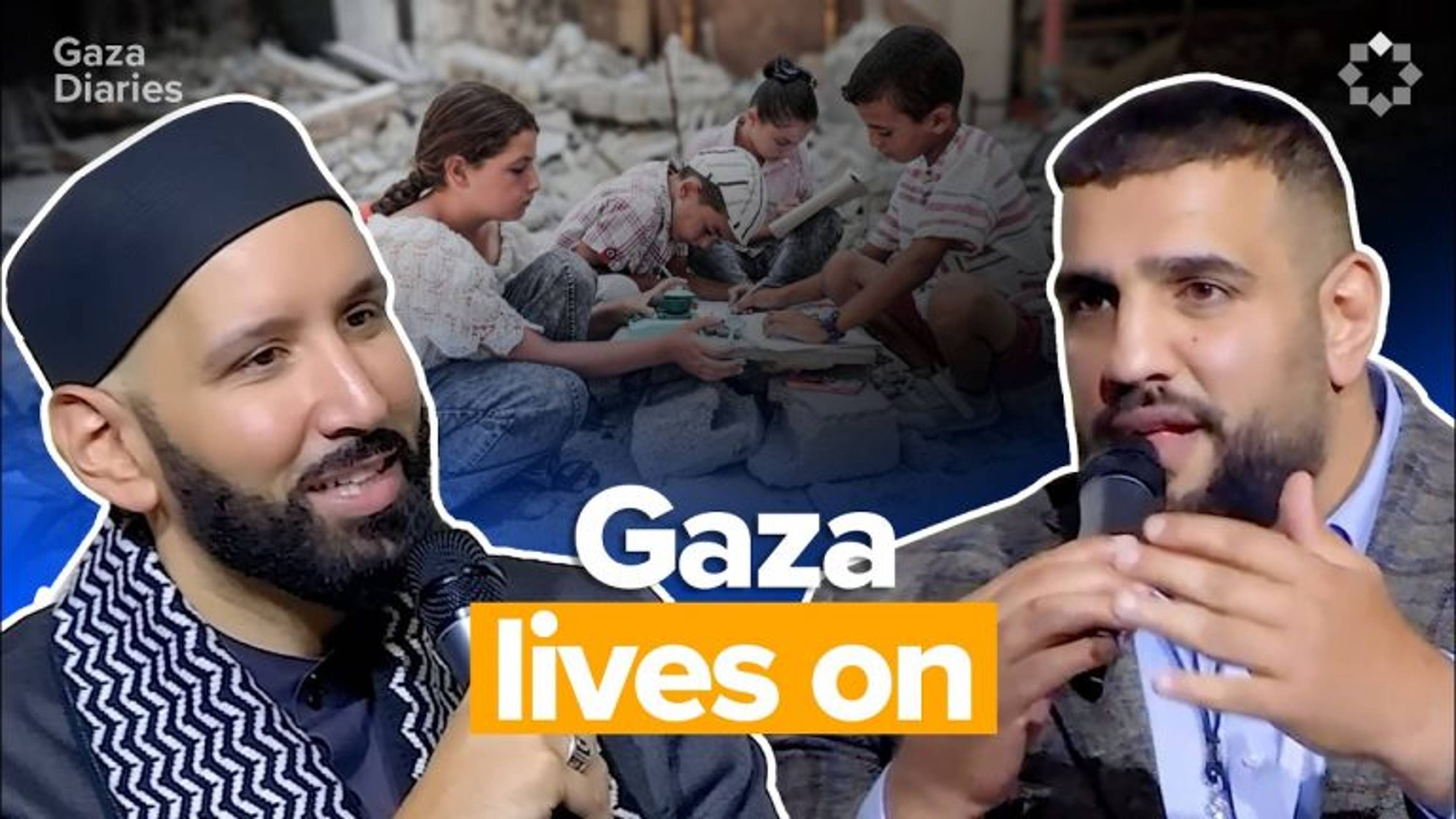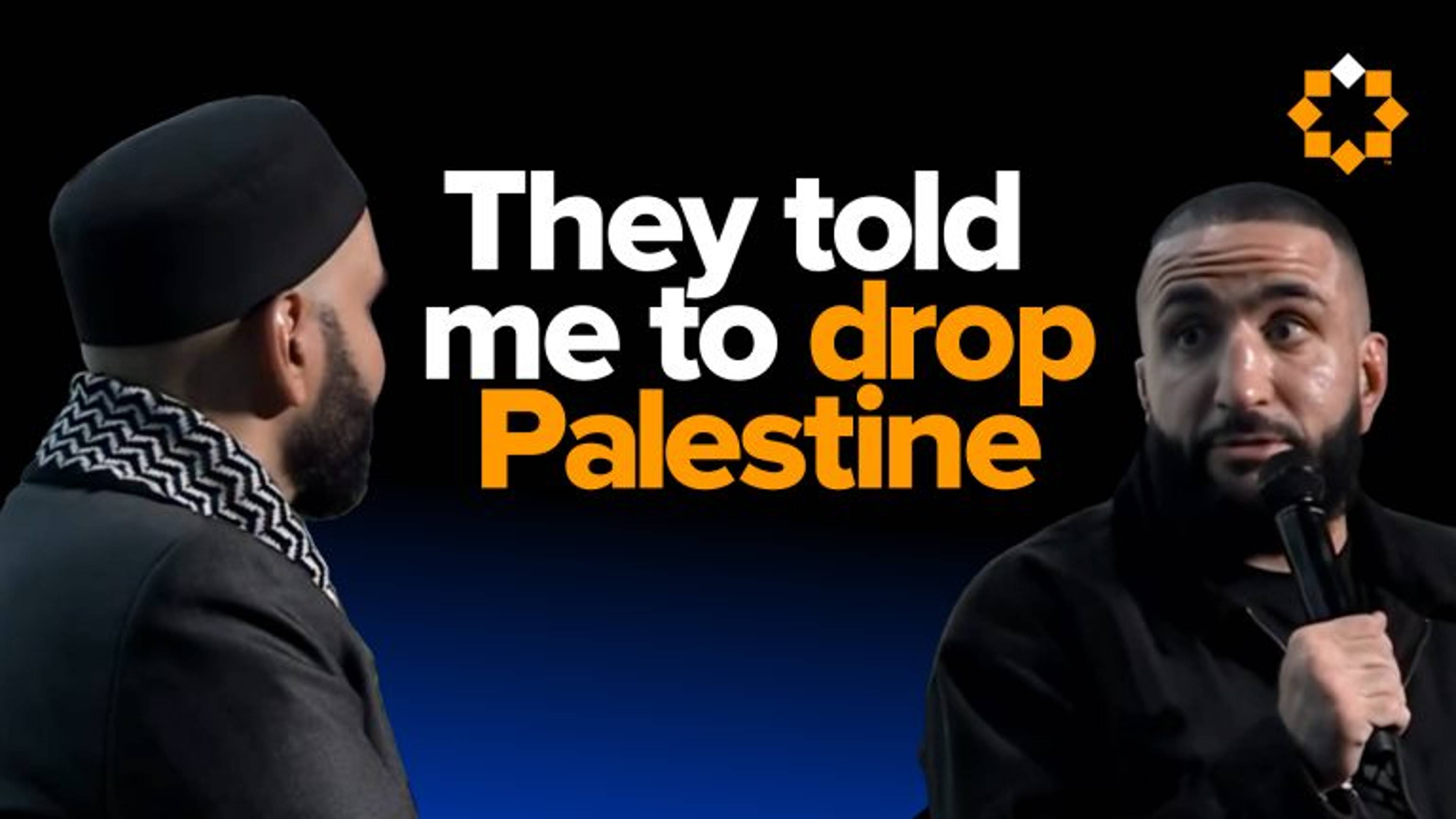
Gaza Diaries with Dr. Omar Suleiman
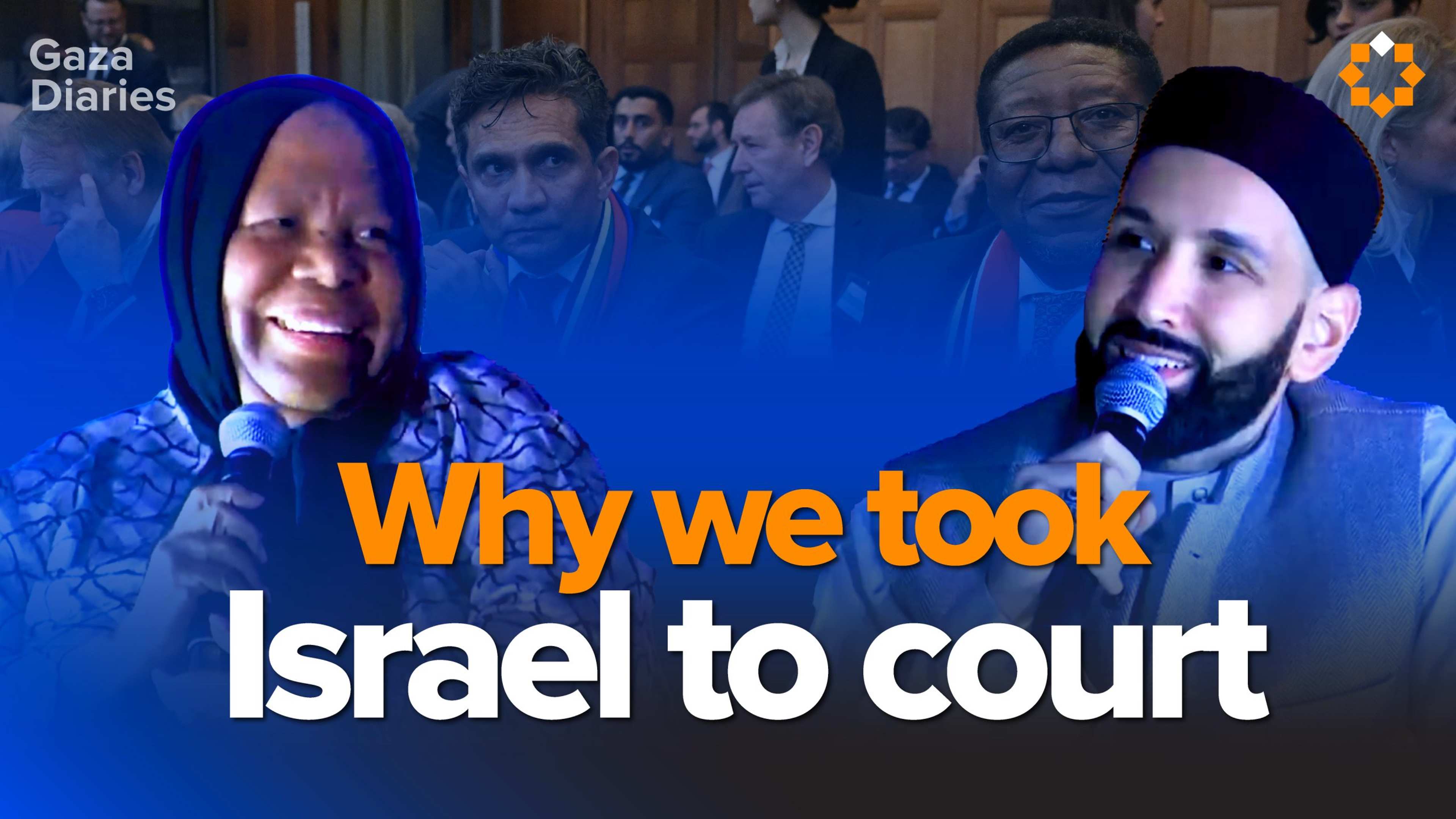
The South African Minister Who Took on Israel | Dr. Naledi Pandor | Gaza Diaries with Dr. Omar Suleiman
South Africa’s former Minister of International Relations, Dr. Naledi Pandor, became the face of the ICJ case accusing Israel of genocide. In this conversation with Dr. Omar Suleiman, she explains why South Africa took that stand, how faith shaped her response, and what international solidarity truly means.
From confronting false media narratives to receiving death threats, Dr. Pandor reflects on the personal and political cost of speaking out—while urging Muslims to reclaim their moral leadership and global influence. What does it mean to act with Iman when the world chooses silence?
This transcript was auto-generated using AI and may contain misspellings.
00:00As-salamu alaykum wa rahmatullahi wa barakatuh. Bismillah walhamdulillahi wa salatu wasalam ala rasulillahi wa ala aalihi wa sahbihi wa man
00:12wala. Honorable ulema, leaders in the community in South Africa, may Allah bless you all and
00:20honor you. Honorable Minister Pandor, may Allah bless you, elevate you and raise you
00:30in the ranks of the heavens. Everyone say ameen. I want to begin by expressing my personal gratitude on behalf of every Palestinian that watched you stand up for us. You have no idea
00:44what it meant to see a diplomat stand in front of the world with a voice that did not
00:53shake, with principles that were not watered down, to speak to the full rights of the Palestinian people to live with honor and dignity. May Allah bless you. Thank you. Thank you. Thank
01:06you. Jazakumullah khairan. So since it's a fireside chat, I'll make two confessions. The
01:17first one is that my father is rarely proud of anything that I do, at least he doesn't show it that way. He was born five years before the creation of the State of Israel. He was born in
01:31a free Palestine, he was born a Palestinian, he's one of those that likes to remind the Zionists that he is older than their state. Usually, when he sees things that I'm doing, or
01:44asks about the events that I have, I don't hear much excitement. But when he saw that I had met you a few months ago, I actually heard excitement in his voice. And that to me was a testament to
01:59what you have meant to the Palestinian cause and what you represent of those that have stood up in the International Court of Justice on our behalf. Walid Dahduk, the famous journalist who has lost
02:13members of every generation of his family. I precisely remember going to see him after meeting you, and him making du'a for you and supplicating for you, just out of the nature of his heart, when
02:27he heard that I had met you. The second thing is, and this is a confession. When I first saw you
02:35on TV, speaking the way that you were speaking, inside of myself, I said, I wish she was Muslim. I
02:47had no idea you were Muslim. And that's due to my ignorance. And I thought to myself, SubhanAllah, the woman is speaking from a place of Iman. She's speaking from a place of faith. I've met many
03:01politicians in my life. I've met many people that speak and pontificate about righteous causes. And the inauthenticity is almost always immediately obvious. When I saw you speak, I said that is a
03:14woman of Iman. That's a woman of faith. I wish she was a Muslim. And then I saw the video of you
03:22speaking at the Al-Quds Masjid. I said, Alhamdulillah, she's a Muslim. An extraordinary one, I thought, who had already established herself as an extraordinary human being. And I don't want to make you any more
03:36uncomfortable than I probably already have. So I'm going to move on to the conversation now, and ask you, how does faith inform what you do?
03:46As-salamu alaykum wa rahmatullahi wa barakatu. It's a real privilege and honor to have the opportunity
03:57to have a conversation with Dr. Suleiman, because I know everyone in this room is a great
04:05admirer of yours, learns a great deal from you, and follows all the talks and lectures that you
04:14give all over the world. And so, with everyone here, I feel really privileged to be in your presence.
04:24And I wish to begin by saying that it was not just me, it was the government of South Africa,
04:36and dare I say, the people of South Africa in their majority, who went to court.
04:48I say this because I have somewhat become a beneficiary of being the public face
04:56of the case to the ICJ. But it was a decision of the government, and I acted and spoke on behalf
05:06of the government. And so it is that whole collective that must be recognized.
05:13I also say this because I know gathered in this room, there are fighters for human rights
05:24that I admire greatly. Individuals who went to prison, some who were tortured when we were
05:33engaged in the struggle against apartheid. I saw, for example, the esteemed judge of the
05:40I saw, for example, the esteemed judge, I don't know if he's here. There he is, a great freedom fighter, human rights lawyer.
05:53And there are many others that I could name. But I think that to answer your question,
06:04my understanding of Islam is that Islam is a directive as to how we are expected to live our
06:12lives. So in a sense, Islam provides a roadmap. And for me, having embraced Islam late in life,
06:23I have come to believe very strongly that because of the influence of the values and principles
06:38that are associated with the faith, one cannot but speak to live a different life.
06:49So I don't know how to say it, but it's the human faith. I think for me, I was
07:01able to embrace Islam because it made me a person I could attach, you know, I could
07:13act, I could recognize. So I think essentially really what influences one is the hope
07:24that by living this life, you live to try to be better. Also, very, very influential to me
07:35is out of the experience of racism and the experience of apartheid and having lived in a political family and then grown up outside my country with the aspiration
07:50to one day be back in a free South Africa. I've always held a belief in fairness.
07:59I believe in fairness, that everyone should have an opportunity, that no person,
08:09because of a particular characteristic, should be denied the right to all that the Almighty
08:17offers to us. And so that belief in fairness, in equality, is a major, major influence in my life
08:30because I have seen what lack of fairness can do. I recall an incident in our parliament
08:39where after the October 7th attack by Hamas, I was called to answer a question as a minister.
08:50And the question was, why am I supporting rapists of children? Because the claim
09:00was that the Hamas fighters had raped women and children in the course of their attack.
09:08Of course, this was false news and I had followed this allegation and it actually
09:17had been indicated to me that it was a lie. And so I replied to say that it's a lie in parliament.
09:26So the gentleman chose to follow up by asking me, what is my concern with Palestinians?
09:35We've got poor people in South Africa who suffer poverty, inadequacy, and great harm,
09:45especially women, with violence. Why then look outside our borders? Unfortunately, the gentleman came from a group in our community, in our country,
09:58in our country who are beneficiaries of apartheid. So I reminded him, you know why you are free?
10:09You are free because we fought for you to enjoy freedom. But it was not just us. We were joined by the people of Palestine in that fight. And so while we enjoy our freedom,
10:24we have an obligation to those who recognize the inhumanity of apartheid to join in their fight
10:35against injustice and oppression. Well, he didn't have any follow-up question after that.
10:42So I hope I'm answering your question. But that, in a sense, addresses how my faith
10:54influences the way I conduct, I hope, myself. And I'm by no means perfect. Everybody's very kind. You all say very nice things to me, but I'm a very cheeky person and I cause a lot of trouble
11:08and I need to. But what you said is actually very beautiful because it stems from a hadith of the Prophet (ﷺ), that people are like precious stones. The best of you in the
11:20days of ignorance are the best of you in Islam, if you have understanding. And that is to say that there are noble people who naturally find themselves in this noble faith and the qualities
11:31and the values that they already held strong to that emanate from a natural disposition that is godly towards mercy and justice are only further polished and refined through Islam. And what you
11:42said very much so aligns with that narration. I want to actually pick up on the second part, which is human solidarity and being able to build connections between struggles.
11:56One of the great tragedies of the digital age, the social media age, is that what was meant to forge a connection has in many ways caused people to hunker down into their individual
12:09identities and to isolate themselves into their echo chambers and to separate their needs and their wants and their struggles from everyone else. One of the powerful elements of the
12:23Palestinian cause is that it has always found itself connected to broader causes, legitimate
12:32causes, against oppression. I recall in Ferguson in the United States that the activists in Ferguson
12:40that were striving against racist police officers that were trained by the IDF spoke about how they took tips from Palestinians on how to wipe their eyes from tear gas and deal with the occupational
12:54forces as they moved in on their protests. I recall multiple instances where people like the great
13:04Nelson Mandela, Madiba, mentioned that our freedom is incomplete until the Palestinians are free.
13:11I had the chance to go to Ireland and to see deeply the way that people genuinely connected
13:20to the Palestinian cause and saw their liberation as inherently tied to the liberation of the Palestinians. Some of the most heartwarming images that I've seen in the last two years
13:32are Palestinians making videos and drawing murals for the people of Sudan and the Sudanese in the midst of their forgotten devastation and genocide, drawing murals and expressing solidarity with the people of Gaza.
13:48How do we break this cycle of isolation and get more people to indulge that spirit of empathy that shines from the sunnah of the Prophet Muhammad (ﷺ),
14:02and that we find in some of the examples that we've mentioned. Well, I think it's difficult, but one of the first things we need to set aside is our desire
14:17for material goods. I think we've become very individualistic as a society. I mean, the question that MP asked me, other South Africans ask me as well sometimes in the street.
14:33So a young person in a dinner like this, they were having a question and answer session, and as I walked into the door, I heard this young lady say,
14:48what does Palestine have to do with us? We mustn't be idealistic. South Africa is suffering from low growth. We should focus on South Africa.
15:04I almost went to grab the microphone. Fortunately, I was sufficiently polite to go and take my seat. But afterwards, I had a conversation with her, and it went along the lines of,
15:19if the world did not believe in idealism, we would not have overcome apartheid. To fight evil, you must believe in good, and even beyond good, you must seek out
15:34from all human beings an attachment to the interest of others. The international solidarity that South Africa achieved through its liberation movements
15:48in support of the struggle against apartheid was of such a character that it was a great achievement.
16:00That eventually, apartheid could be described, the apartheid state could be described as a pariah internationally.
16:13It was a shame to admit you were a white South African, eventually. And it was because of international solidarity.
16:25The greatest prize that the Israelis want is respectability. And they get it from this impunity that we have granted them, from the horrific experience of the Holocaust.
16:46But a mistake has been made by humanity. Because we've almost created a notion that because you experience something bad, you can do all that you wish unto others. This is wrong.
17:00And I think what we need to do is begin to talk more and more about a common humanity and about how we strive together in the interest of others.
17:15I'm very excited at the moment. I'm exhausted, but I'm excited. I'm being invited all over the world to speak on Palestine.
17:28I keep asking myself, is it the right thing for me to do? Because I'm not a Palestinian. But when civil society in Norway says come, when civil society in Slovenia says come, when an organization in Berlin, do I say no? Do I say yes?
17:51The fact that that is happening means this notion, this concept of international solidarity is beginning to get a hold, is beginning to achieve traction.
18:07And I believe South Africans, as the people who crafted the concept and emphasized it to its almost perfect realization, they, you, have an important obligation to share with the world the notion of international solidarity.
18:33And to say to all those who support the just cause of the people of Palestine, that when we march after Jumu'ah, are you marching too? All of us must march.
18:49When we stand with a picket on a Monday at the embassy of those who are arming Israel, do you have a picket? Let us do it together. You take your image, we'll send you our image, we are beginning international solidarity.
19:12There should not be any sense that it is enough that we protest. The satisfaction must come from the reality that we have joined with the world to stand up. And you will see it will not just be us, it will be everybody.
19:34We must grab onto the good. Our problem today is we have allowed evil to run rampant all over the world. And I believe we as Muslims, we have the opportunity now, with our role in the struggle for the people of Palestine, to restore the notion of good to the world.
20:00And I hope we continue to play such a role in struggle. Insha'Allah.
20:35Or your participation in this symbolic protest is going to substantively change the way that apartheid functions. Do you really think that you can overcome this monster through this BDS movement, through the Boycott, Divestment, Sanctions movement? You're deluded. It means nothing.
20:59You can see even in the Muslim world that there will be flare-ups where the boycott will last for a few weeks, a month, and then people will move right back on and go right back to consuming the very same products that they said that they would not in the initial phases because it factors into an overall sense of pessimism that we're not really making any changes.
21:20That we're fooling ourselves. That this is almost a form of self-medicating therapy. That we convince ourselves that we're doing something effective, but we're not actually doing anything effective.
21:36That pessimism has taken hold more so after the genocide. That who are you fooling? What are you actually achieving? And you can hear the cynicism and the pessimism and the deflation even in the voices of people that have been committed that what are we really achieving?
21:55We often remind people that Algeria put forth millions of martyrs in fighting the French colonialists. That South Africa was a decades-long struggle. That these struggles are centuries in the making at times.
22:15What do you say to the young person that comes up to you right now and says, is it really working? Will there be anything left of Palestine to salvage when it's all said and done? Are we moving at a pace that's sustainable, that's impactful with the aggression being as unprecedented and as unchecked as it is at the moment?
22:40Well, there's Dr. Khamisa here who will tell you in science, every action has a reaction. And I think to do nothing would be a real problem. So what we need to focus upon is the sum of many small parts.
23:01I think BDS is important. I think work through the UN system is important. I think linking with civil society is critical. We have neglected, for example, working more closely with trade unions, which was something South Africa did.
23:20So I think one of the things we need is we should convert some of our deliberations and meetings into political education campuses.
23:36One of the former prisoners of Robben Island, he was telling me yesterday, Dr. Bidwan Rylands, about how as prisoners they converted the prison, Robben Island, into a university.
23:55So I think political education is important. Young people sometimes think that because there was negotiation for a few years and then an election in 1994, that the struggle was of short duration.
24:14But it took 82 years before ANC was unbanned.
24:25I think we must recognize that a struggle has many elements and those who participate in it must bring all those elements into play.
24:40For example, we have significant financial ability as a Muslim community, both through Zakat, through Waqf, and other forms of giving.
24:56But we do not sufficiently examine, as a young Palestinian civil society activist said recently, the strategic utilization of those resources beyond relief and aid.
25:13And I think we do have to have meetings where we ask ourselves those questions.
25:21Why is it possible for Zionists to control the national and international messages?
25:33There's a gentleman called Roger or something, who has a YouTube statement about me almost every day.
25:44He says, I'm Hamas. I actually knew about October 7 before it happened, that I'm actually a tool of Iran in South Africa.
25:57And he repeats this every day. I haven't seen any South African responding to him.
26:05And it's not just him. There's another very wealthy South African gentleman who said, you know, Naledi Pandor and her husband, she's doing all those things because of Sharif Pandor.
26:22That is very dangerous, you know.
26:27Just imagine, she went to Iran just before the elections in South Africa last year, and she came back with bags of money.
26:42And we know this because the ANC was bankrupt before she left, and after she came back, ANC suddenly could pay its debts.
26:53Ridiculous. But these stories have currency. There's a publication called Jewish Report. They have something on me every month.
27:05I'm a crook. I'm corrupt. I'm an evil Muslim from an evil Muslim family.
27:14And my son Haroon is this. I mean, every month. You know, I didn't know I would be so famous ever in my life.
27:23But I ask myself all the time, what are our publications? What media do we control?
27:33Speaking to some of our Ummah in the United States of America, I told them we were driving for a seminar I was to speak at, driving an hour outside New York.
27:47And we passed a university, and I saw Ira Einstein Health Institute.
27:55Bernard Bernstein Health Faculty. So and so Jewish name. I didn't see one Muslim name.
28:06Today, freedom of expression is under attack in universities. Where are we in that battle?
28:16So a long reply to a very simple question is I believe we can act in many different ways.
28:26And we must never be pessimistic. And we're not achieving an objective.
28:32We must ask ourselves the hard question. Is our strategy correct, or do we need to adjust?
28:42Interesting that you mentioned prison as a place of education, and we have some of our great freedom fighters here as well.
28:57In many ways, Gaza has been an open-air prison prior to this genocide, and in the process, the greatest universities tend to be the darkest prisons.
29:06And we can see the students of that university and how they've been able to remain steadfast in the face of this aggression.
29:15The question that I have for you is that there's a growing skepticism as well about these international systems of law.
29:24Are we witnessing in the process of the unmasking of the futility of these international systems of law
29:33an opportunity to perhaps remake and reimagine what broader systems of accountability look like?
29:41Is there anything that comes out of working within the ICJ's purview? And does it move beyond protest?
29:51And I guess with that, I'll tag on the question, what's the progress of the ICJ case at this point?
29:57Obviously, we saw the brilliant submission of the case, and there has been an eager wait for the verdict and the potential prosecution of that verdict.
30:11What is the progress of it based on what you know?
30:16Well, certainly I think there is an attempt to marshal unilateral control of the global multilateral system.
30:30The world in the last 30 years has allowed a really terrible unipolarity of a dominance of the United States of America, supported by Europe.
30:46And this has led to a diminishing of multilateral institutions.
30:54We should have been concerned when the first attack in terms of withdrawal of finances happened to the United Nations body.
31:04And this decimation has continued over many, many years.
31:10So I think that the international system is certainly under threat, but I believe we must not allow it to die.
31:21Because multilateralism is critical to us all having a place in the world. In my view, this moment is a moment for the South.
31:33And I'm just nervous that I'm not seeing the leadership of the South standing up and saying we are ready to take up the mantle of leadership.
31:45We should see more political leadership from BRICS, for example. We should see greater unity between BRICS and ASEAN. We're not seeing that in the world.
32:00But this is the moment for the South. What do we do with multilateral institutions? We've argued for many years that it is vital that we reform the United Nations,
32:14but that we retain it as the premier multilateral body.
32:19But we cannot be satisfied with the failure of the United Nations Security Council. It's been dismal.
32:31Again, because it has been dominated by the West. And they've held sway over its ability to make decisions on global affairs.
32:42So I think the first reform is reform the United Nations Security Council. The second is deal with the matter of veto. I don't think five permanent members with a veto should be permitted.
32:57Change the manner of decision-making. I do think you need a Security Council, but the final word cannot be there.
33:09Should there be disagreement, I believe this must be taken to the more democratic space, which is the General Assembly.
33:19So really radical reform of the United Nations, but linked to it, the most terrible failure is the genocide against the people of Palestine.
33:33So I believe as we proceed concretely, because we've been discussing reform for 10 years, two decades,
33:44as we proceed concretely on measures of reform, one of the most important questions alongside the Security Council is enforcement of peace.
33:58Not peace monitoring, enforcement. We need a force that can protect civilians from the harm of genocide that we are seeing in Palestine today.
34:11So those are some of the matters.
34:14I also wish we could see greater strength in independent political positions on the African continent and among the Gulf states.
34:29Great deal of work to be done there to build a political consciousness that recognizes that as Africa and the Gulf,
34:41we offer the world a different set of values and principles, but we have to be more assertive about our leadership through collaborating in leading international institutions,
34:55ensuring we have young people with the capacity to play an effective role in them. So there's work of training as well.
35:04It is true, as I think we had some sense of in the lecture yesterday, that our Iman is absolutely important.
35:16We must know and understand our faith.
35:20But I think faith without the ability to influence the course of humanity is to disappoint our religion.
35:33And so I hope that we will have a leadership, and even our ulema had a wild idea,
35:44that if our leaders all over the world, our MJC, our United Ulema Council,
35:52all of the leaders of our faith could gather in one place and summon every leader of a Muslim-majority country
36:02and ask them, what are you doing? Why are you allowing this? I believe this will be a very important moment for us.
36:15And I cannot imagine if you're summoned by a great mufti, that whether you're a prince or a king, you will say no.
36:26So I think it is time for our religious leaders to realize that our political leaders have failed us
36:36and that they must begin to assert their directing role.
36:49The great Malcolm X of Hajj Malik al-Shabazz, would have been 100 years old next month. A powerful voice that was taken from us at the age of 39 years old.
37:03One of the most brilliant essays that he wrote was Zionist Logic in September of 1964.
37:10In that, he talks about the strategic positioning of Israel as a colonial base to divide the African and the Arab world.
37:23And that there would be such a depletion of resources on both sides in trying to survive in a colonial world that the Zionists would then be able to pit Africa and the Arab world against each other
37:37by bankrupting, by stealing resources, by diminishing the technological capabilities and innovations of Africa and the Arab world
37:49and then coming as saviors to Africa to say that we can be your teachers. He used the example that they clip the bird's wing and then they blame it for not flying as high as them.
38:06Was Malcolm onto something in 1964, as we are now in 2025.
38:13Was Malcolm onto something of the division of Africa in the broader sense and the Muslim world in the broader sense divided by the plague of the Zionist occupation?
38:27And how can we now use the moment to peel back those layers when South Africa has become the most popular country in Palestine?
38:39I think he was absolutely correct.
38:43I think what happens is that you have cultures and civilizations that are very competent at creating the notion in your head that they are the best.
39:02And over time, they convince you that actually you are less and they are more.
39:12It's something that you observe with racism, for example. That the individual is so racist that actually they don't even recognize it.
39:24It just becomes part of their skin. And their conduct is so offensive. But they don't see it and they convince you not to see it.
39:39I think one of the things we could learn from the past few months of the presidency in the United States
39:51is we better wake up to the fact that we must develop our own competence and capacity
40:02and we must control our resources in our people's interest.
40:14If we don't wake up to that reality, we are going to be dependents forever. And as far as I understand Islam, we are never dependents.
40:29We are a very, very strong community that is able to assert itself. And these are characteristics we must share with others.
40:43So I think we also need to work more closely together across faiths and ensure that we are sharing in providing skills, empowerment to each other.
40:58So that we can withstand those who intend to destroy us. And finally, we must understand the hatred of Islamophobia.
41:10Sometimes hatred is merely a statement to you that you are really good. And so you must appreciate who you are.
41:22In the darkness of this genocide, we have seen people of various faiths. We have seen brilliant Jewish activists standing up for Palestine in the United States.
41:36We have seen Christians that have broken the spell of Christian Zionism. We have seen people of all faiths and no faiths. But you are a Muslim.
41:47And I am going to ask you as a final question, with the death threats, with the difficulties. And I know that you deflected in the beginning and said that you haven't really been through anything.
42:00But death threats are a serious thing. And we ask Allah to protect you. But there is no doubt that when the going gets tough, you have to dig into something deep.
42:13If there is a text or a story of the Prophet Muhammad (ﷺ), a verse from the Quran. Something about the faith of Islam that you dig into in your darkest moments.
42:26What could you share with all of us that that would be? I think my favorite is always Al-Fatihah. That O Allah, do not desert us for those who would do evil.
42:41Lead us to the path of those who are righteous in following your teaching.
42:48For me, that is the most meaningful of the verses that I love of the Quran. But there are so many.
43:00As you get older, you lose many, many friends. And you draw strength from Inna lillahi wa inna ilayhi raji'un.
43:10Because indeed it is from Allah that we come and it is to Him that we return. So what you are doing here is just a small part of what you are doing.
43:24So what you are doing here is just a small part of the assignment that we have all been given. But we must always understand that there is a larger voice.
43:35Finally, I didn't answer properly on the ICJ case. We have made our final submission. Our papers as the government of South Africa. I am no longer government.
43:49And in future, could you invite the minister of South Africa, not me. But the submission has now been handed in.
44:01And the Israelis have asked for time to provide their response. I think when they saw the weight of what has been submitted,
44:15they realized that there is trouble on the horizon. There is trouble, Ma sha'Allah.
44:28You know it's incredibly interesting from a spiritual perspective. You cited Al-Fatihah, which is also named Ash-Shifa, the cure.
44:40And it was given to the Prophet Muhammad (ﷺ) as he looked up to the skies. And he was told that rejoice in a chapter that has been given to you and has not been given to anyone before you. And then you mentioned,
44:55the statements, to Allah we belong and to Allah we return. Which is also a gift that was given to the Prophet Muhammad (ﷺ) and his Ummah. And he was told that no one before you was given this gift. And had Jacob (peace be upon him) known the phrase,
45:09when he lost his son Joseph (peace be upon him), then he surely would have said it. And so I just want you to appreciate that you actually mentioned,
45:20unknowingly, the two phrases that were given to this Ummah in a special way. And I pray that that's a sign of your special status. May Allah bless you and honor you. Thank you for what you have done.
45:33Thank you for who you have represented. May Allah bless you and all of those that you represent in the righteous struggle. May Allah Subhanahu Wa Ta'ala allow all of us to celebrate liberation together with our brothers and sisters in Palestine,
45:48in a free Masjid Al-Aqsa. And may Allah Subhanahu Wa Ta'ala direct us to all causes of good and righteousness and justice. Allahumma Ameen. Thank you once again, Honorable Minister, Dr. Pandor. Thank you very much.
46:03Thank you.