
LGBT
Islam teaches that God created humanity as male and female (Qur’an, 49:13) and that sexual intimacy belongs within marriage between a husband and wife. These questions and answers explain what the Qur'an says about same-sex acts and gender, how Islam distinguishes feelings from actions, and why sexuality is not treated as an identity. They also cover how Muslims are called to treat others with honesty and compassion, and where those who are struggling can find support.
Quick facts on Islam and LGBT
- A person is not held accountable for feelings they did not choose, so experiencing same-sex attraction is not itself a sin. What Islam prohibits are same-sex sexual acts and the deliberate steps that lead to them. A Muslim who experiences this attraction and does not act on it carries no blame, and the effort to stay within God's limits can itself earn reward. A person's worth before God rests on faith and obedience to Him, not on the desires that test them. Source
- In Islam, every sexual act outside marriage is prohibited, whether heterosexual, homosexual, or otherwise. Intimacy between a husband and wife is permitted and encouraged, and is described in the Qur'an as a bond of tranquility, love, and mercy (Qur’an, 30:21). Same-sex acts and same-sex marriage therefore fall outside what revelation allows. The Qur'an addresses same-sex acts most directly through the story of the people of Lot, and every school of Islamic law has read these explicit passages the same way for more than a thousand years. Source
- In Islam, a person's core identity is their relationship with God, not the pattern of their desires. The idea of a sexual identity is a recent development in the modern West, and classical Arabic had no word for it. For this reason, scholars prefer to describe someone as experiencing same-sex attraction rather than labeling them by it. A Muslim can acknowledge the attraction, avoid what is prohibited, and live a faithful life without building an identity around sexuality. Source
- God created humanity as two sexes, male and female, and that design is not open to revision. A person who experiences gender dysphoria is not sinful for the distress itself, but revelation does not permit living or presenting as the opposite sex, whether socially, medically, or surgically. Being intersex (khuntha) is different. A person born with ambiguous or mixed sex characteristics has a genuine physical condition, not a sin, and scholars permit medical treatment to establish that person’s biological sex. The Prophet ﷺ warned against deliberately imitating the opposite sex. Scholars apply that warning to intentional impersonation, not to someone's natural manner, and the tradition is flexible about masculine and feminine norms across cultures. Source
- Every person is owed dignity, justice, and their due rights as a creation of God, and respect does not require endorsing what revelation prohibits. When someone confides that they experience same-sex attraction, Muslims are called to support them, keep their confidence, and help them stay close to God rather than shame them. Same-sex acts are a major sin, but they do not amount to disbelief, and the door of repentance (tawba) always remains open. Source
What the Qur’an and Sunnah Say
What does the Qur’an say about homosexuality?
The Qur’an addresses same-sex acts most directly through the story of the people of Lot (as), mentioned in more than seventy-five verses across at least nine chapters. Their defining transgression is described as approaching men with desire instead of women (Qur’an 7:80–81), which the Qur’an calls a fahisha, an act of gross indecency. The condemnation falls on the act itself, not on a modern notion of orientation, which had no equivalent in the language of revelation or in classical Arabic. Prophet Lot (as) called his people back to the union God created between men and women and warned them against transgressing those bounds. Scholars across every school of law have read these passages the same way for centuries, treating the prohibition of same-sex sexual acts as settled.
What is the story of the people of Lot in the Qur’an?
Do some scholars say the Qur’an doesn’t condemn homosexuality?
Why is homosexuality haram?
Is same-sex marriage allowed in Islam?
Is homosexuality the worst sin in Islam?
Attraction, Identity, and Faith
Is being gay a sin in Islam?
Does Allah hate someone for being attracted to the same sex?
Can you be Muslim and gay?
Why do Muslims say sexuality isn’t an identity?
Are people born gay, and can attraction change?
Where can a Muslim struggling with same-sex attraction find help?
Gender and the Body
Are there more than two genders in Islam?
Is being transgender a sin in Islam?
Is gender transition surgery allowed in Islam?
Is it a sin for a man to be naturally effeminate in Islam?
Family, School, and Society
How should Muslim parents handle LGBT topics in schools?
How should Muslims treat someone who is gay?
Do Muslims have to treat LGBT people with respect?
Should Muslims support LGBT rights?
Research vetting process
Editorial Review
Evaluation by a senior editor for intellectual rigor, faith alignment, and accessibility to Yaqeen’s core audiences.
Peer Review
Scholarly assessment by subject-matter experts to strengthen the paper’s argument.
Ihsan Assurance
Final review to ensure accurate citations and alignment with mainstream Islamic thought.
Developmental Editing
Structural refinement to enhance clarity, logic, and flow.
Style and Copy Editing
Polishing for language, tone, formatting, and consistency with Yaqeen’s editorial standards.
Research scholars
 Imam Omar Suleiman
 is the Founder and President of the Yaqeen Institute for Islamic Research, and an Adjunct Professor of Islamic Studies in the Graduate Liberal Studies Program at SMU (Southern Methodist University).
read more Imam Tom Facchine
 is the Research Director of Islam and Society at the Yaqeen Institute for Islamic Research. He is also an instructor at Legacy International Online High School, where he teaches Tafseer and Islamic History. He holds a BA in Political Science from Vassar College (2011) and studied in Madinah from 2015-2020, where he obtained a BA from the Faculty of Shariah at the Islamic University. His work largely focuses on Islamic Political thought and deconstructing contemporary ideologies.
read more Sh. Abdullah Oduro
Abdullah Oduro is a first generation Ghanian native that converted to Islam in 1997. He graduated from the College of Islamic Law from the University of AlMadinah in 2007. He conducts public speeches, sermons, lectures, and workshops around the US on Islamic Law, self-improvement, and convert life. He is currently the Imam at the Islamic Center of Coppell and Lewisville in Dallas, TX. He resides in Dallas, TX with his wife and four children.
read more Sh. Mohammad Elshinawy
Mohammad Elshinawy holds a bachelor’s in Islamic studies from Mishkah University, and another bachelor’s in English literature from Brooklyn College (NYC). In addition to Yaqeen, he serves as the religious director at the IECPA (Allentown, Pennsylvania), and an instructor at Al-Maghrib Institute, MishkahU, and Legacy IOHS. He has translated dozens of books and research papers into English, authored The Final Prophet: Proof for the Prophethood of Muhammad, and coauthored When the Stars Prostrated: Meditations on Surat Yusuf and The Prophet of Mercy.
read more Islam and the LGBT Question: Reframing the NarrativeYaqeen Institute
 Is Gender a Social Construct? | Iman CaveSh. Abdullah Oduro
 Addressing LGBTQ Issues in Islam | WebinarYaqeen Institute
 Living with Same-Sex Attraction as a MuslimTom Facchine
 Sexuality, Love, & Morality | Episode 5Dr. Carl Sharif El-Tobgui, Tom Facchine
 Students and Parents Dealing with LGBTQ Pressure | Episode 7Tom Facchine, Sh. Ahmad Saleem
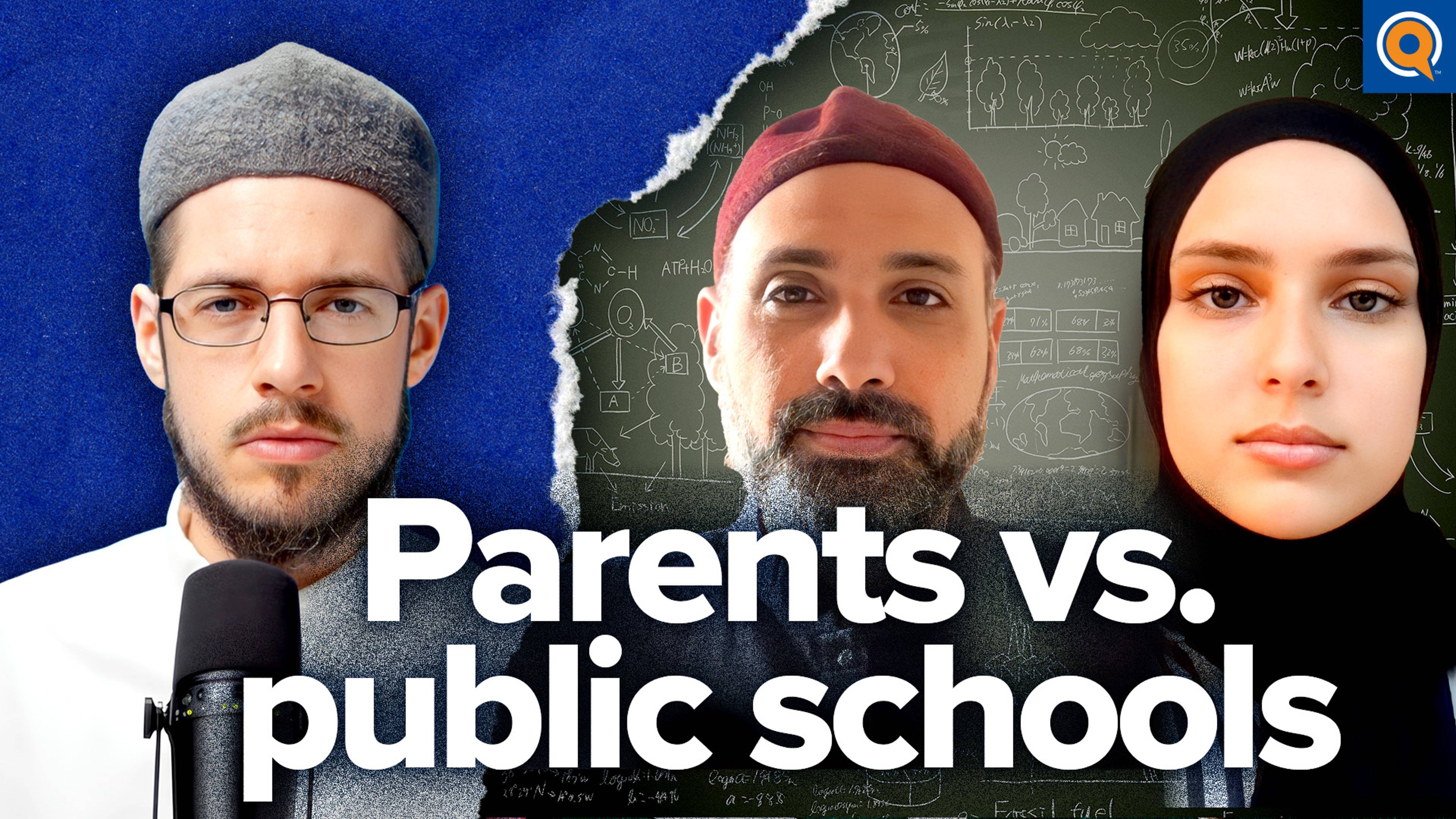 The Coalition Fighting Radical Gender Ideology in SchoolsTom Facchine, Kareem Monib, Sameerah Munshi
 "And We Created You in Pairs": Islam and the Gender QuestionFaatimah Knight