fbpixel
How America Turned Every Phone Into a Casino | Focal Point | Imam Tom Facchine

Focal Point

How America Turned Every Phone Into a Casino | Focal Point | Imam Tom Facchine

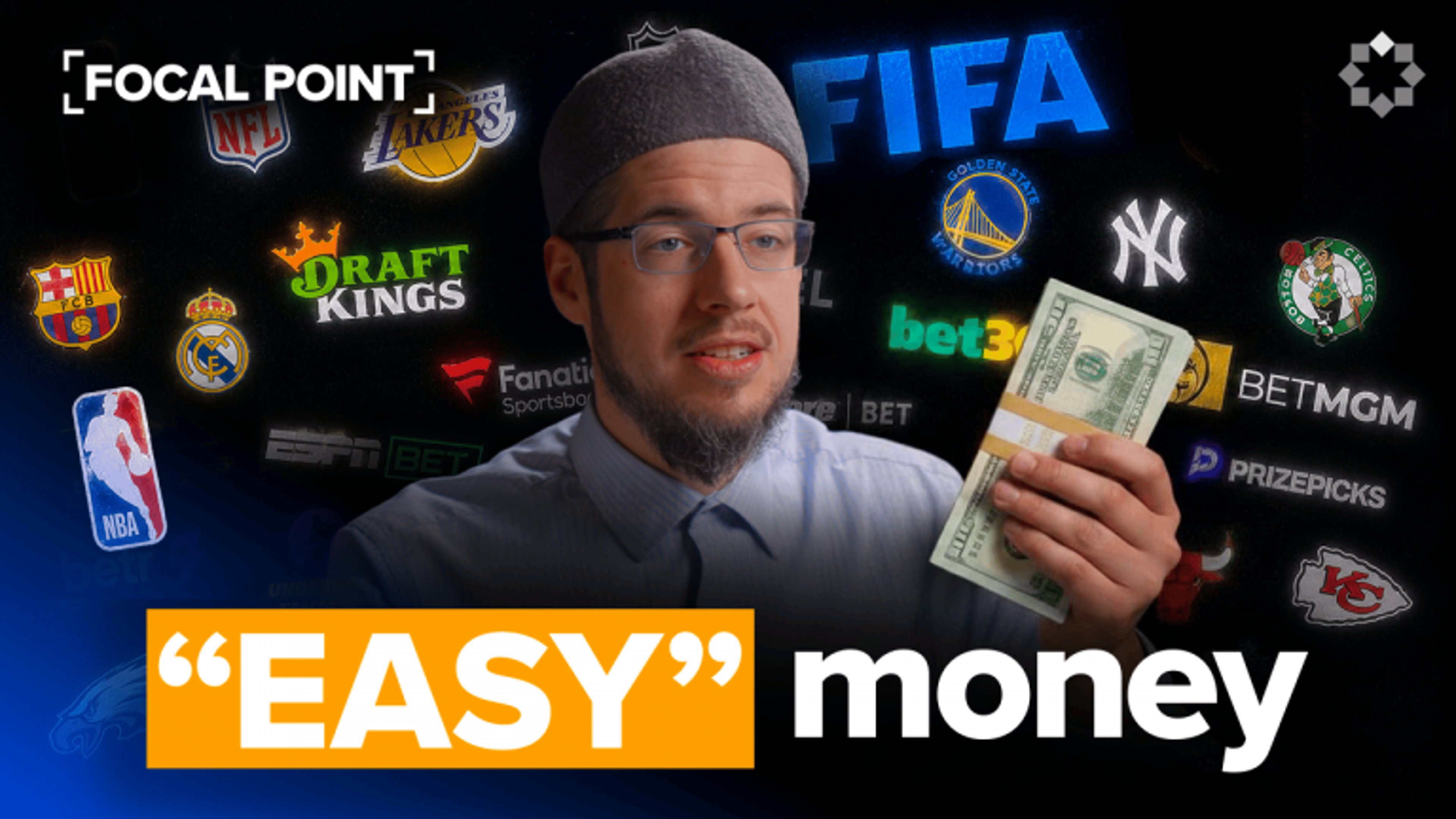
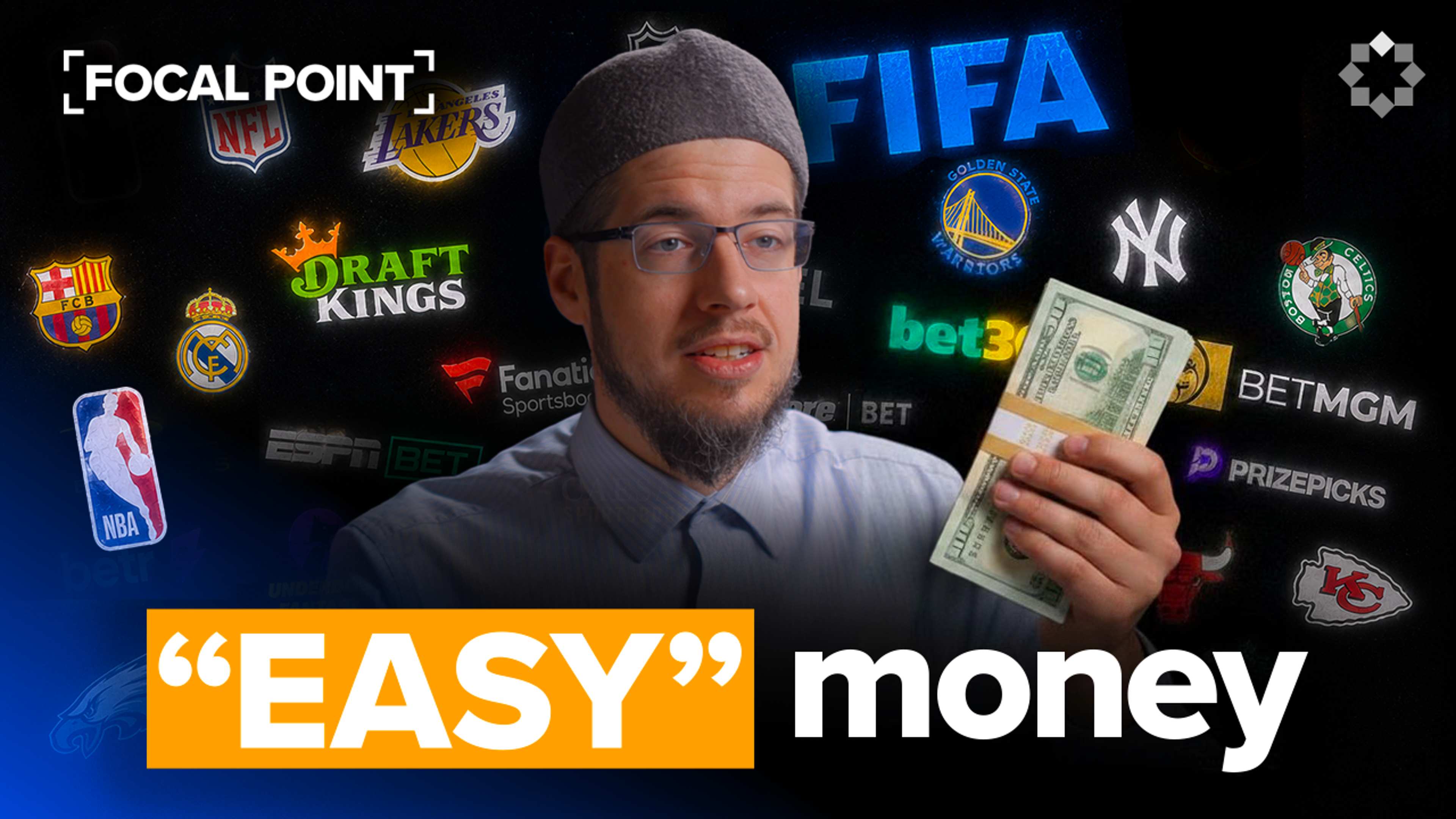
The casino is no longer a building in Las Vegas. It’s a permanent presence in our pockets, our sports broadcasts and in our children’s video games. In this Focal Point, Imam Tom Facchine examines the transformation of gambling from a physical destination into a ubiquitous digital industry while becoming increasingly difficult to recognize. Drawing on historical analysis, contemporary research, personal testimonies, and Islamic teachings, this episode explores the normalization of gambling, who bears its costs, and why the Qur’ans prohibition is as relevant today as ever. This episode covers: — How sports betting expanded across America following the 2018 Supreme Court ruling — Loot boxes, sports betting, and the growing exposure of youth to gambling behaviors — What contemporary research reveals about gambling effects — The Qur’anic framework and why Islam prohibits gambling — How Muslim communities can respond to its pervasive presence

This transcript was auto-generated using AI and may contain misspellings.
00:00There was a time when if someone said gambling, you knew exactly what it meant. Maybe a casino in Las Vegas, neon lights, slot machines, a poker table. It was a geography.
00:14It was a place that you had to physically be at, a facility. Well, those days are gone. In 2018, the Supreme Court removed the federal barrier to sports betting. And in less than six years, legal gambling expanded from Nevada into 38 states.
00:28Half a trillion dollars has been legally wagered since that single ruling. To put that in perspective, it took lotteries 33 years to reach 38 states. The casino did not expand, it actually dissolved.
00:41And it happened to reassemble, and it reassembled inside your phone. Now, it lives in your sports broadcast, it's in your group chats, it's in the video games that your children play, you see it in live streams,
00:52you see it in campus stadiums, it introduces itself with a different name every single time. Daily fantasy sports, player props, event contracts, prediction markets, loot boxes, skill gaming. The language keeps changing, but the mechanisms do not.
01:06An entire generation is now participating in gambling without recognizing it as gambling. That's not an accident. In fact, that was a very deliberate strategy.
01:16This episode is about what modern gambling actually is, how it's spread, who it targets, what it destroys, and why the Qur'an's prohibition was not a medieval restriction,
01:26but a precise diagnosis of a disease that now runs through the very center of our culture. Allah subhanahu wa ta'ala warned us about this more than 1,400 years ago. He said in Surah Al-An'am, "And Shaytan made their foul deeds alluring to them."
01:40The devil has never needed to convince us that evil is good, he just has to convince us that what we're doing isn't really evil at all. How did we get to where we are today? The history that you haven't heard about when it comes to gambling.
01:52When most Americans think of gambling, they're thinking of a harmless pastime, betting on their favorite team, or even a weekend getaway in Vegas. I remember as a child, my father coming home with pools, what we would call pools, which were his work thing. They were little slips of paper that were the size of a receipt.
02:07You had to make a certain amount of picks and you'd put a certain amount of money on it. And he would have us participate in these things as younger children. That was the conception of gambling that I had. But the truth of gambling is much, much darker than that. America's relationship with gambling goes back to Jamestown,
02:22literally the first English colony. In 1612, the settlers were so desperate for provisions that they resorted to eating cats, dogs, and according to archaeologists, at least one 14-year-old girl.
02:34The Virginia Company of London was authorized by King James I to hold a lottery to fund the dying colony. Gambling didn't save Jamestown, but it certainly did try. The proceeds were called life-saving by Captain John Smith himself.
02:48Lotteries went on to fund all 13 original colonies. They helped establish Harvard, Princeton, and Yale. The Revolutionary War was partially financed by a $10 million lottery organized by the Continental Congress,
03:01even as George Washington simultaneously forbade his soldiers from gambling, calling it, quote, "the foundation of evil and the cause of many a brave and gallant officer's ruin." America was built, in part, on gambling revenue
03:14while simultaneously trying to suppress gambling culture. And that contradiction has never been resolved to this day. By the 20th century, the official stance was clear, at least after eight Chicago White Sox players
03:25were caught throwing the 1919 World Series in exchange for money, an event so catastrophic that it led to the creation of the Commissioner of Baseball. Professional sports leagues spent the next century
03:37treating gambling as an existential enemy. In 1989, Pete Rose, the MLB's all-time leader in hits, was called Charlie Hustle for his fanatical drive. He was banned from baseball for life.
03:50He had been betting on games, including games involving his own team, and he had been doing it for years. His biographer concluded that he suffered from a genuine gambling addiction, and in his final years, he reportedly sold autographs with the inscription,
04:04"I'm sorry, I gambled on baseball." He died in 2024, still banned. Three years after Rose's ban, Congress passed the PASPA, the Professional and Amateur Sports Protection Act,
04:19which locked every state except for Nevada out of legal sports betting entirely. The NFL commissioner at the time testified before Congress that, quote, "sports gambling is evil at any age." Can you imagine this being said today?
04:33Sports gambling is evil at any age, and that its, quote, "moral erosion cannot be limited geographically." End quote. Spectators at the hearing wore buttons, and the buttons said, "Don't gamble with our children's heroes."
04:48For decades, the leagues held the line, but they couldn't ignore how much money was being made on the other side. In 2011, New Jersey Governor Chris Christie signed a bill to bring sports betting to Atlantic City.
05:02The major sports leagues, the NFL, the NBA, the MLB, the NHL, even the NCAA immediately sued. New Jersey went 0 for 6 in the lower courts, but the state kept on fighting, arguing that PASPA violated the 10th Amendment's
05:16anti-commandeering rule, which forbids the federal government from forcing states to enforce federal policy. In May 2018, the Supreme Court ruled 6 to 3 in favor of New Jersey,
05:29just as Samuel Alito's majority opinion stated that PASPA's, quote, "unequivocally dictates what a state legislature may and may not do, a direct affront to state sovereignty." The ruling did not legalize sports betting per se, it simply freed every state to legalize it themselves.
05:42What followed was one of the fastest legislative expansions in American history. I'm going to quote you something from J.D. Cohen, in a book called "Losing Big," which was just published in 2025 last year: Quote, "Americans gambled $121 billion in 2023 alone,
05:57more than they spent that year on video games, movie tickets, music streaming, books, and concert tickets combined." And critically, the industry didn't just benefit from the ruling,
06:09it actually had been preparing for it for years. To understand modern gambling, you have to understand DraftKings and FanDuel, and you have to understand that they were never really in the fantasy sports business.
06:20Daily fantasy sports was a legal workaround. By insisting their games were based on skill rather than chance, these companies exploited an exemption in the 2006 Unlawful Internet Gambling Enforcement Act,
06:33which had specifically carved out fantasy sports. Online poker sites had just been devastated by federal indictments. DFS companies filled the vacuum,
06:46spending years building brand recognition, customer databases, media deals, and relationships with lawmakers. Jason Robbins, the CEO of DraftKings, admitted it openly after the 2018 ruling. Daily fantasy sports, he said on CNBC, had been, quote,
07:01"a Trojan horse to position the company for the online gambling boom." Quote, "This is why we got into the business." By the time sports betting was legal, DraftKings and FanDuel had a decade's head start. They had the email addresses, the credit card numbers, the wagering histories of 16 million customers.
07:16In states where betting became legal, FanDuel converted approximately 90% of its existing DFS customers into sports bettors. Traditional casinos, the ones that had actually followed the rules for decades,
07:31were suddenly competing against digital companies that had already colonized the smartphone. But the real genius of the strategy was not just legal, it was psychological. By the time sports betting became widely legal, DraftKings and FanDuel had already erased the psychological boundary
07:45between gambling and entertainment for millions and millions of people. Fantasy sports, picking players, checking scores, talking strategy with friends, they all had become a completely normalized part of sports culture. The mental step from,
08:00"I have a fantasy lineup" to, "I have a bet on tonight's game," I have a fantasy lineup to, I have a bet on tonight's game, had been pre-shrunk to almost nothing.
08:13Now add 1.5 million television commercials in a single year. The BetMGM logo on the Green Monster at Fenway Park, betting lines integrated directly into live broadcasts. I don't know about you, but I can't watch a YouTube video without Kevin Hart advertising for DraftKings.
08:27In addition to Post Malone and Charles Barkley, they promise people crazy payouts for small bets placed right from your phone. Representative Paul Tonko compared this advertising strategy directly to the tobacco industry's use of Joe Camel,
08:41cartoon imagery designed not to sell to existing smokers, but to create new younger ones. He introduced the Betting on Our Future Act, explicitly modeled on the 1969 legislation that banned cigarette advertising
08:54to prohibit sports betting ads on television, radio, and the internet. Guess what? It hasn't passed. One researcher noted that Conan O'Brien once tweeted, I haven't seen an online sports betting ad in almost seven minutes. Am I dead? It was a joke.
09:08It was also statistically not far from accurate. We have a quote here from Dr. Rachel Volberg, who is a gambling epidemiologist. And I love the fact that that exists because it recognizes the harm. A gambling epidemiologist. She said,
09:20Sports betting legislation has been linked to higher bankruptcy rates, higher debt collections, higher debt consolidation rates, loan delinquencies, and rates of intimate partner violence.
09:32States facing budget deficits viewed sports betting as a fiscal narcotic, a term the New York Times editorial board first used in the 1980s. States that legalized gambling received tax revenue without raising taxes directly.
09:46The money comes from their own citizens' losses. The government doesn't become your partner in prosperity. It becomes your bookie's silent investor. And because states compete with their neighbors, lawmakers openly described feeling like chumps
09:59if their residents were crossing state lines to bet. They often rush legalization to meet major sports deadlines, like the Super Bowl or March Madness, with regulatory frameworks assembled in just a matter of weeks rather than years.
10:11The result is a system where regulators are often the same people who depend on gambling revenue, where the industry helped write the bills governing its own behavior, and where the incentive to protect consumers keeps losing to the incentive to collect taxes.
10:26Some people hear the Islamic prohibition on gambling and they assume that it belongs to some bygone era. Simple economies, primitive games of chance. But read carefully what Allah ﷻ actually says in Surah Al-Baqarah. They ask you about intoxicants and gambling.
10:41Say, In both, there is great sin and some benefit for people, but the sin is greater than the benefit. Notice that the verse doesn't say that gambling is worthless. It doesn't deny that there might be some type of benefit
10:54such as excitement perhaps, or the occasional win, the temporary rush that comes to you. Allah ﷻ acknowledges that there is benefit which makes the prohibition intellectually serious rather than just dismissive.
11:07Then Allah ﷻ goes further and explains the mechanism of the harm. What is harmful about this thing? In Surah Al-Ma'idah verse 91, The devil seeks only to incite enmity and hatred among you through intoxicants and gambling,
11:19and to stop you from remembering God and prayer. Now read that again with the research open in your other hand. Gambling incites enmity and hatred. When a home team loses, studies find that intimate partner violence spikes by 10%.
11:34College athletes, human beings who simply play the sport, receive graphic death threats from people who lost money on a prop bet. One in three NCAA men's basketball players
11:45report being directly blamed by fans for their betting losses. 26% of them report verbal or physical abuse. Gambling stops you from remembering God and prayer. One clinical study of compulsive gamblers
11:59documented a pattern of progressive isolation. Shame, because you're gambling, it prevents disclosure. And then secrecy demands compartmentalization, and the hours consumed by betting and tracking and chasing losses,
12:12they crowd out prayer, family, and community. Now the Arabic word for gambling, maysir, it comes from the root yasr or yusr, which has to do with ease. And so it signifies gaining wealth without legitimate effort.
12:26It captures something that the modern industry has perfected to a science. The illusion of return with no corresponding value created. Money is just simply changing hands at this point. Nothing's actually made by gambling. And the only entity that's consistently
12:40on the winning side of that exchange is always the house. Since sports betting expanded across America, peer-reviewed research has documented that bankruptcy rates have increased in states after legislation. Household savings have declined,
12:53especially in financially constrained households. Credit card debt has risen sharply, particularly among low-income users. Loan delinquencies have increased post-legalization. We've already mentioned intimate partner violence. Another one is suicide risk.
13:08One in five compulsive gamblers will attempt suicide. Now that's the highest rate of any addiction category. And there's also something that's called social harm radius. So studies show that a typical problem gambler
13:20financially or psychologically affects five to six other people. It's not just someone's bad habit. They affect the people around them as well. Now let's go back to that suicide number. One in five is higher than opioid addiction. That's higher than alcohol dependence.
13:35That's higher than any other substance that people are marketing. Now there's no balconies. Did you know this? There's no balconies in hotels in Las Vegas. And that's not just a rumor. That's by design. It's an architectural policy because of reality.
13:49And yet we still live in this tension that the architecture actually belies. The Qur'an was never lagging behind. Social science is just catching up to the Qur'an. This stuff is dangerous. Let's tell a story. I want to
14:01tell you a story about someone named McKay Coppins. McKay Coppins is a practicing Mormon, a suburban father. He's a staff writer for the Atlantic. He has a faith community. He's got explicit religious prohibitions against gambling.
14:14He's a man that by any outside measure or standard or observer would say had every single guardrail in place to protect him from a gambling addiction.
14:24Yet the Atlantic gave him $10,000 to experience the sports betting ecosystem firsthand. This was what they called a journalistic exercise. His bishop gave him a tentative blessing, wild, cautioning him about slippery slopes.
14:38Coppins entered the experiment confident in his own stability. Just one year later Coppins had overdrafted his bank account. He was hiding in his kitchen pantry to place bets while his family was asleep and he was searching for a self-exclusion
14:53form. A self-exclusion form is a legally binding document that bans you from gambling platforms because he could no longer resist the apps through his willpower alone. How did it happen? The first night he won $20. His immediate
15:07thought was, maybe many people's thought, if I scale this up, if I can continue at this rate I could make $20,000 over an entire season. The statistician Nate
15:18Silver told him directly that 98% of sports bettors lose money. 98%. Coppins heard the data but he kept betting anyway. Within weeks he noticed that he could no longer sustain interest in a game unless he had money riding on
15:31it. The dopamine system had been recalibrated. Watching sport for pure sport had become neurologically boring. It got to the point where a single referee call in December cost him $500 and at that point he could tell that
15:45something inside him had shifted. He went on tilt. That means that he abandoned his careful record-keeping research to chase the losses and he made increasingly reckless wagers. And this is not just a character flaw, right?
15:59This is documented psychological progression, or we should say a regression. The gambling industry has actually a term for this internal to itself. They call it loss smoothing. It keeps users losing at a pace that they
16:13can emotionally tolerate. In other words, they don't want you to lose too much too fast or else you'll stop gambling entirely. Gamblers themselves have a different name for it. They call it the slow bleed. The apps are not designed to
16:26make you win. That should be clear by now. They are designed to keep you losing at the precise rate that will not make you quit. Industry data shows that as much as 90% of sportsbook revenue comes from less than 10% of users. The business
16:40model is not built around recreational bettors who enjoy a casual wager on the Super Bowl. It is built around compulsive users who can't stop. Coppins' conclusion was stark. He wrote that America has made an enormously
16:53risky bet that it can legalize gambling at scale and avoid the consequences that "every previous civilization" has "confronted when it tried." He argues
17:04that in dismantling PASPA, the Supreme Court ignored what he called millennia of accumulated wisdom that recognized gambling as "soul-rotting" and "civilizationally ruinous." His final observation was about prediction markets.
17:18He described them as the logical endpoint of the gambling boom. A world where you can wager on war, famine, elections, weather, and where the line
17:28between information and manipulation becomes non-existent. In total, Coppins lost $9,891. He considered himself one of the lucky ones. Now I want to tell you
17:40about Sohail Patel. Sohail is a hafiz of the Qur'an. He was a teacher at an Islamic school. He was active in his local masjid community. He was respected by people
17:53around him and he was a compulsive gambler for years before a single person in his own community knew about it. His story does not begin with greed. It begins with a bill. Sohail was newly married and when he received an
18:07unexpected car bill—a misunderstanding, there was some small print—he couldn't cover it, he was too ashamed to ask his family for help. So he turned to gambling. The first time I won something, I donated it to charity, to Barnardo's
18:20online because I felt guilty. I thought this is haram. Even though the money was gone, the dopamine rush stayed. After a long break, he returned to gambling when his marriage began to struggle and life became stressful. He
18:33describes it as numbing the senses, a way of drowning your sorrows that functions in the mind similarly to alcohol. He could hide betting tabs on his laptop. Publicly, he was a respected leader, but privately, he was living a
18:45double life. He feared being labeled a hypocrite by the community that looked up to him. So the secret grew and secrets always cost more than the original. One day I went to the barber's and I noticed a bald patch at the back of my
19:00head. And the barber said, "Have you eaten something? Or what's happened here?" And I had no idea. I thought it's, you know, I thought it's alopecia, you know, and how did that happen? And I was really concerned, went to the doctor,
19:13and he talked about stress. And I fully knew he was stressed. Then came the moment that shattered everything. A photograph circulated of him inside a betting shop wearing a thobe. People he had borrowed money from confronted him
19:27at the school. In a room full of witnesses, he said the words out loud for the very first time: "I've got a gambling addiction." He lost his job. He lost his standing in the community. Sohail began attending Gamblers Anonymous,
19:39not an Islamic organization, but one where he could speak without the weight of religious reputation pressing on every word. He says that speaking for just 20 minutes in that room lifted a burden that he had carried for years.
19:51His recovery required something important. He had to stop focusing on the financial loss, and start looking at the root causes underneath the behavior, which was in this case, financial desperation, also marital
20:03strain, also the cultural expectation that men should not admit their weaknesses. Also, the absence of any safe space in the community, where gambling could even be discussed honestly. He found a spiritual footing
20:16in Islam itself, which distinguishes between the act of sin and the individual that is committing the sin itself. He now works at Beacon Counseling Trust in the UK, providing culturally appropriate support for Muslims struggling with gambling. His message to Muslim communities is very
20:31direct. "This addiction exists among us. And I'm sure that it's true for the UK community, just like it's true for the US community. It hides behind religiosity and respectability. We don't like to admit, let alone air our
20:43dirty laundry out in front of others. We're afraid of being exposed. But this type of addiction thrives in the space between what we know is forbidden, and what we feel comfortable admitting. And the only thing that breaks that
20:54silence is a community that's willing to create safe spaces before the crisis, not after. And a safe space doesn't mean a space where you are changing Islam to say that this is not prohibited. But it's a space that people feel
21:08comfortable enough coming forth and acknowledging the sin that they're engaged in." Another thing that Sohail's story reveals is that we have a big gap when it comes to the sermons that address our community. We've got khutbas about zina, we've got khutbas about alcohol, we've got programs for drug
21:22abuse. But where are the conversations happening about gambling? And this is at a moment where every person in the congregation is literally carrying a casino in their pocket. Sohail's story is not unique. It's simply the one that
21:34he chose to share publicly. The Prophet ﷺ explicitly connected gambling to the spiritual orbit of shirk, not casually, because both represent a
21:45displacement of where the heart places its hope. When someone bets they're not simply risking money, they are placing their faith in chance over their trust
21:55in Allah ﷻ. Everything that we've described so far targets just adults. The next phase targets children. According to the 2026 Common Sense Media report, "Betting on Boys: Understanding Gambling Among Adolescent
22:10Boys," 36% of boys aged 11 to 17 reported gambling in the past year. At age 11, the
22:18figure is 32%. By the age of 17, it climbs to 49%. That means half of boys aged 17 have gambled. In Ohio, a survey of 8,000 high school students found that
22:31many of them were using their parents' accounts or their siblings' accounts to bypass the age restrictions that exist on these apps. The entry point is almost never a sports book. It's actually a video game. Things like loot
22:42boxes, gotcha mechanics, skin betting, pack openings. These are the systems embedded within games that children play as entertainment that share the fundamental psychology of gambling. Real money wagered on uncertain, randomized
22:56outcomes. The industry is very, very careful with its language. They never, ever call it gambling. A loot box is a "surprise mechanic." A skin trade is an
23:06"item exchange." The semantic distance is deliberate. It obscures the risk from both children and parents until the behaviors are already established. The brain's prefrontal cortex, the region responsible for impulse control and risk
23:20assessment, it doesn't actually fully develop until the mid-20s. Young people are biologically predisposed to respond more intensely to the dopamine surge produced by variable rewards. The gambling industry did not discover this
23:33recently. It built its product architecture around it. Nearly half of adolescent boys who gamble are also regularly exposed to gambling content online, mostly through algorithmic recommendation. Those who watch gambling
23:46content more frequently spend more than twice as much on gambling as those who don't. $72 versus $32 based on average. The pipeline from content to behavior is documented and measurable. Companies like Stake pay celebrities and streamers
24:00millions of dollars to gamble live in front of their audiences. Whether it's Drake or other influencers, rap artists, even Muslim influencers and streamers have gambling deals. You know if you know. Lots of content creators are in on this.
24:15Because they are gambling with sponsor money, not their own, they are insulated from the loss. They can place $100,000 bets with genuine indifference. They don't care about the outcome because the money is never theirs in the first place.
24:27But the audience, often very young people, teenagers and below, they watch with excitement and without consequences. They see the wins celebrated, they see the losses laughed off, and they absorb a completely distorted understanding of
24:42what gambling costs ordinary people. And below the celebrity tier is an ecosystem of smaller creators who earn income through affiliate links and referral codes. Their revenue is directly tied to how many followers they can sign
24:55up to gambling platforms. They are not entertainers who would just happen to be discussing gambling. They're active recruiters. And then they go to university, okay, where the gambling industry has already arrived before they
25:07get there. University athletics departments, strained by pandemic budget shortfalls, they began signing sponsorship deals with the sportsbooks. If there's money to be made, you can bet that college sports is going to be in on
25:20it. Michigan State signed a five-year, $8.4 million agreement with Caesars Sportsbook. Louisiana State University, LSU, entered a multi-million dollar partnership with Caesars as well. The University of Colorado Boulder
25:33accepted $1.6 million from PointsBet, including a provision that paid the university $30 every time a student used a promo code to download the app to
25:44place their first bet. Madness! The University of Colorado was effectively paid per student recruited to betting apps. Many of these deals are routed through private multimedia rights companies, which shield contract details
25:57from public scrutiny. So they're not really very forthcoming about this. The gambling branding appears in stadium promotions, campus broadcasts, and branded tailgating events, often without students or parents having any clear awareness of
26:12the commercial relationship behind it. Charlie, a Syracuse University student, started with $5 bets. Casual, social, unremarkable. Over time, he accumulated $1,800 in debt to illegal bookmakers. The cycle of chasing losses led to
26:26depression, and he actually had to leave school to seek treatment. This is not some rare outcome. It is one of many that universities are now financially incentivized to ignore. Now we've come to the newest frontier, and perhaps the
26:38most dangerous precisely because it's the hardest to recognize as gambling at all, and that is prediction markets. Platforms like Kalshi and Polymarket, present themselves as sophisticated forecasting tools, information markets
26:51where people trade on the probability of future events. They explicitly reject the label of casino. They argue that they function more like a stock exchange. The platform itself has no stake in the outcome, collects only transaction fees,
27:04and allows markets to aggregate public knowledge into accurate predictions. News outlets like CNN have begun integrating prediction market data into their
27:15election coverage as a replacement for or supplement to traditional polling. But examine what's actually happening here. People are wagering real money on uncertain outcomes. The platform profits regardless of who wins, and according to
27:30Artemis Analytics, users worldwide now spend more than $5 billion total each week on prediction platforms. 85 to 90 percent of activity on Kalshi is sports betting, the same product rebranded as finance.
27:45...for a state to file criminal charges against Kalshi for allegedly operating an illegal gambling operation. The founder of Kalshi is a former Palantir employee.
27:54Donald Trump Jr. serves on the advisory boards of both Kalshi and PolyMarket, and is an investor in the latter. But the deeper problem with prediction markets is structural. They require inside traders to function.
28:08They depend on people with non-public information, government officials, corporate employees, military personnel, to place large bets on certain outcomes, which pushes the market price towards the truth.
28:19This is not actually a flaw in how it's designed, this is the design itself, and it's already being exploited.
28:27A U.S. Special Forces soldier made over $400,000 on bets placed regarding the U.S. operation to abduct Venezuelan leader Nicolás Maduro. An Israeli Air Force reserve major placed bets on the timing of airstrikes in Iran,
28:41sending the timing to a civilian contact who used it to profit more than $160,000. In April 2026, French authorities began investigating suspected tampering with weather sensors at Charles de Gaulle Airport.
28:54Temperatures had spiked unusually 4 to 5 degrees Celsius. Readings that were used to settle temperature contracts on PolyMarket, which had attracted $1.4 million in bets. That's more than double the typical volume.
29:06Someone, it appears, may have manipulated physical infrastructure to win a bet. In the same period, three American political candidates were suspended from Kalshi for allegedly betting on their own electoral races.
29:20When gambling platforms are integrated into news coverage, and when winning bets require inside information, the manipulation of markets becomes indistinguishable from manipulating reality itself. This is what's called a closed loop of power.
29:34Manipulation of prediction markets produces data. The data gets reported as legitimate news. That news shapes public opinion and eventually policy, all while the people with the most information and the most money extract all the wealth at every single stage.
29:48The Islamic concept of gharar, which is excessive uncertainty or ambiguity, ambiguity deliberately constructed to exploit the other party, has never had a more precise modern application.
30:01Maysir was forbidden. Gambling was forbidden because zero-sum wealth transfer through manufactured uncertainty destroys communities. Prediction markets are maysir in a business suit, operating at a civilizational scale.
30:14So we've talked about the industry. We've talked about individuals. Now we have to talk about the real bearer of the cost of gambling, and that's the family.
30:23A 2022 systematic review published in Addictive Behaviors examining parental problem gambling and its effect on children produced findings that should be read from every minbar in every masjid.
30:35The most commonly reported harms to children were not financial. They were relational. Children described feeling distressed and disconnected from their parents. They described being left alone without supervision.
30:48They described a home that felt emotionally unstable and unsafe. The more severe the parents' gambling addiction, the more severe each of these harms became.
30:59Adults who had experienced child welfare intervention because of a parent's gambling were significantly more likely to report current symptoms of depression.
31:08Adults who had endured verbal abuse connected to parental gambling were significantly more likely to show symptoms of PTSD. This is remarkable because PTSD had previously been associated with problem gambling,
31:19but not simply with growing up around a gambling parent. The chronic instability, the fear, the unpredictability of a gambling-affected household, the research now suggests this itself is a form of childhood trauma.
31:33And the harm doesn't end when the child grows up. Maternal gambling was linked to higher rates of anxiety in adult children, a higher likelihood of developing gambling problems themselves, and a greater likelihood of becoming victims of intimate partner violence.
31:46One study from Australia found that each problem gambler financially or psychologically affects five to six other people, not just intimate family either, but friends, colleagues, creditors, community members, everybody absorbs the ripple effects of the loss.
32:01And the suicide data, as we mentioned before, is catastrophic. One in five compulsive gamblers will attempt suicide in their lifetime. That is the highest level, we'll say it again,
32:13the highest level rate of suicide ideation and suicide attempts of any addiction category. Not opioids, not alcohol, it's gambling.
32:23The hadith of the Prophet, peace and blessings be upon him, teaches that poverty may lead to disbelief. And this is not a warning about being poor, it's a warning about what sustained financial despair does to the heart.
32:35Gambling is a sin, and that sin manufactures the exact condition that it exploits. It promises escape from financial anxiety while producing financial anxiety and intensifying it,
32:48and through shame and secrecy, isolating the victim from the very community support that just might offer a way out. The maqasid of the Shari'ah, the core objectives of the Shari'ah, are to protect five things,
33:01religion, intellect, wealth, lineage, and life. Modern gambling attacks all of them at the same time. It distracts from worship, it hijacks the mind, it destroys your financial stability,
33:13it fractures families across generations, and yes, it does take lives. Before we close, we need to be honest about the objections, because they are real, and they deserve serious responses. Objection one, it's legal, so what's the big deal?
33:28Well, as you should figure out by now, in 2026, legality and permissibility are not the same standard. Alcohol is also legal, cigarettes are also legal, payday loans that charge 400% annual interest are legal in many states,
33:42legality reflects only the balance of power in a given moment, often including the lobbying power of the very industry being regulated. In 2018, that ruling that opened up sports betting was not a moral endorsement,
33:55it was federalism, a decision about which government level gets to decide. The Islamic standard is not, well, what has the government permitted, it's what has Allah said, what has Allah clarified, what has Allah, subhanahu wa ta'ala, ruled,
34:08and those are very, very different questions. Allah, subhanahu wa ta'ala, actually acknowledges this in both its great sin and some benefit for people. That is a recognition that there might be some benefit for some people,
34:19the recreational enjoyment is real, the occasional win can be fun, but Allah's response is not to deny this, it is to insist that the harm outweighs the benefit at the systemic level,
34:32and that what begins as manageable has a documented architecture of addiction built into it by design. The industry's own data tells you who actually pays for the responsible gamblers,
34:42the 10% of users who generate 90% of the revenue, the person who bets casually in a very direct sense, normalized cover for the predatory extraction of the more compulsive users.
34:55Third objection is that, oh, well, prohibition doesn't work, we proved that with alcohol, and this is the most annoying objection. By the same logic, okay, that we should just legalize everything, why would we have any standards, it's a nonsense argument.
35:08And it's also historically inaccurate, right? Like if you're going to say whether prohibition worked or didn't work, you have to actually define what it means to work, what is success.
35:16And the strawman that is actually erected in order to make this nonsense objection in the first place is the idea that like prohibition was supposed to stop everyone from drinking. It wasn't ever meant to do that.
35:30It was meant to dramatically reduce it, and dramatically reduce it, it did. The death rates from alcoholism fell significantly during prohibition. The harm that was real was measurably reduced, and that's not a failure.
35:45And I have never seen anybody who said that the goal was complete sobriety. Anyway, the Islamic position is not prohibition imposed on society by law, it is personal, anyway, right? Everybody, like we're not going to, at least now, at least yet,
35:58be able to influence legislation that's going to peel this back, though we should organize for that. But every individual and community has to make a moral choice in this moment, right now,
36:09rooted in conviction, and that's entirely different from legislative enforcement. So the problem is clear, but what is the responsibility of the community?
36:19Suhail Patel's community did not speak about gambling until a photograph appeared. By then, years of damage had already been done. Khutbas, halaqas, parenting workshops, youth programs,
36:33they all need to address gambling. They all need to address gambling in its modern forms, and it needs to happen before the first crisis, not after. Now, this is going to require teaching people what modern gambling looks like. It's not just going to a casino in Vegas.
36:47It's a DraftKings app. It's a Fortnite loot box. It's a Kalshi account that's marketed as event trading. Parents need to recognize these systems in their children's devices. Young people need the language to name what they're being recruited into.
37:02And Suhail's addiction survived for years, because he could not imagine admitting it to anybody in his community. The shame of hypocrisy, being known as a religious person who falls into a sin that's so clearly and unambiguously condemned,
37:16that was more paralyzing than the addiction itself. We have to have Muslim counselors and imams that are going to speak about this, and trained to understand that gambling addiction is simultaneously a spiritual, psychological,
37:31neurological, and financial issue. And we need spaces that are genuinely confidential enough, they're confidential enough and non-judgmental enough, where someone can actually say, hey, I have a problem and I need help with this, before it destroys everything that they have.
37:44And similar to the Sunnah way of approaching sin, like we believe that that sinner is redeemable, like that's a human being there and they're caught in something, and if we can find a way to take them out of it, then that's our duty as brothers and sisters
37:59to be able to try to help that person come out of it. And it's not about just trying to shame somebody, let alone just like cover it up and act like it's not a thing. This is a condition that some people have, it is something that people can recover from, and we need to be aware of it,
38:14so we can catch it early and intervene appropriately. Another frontier that this has to take into effect is Muslim businesses, right? And you can already guess that we've got a problem, we've got a problem of some Muslim businesses selling alcohol.
38:28So we need to make lottery tickets, right? And all types of gambling have the same status and the same type of stigma around selling these things that we would hope exist around alcohol and pork,
38:42that if there's a convenience store that a Muslim owns and behind that counter, it's selling lottery tickets, or it's selling, you know, or it's advertising any of these apps, or providing access to this type of gambling industry.
38:56That's an inconsistency on our part. And that is a failure on our part as a community to forbid the evil and to spread awareness about this. Now for actual, for the parents out there and for families, you have to be aware of what's going on in your kids' games,
39:11the loot boxes, the skin betting, the simulated casino games, they're all embedded into the entertainment that children are, they're just drinking it, breathing it, living it,
39:22day in and day out, oftentimes without parental awareness. The research is so clear and unambiguous. These systems, they prime gambling behavior. They are trying to make your kids future addicts.
39:35Parents need to understand what their children are interacting with, not to shame or restrict necessarily without any explanation, but they themselves need to be given the ability to see it and to intervene. And you have to be willing to have the conversations with your kids
39:49that the wider culture certainly is not going to have with them. In conclusion, the casino is no longer just a building in Nevada somewhere. It is an infrastructure. It's woven into the sports broadcasts and the university stadiums,
40:02the video games, the news coverage, political campaigns, prediction markets. It's been manipulated by people who already knew the outcome before the bets are even placed. Allah subhanahu wa ta'ala told us very,
40:12very clearly that this is a reality worth taking seriously, that it is something that incites enmity, it severs community, it distracts from remembrance, it preys upon desperation,
40:25and it creates a zero-sum destruction disguised as entertainment. The question is whether we have the clarity to recognize the casino when it doesn't look like a casino anymore. Allah subhanahu wa ta'ala says,
40:37as for those who were in awe of standing before their Lord and restrained themselves from evil desires, wa nahd nafsan 'anil-hawá, Paradise will certainly be their home. Restraint is not deprivation. It's not going without.
40:51It's actually protection. And in an era when an entire industry is spending billions of dollars to take away your restraint, it's trying to normalize betting. It's trying to make the casino invisible. It's trying to recruit your children
41:05before they even have the language to name that they are betting and actually gambling. The act of holding the line is not passive. It is a choice that has to be made actively every day by every single one of us
41:19so that the system does not profit from our surrender. Now the industry, they're making a big bet. They're betting that you can't hold that line. We have to prove them wrong.