
Embracing Uncertainty: How to Feel Emotionally Stable in a Pandemic
How can embracing uncertainty make you feel emotionally stable during a pandemic? People crave certainty in life. Certainty gives us a sense of security and the feeling that we have life under control. Through survey analysis, this paper explores the American Muslim reaction to the coronavirus.


Published: March 30, 2020 • Shaban 6, 1441
Updated: July 22, 2024 • Muharram 16, 1446
16 mins • Reports

For more on this topic, see Faith in the Time of COVID-19
Introduction
Coping with uncertainty in especially uncertain times
More Like This



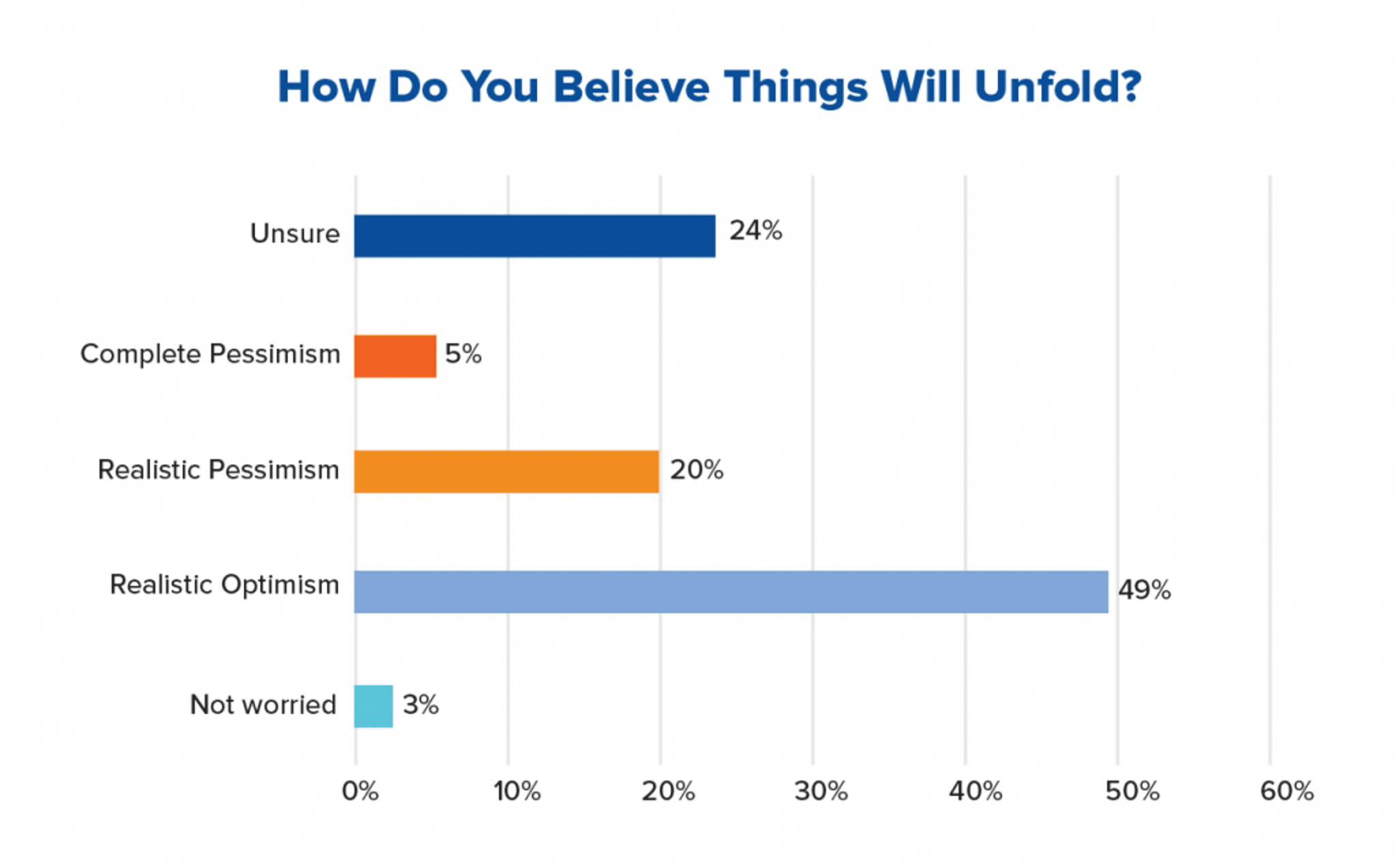
Muslim mindsets regarding the new coronavirus

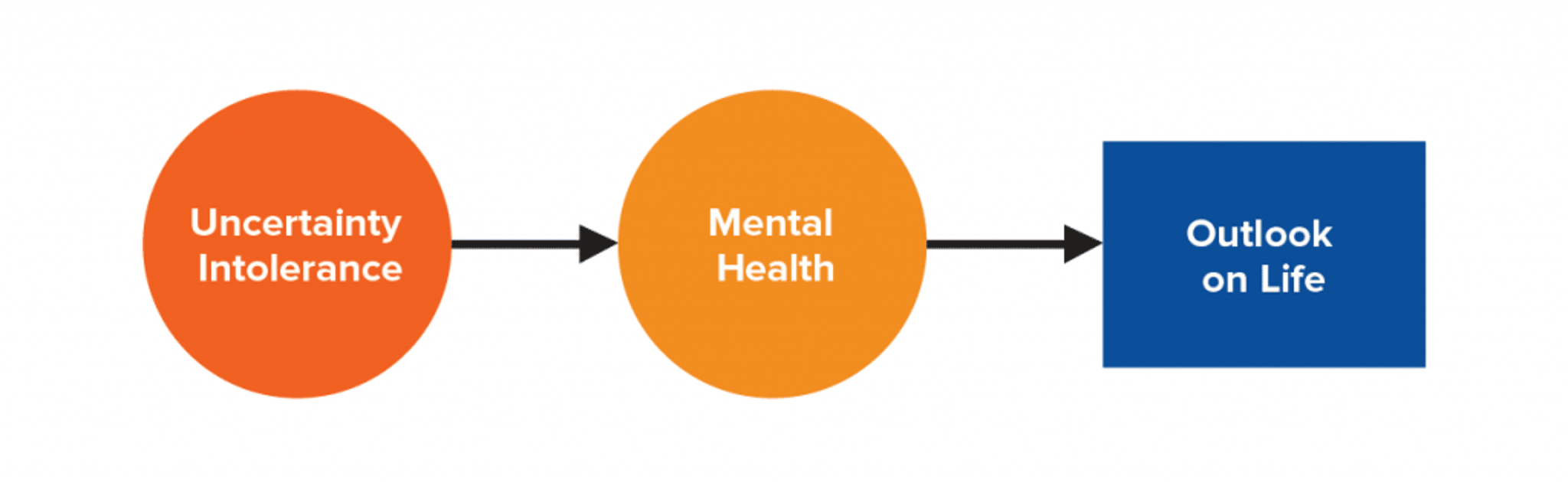
Uncertainty intolerance and mental health

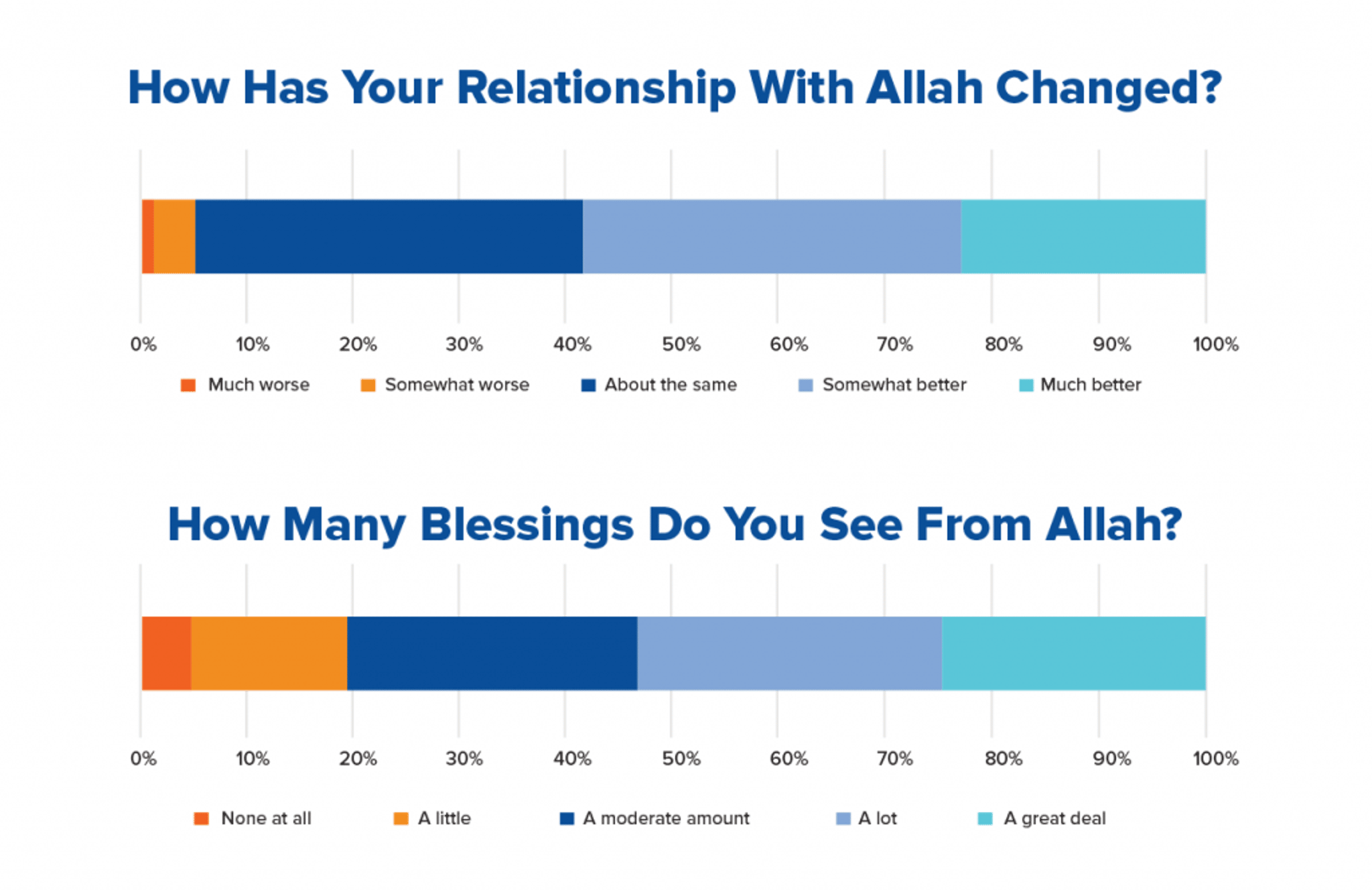

Key findings
Discussion of the results

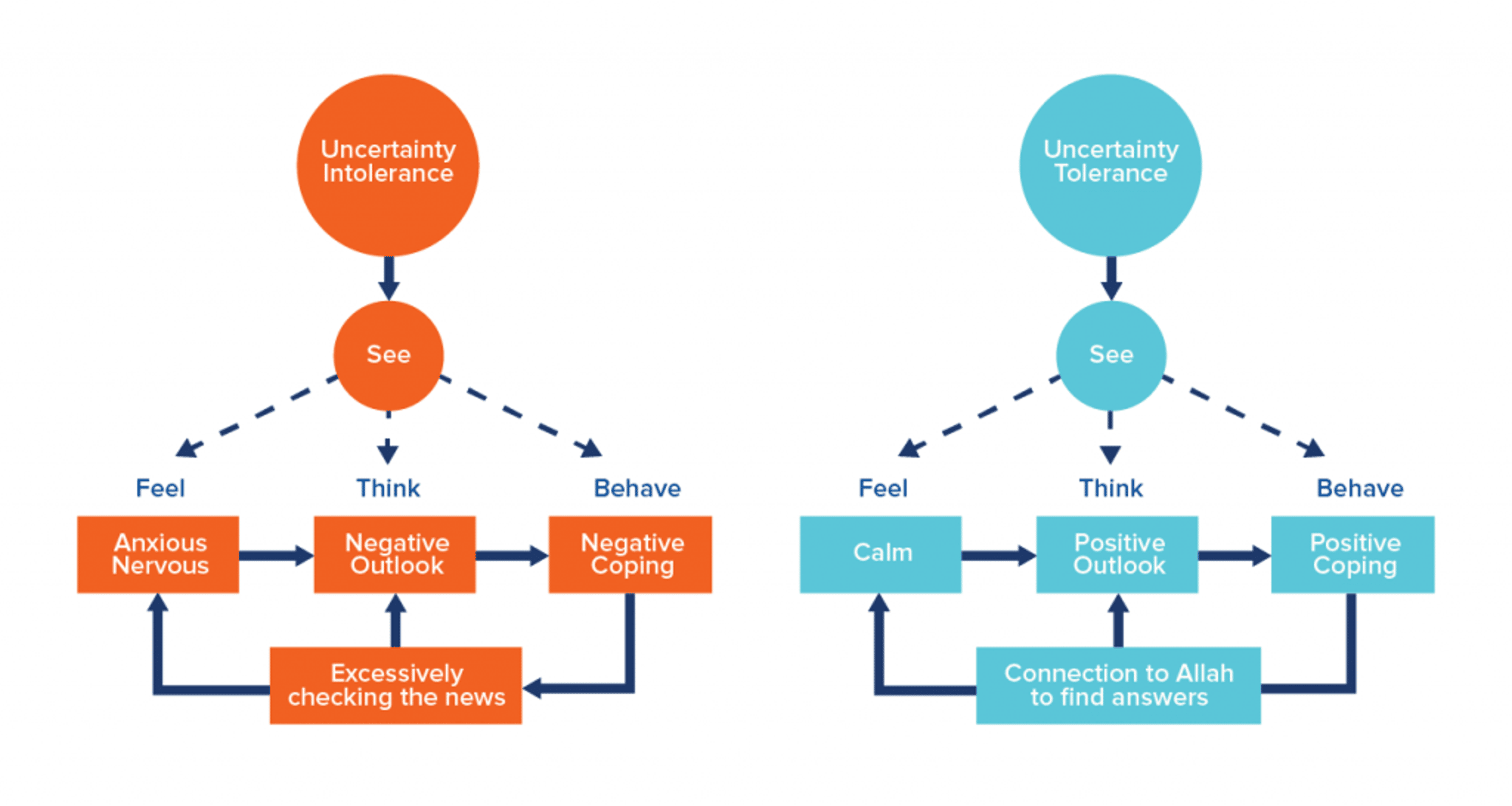
The adaptive path
A maladaptive path
The way forward
لَا حَوْلَ وَلَا قُوَّةَ إِلَّا بِاللهِ
There is no change of a condition nor any power except with Allah.21
- A Spiritual Regimen consisting of:
- Daily prayers
- Daily Qur’an reading
- Dua focused on removing anxiety and relinquishing control22
- Daily dhikr (e.g., morning and evening)
- Tahajjud Night prayers
- Reading about Allah’s Names and Attributes
Conclusion
Appendix A
- Uncertainty makes life intolerable
- My mind can’t be relaxed if I don’t know what will happen tomorrow
- Uncertainty makes me uneasy, anxious, or stressed.
- During the past few days, how often have you felt anxious?
- During the past few days, how often have you felt nervous?
- During the past few days, how often have you felt calm?
Which of these statements reflects how you believe things will unfold in the next few months?
- Things will turn out just fine. There is no reason to be worried about anything.
- Despite the many ordeals people will face, things will turn out all right with many positive outcomes.
- Things will be bad, as lots of people will suffer from the consequences of the virus.
- Things will turn out terribly, with catastrophic loss of life and societal outcomes.
- I really have no idea.
How many blessings do you see from Allah in allowing the coronavirus to spread?
(1) None at all to (5) a great deal
- How concerned are you about getting the coronavirus?
- How concerned are you about beloved friends or family getting the coronavirus?
- How concerned are you about the societal consequences of the coronavirus?
Descriptive Statistics for Uncertainty Intolerance & Mental Health
| Mean | SD | min | max | |
| UI intolerable | 2.78 | 1.23 | 1 | 5 |
| UI thinking | 2.47 | 1.25 | 1 | 5 |
| UI anxious | 3.22 | 1.25 | 1 | 5 |
| Anxious | 2.41 | 1.04 | 1 | 5 |
| Nervous | 2.19 | 1.03 | 1 | 5 |
| Calm | 3.27 | 1.00 | 1 | 5 |
| N | 1235 |
Appendix B
| Structural Model | B | SE | Z-value | p-value |
| Pessimistic Outlook | ||||
| Mental Health | 0.16 | 0.03 | 4.93 | 0.00 |
| Female | -0.08 | 0.03 | -2.96 | 0.00 |
| Reading Qur’an | -0.07 | 0.03 | -2.32 | 0.02 |
| Checking the News | 0.12 | 0.03 | 3.92 | 0.00 |
| Gratitude | 0.02 | 0.03 | 0.61 | 0.54 |
| Intercept | 0.36 | 0.50 | 0.71 | 0.48 |
| Coronavirus Fears | ||||
| Mental Health | 0.38 | 0.03 | 13.44 | 0.00 |
| Female | -0.03 | 0.03 | -1.29 | 0.20 |
| Reading Qur’an | -0.04 | 0.03 | -1.42 | 0.16 |
| Checking the News | 0.18 | 0.03 | 6.68 | 0.00 |
| Gratitude | 0.04 | 0.03 | 1.34 | 0.18 |
| Intercept | 2.86 | 0.47 | 6.04 | 0.00 |
| Blessings Seen Since the Coronavirus | ||||
| Mental Health | -0.18 | 0.03 | -5.83 | 0.00 |
| Female | 0.04 | 0.03 | 1.37 | 0.17 |
| Reading Qur’an | 0.22 | 0.03 | 8.15 | 0.00 |
| Checking the News | 0.03 | 0.03 | 1.13 | 0.26 |
| Gratitude | 0.14 | 0.03 | 5.10 | 0.00 |
| Intercept | -0.06 | 0.49 | -0.12 | 0.90 |
| Mental Health | ||||
| Female | 0.08 | 0.03 | 3.19 | 0.00 |
| Uncertainty Intolerance | 0.68 | 0.02 | 32.49 | 0.00 |
| Measurement Model | ||||
| Uncertainty Intolerance | ||||
| UI intolerable | 0.60 | 0.02 | 27.69 | 0.00 |
| UI thinking | 0.80 | 0.02 | 50.03 | 0.00 |
| UI anxious | 0.81 | 0.02 | 51.71 | 0.00 |
| Mental Health | ||||
| Anxious | 0.88 | 0.01 | 87.01 | 0.00 |
| Nervous | 0.88 | 0.01 | 88.35 | 0.00 |
| Calm | 0.70 | 0.02 | 41.81 | 0.00 |
| chi2(45) = 228.73, p=0.0000 | ||||
| Note: All values are standardized. SE=Standard Error.Fit Indices: RMSEA =.057, CFI=.96 |
Notes

Co-Director of Psychospirituality Department

Senior Fellow
Disclaimer: The views, opinions, findings, and conclusions expressed in these papers and articles are strictly those of the authors. Furthermore, Yaqeen does not endorse any of the personal views of the authors on any platform. Our team is diverse on all fronts, allowing for constant, enriching dialogue that helps us produce high-quality research.
Want to appear on Yaqeen?
Cite this paper
Umarji, O., & Elwan, H. (2020). Embracing Uncertainty: How to Feel Emotionally Stable in a Pandemic. Yaqeen Institute for Islamic Research. https://doi.org/10.65061/DRWQ8884
Feedback
We'd love to hear your thoughts on this unit!
Data

Related
