Focal Point
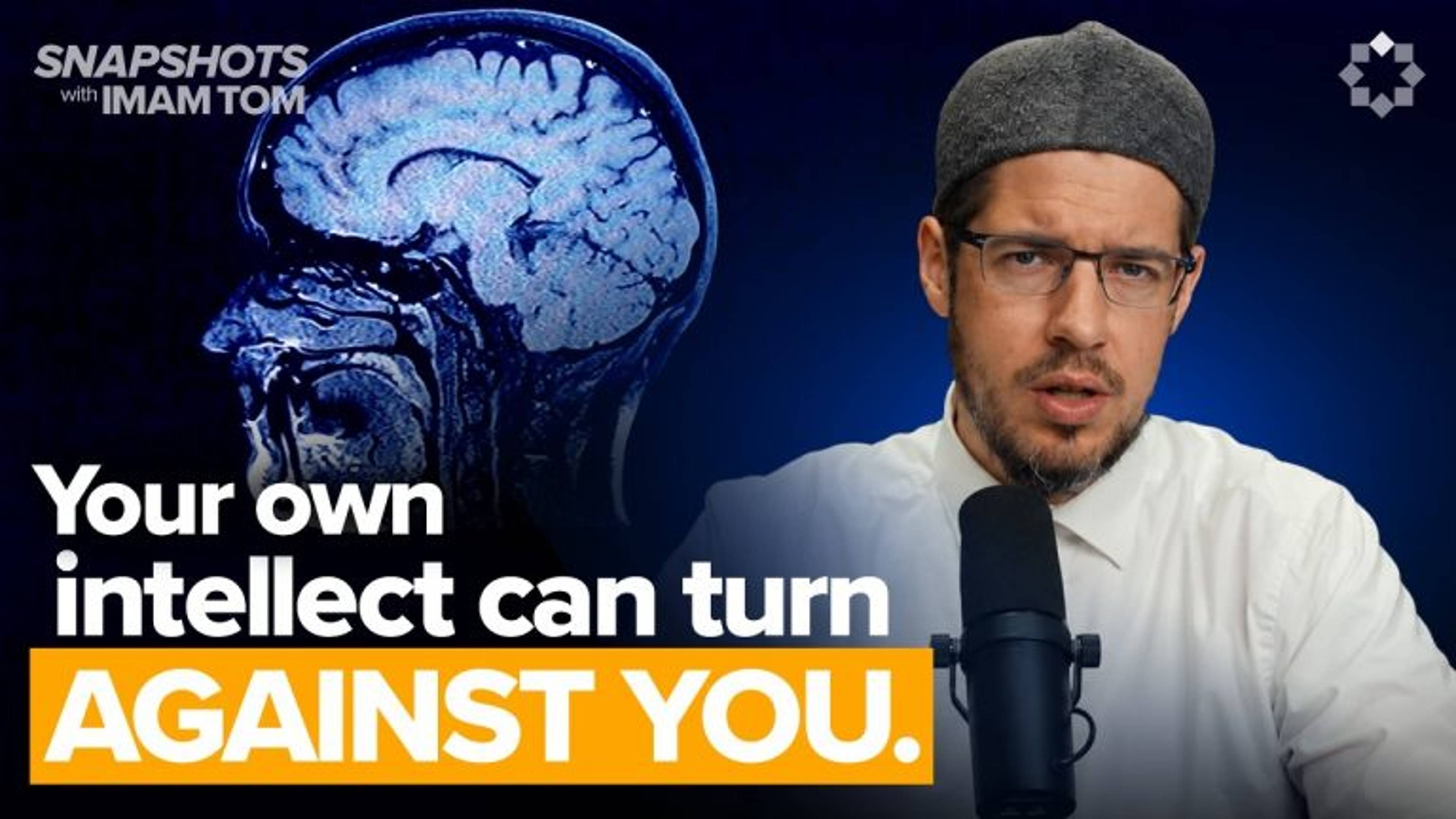
The Devil Whispers. Your Intellect Does the Rest | Snapshots with Imam Tom Facchine
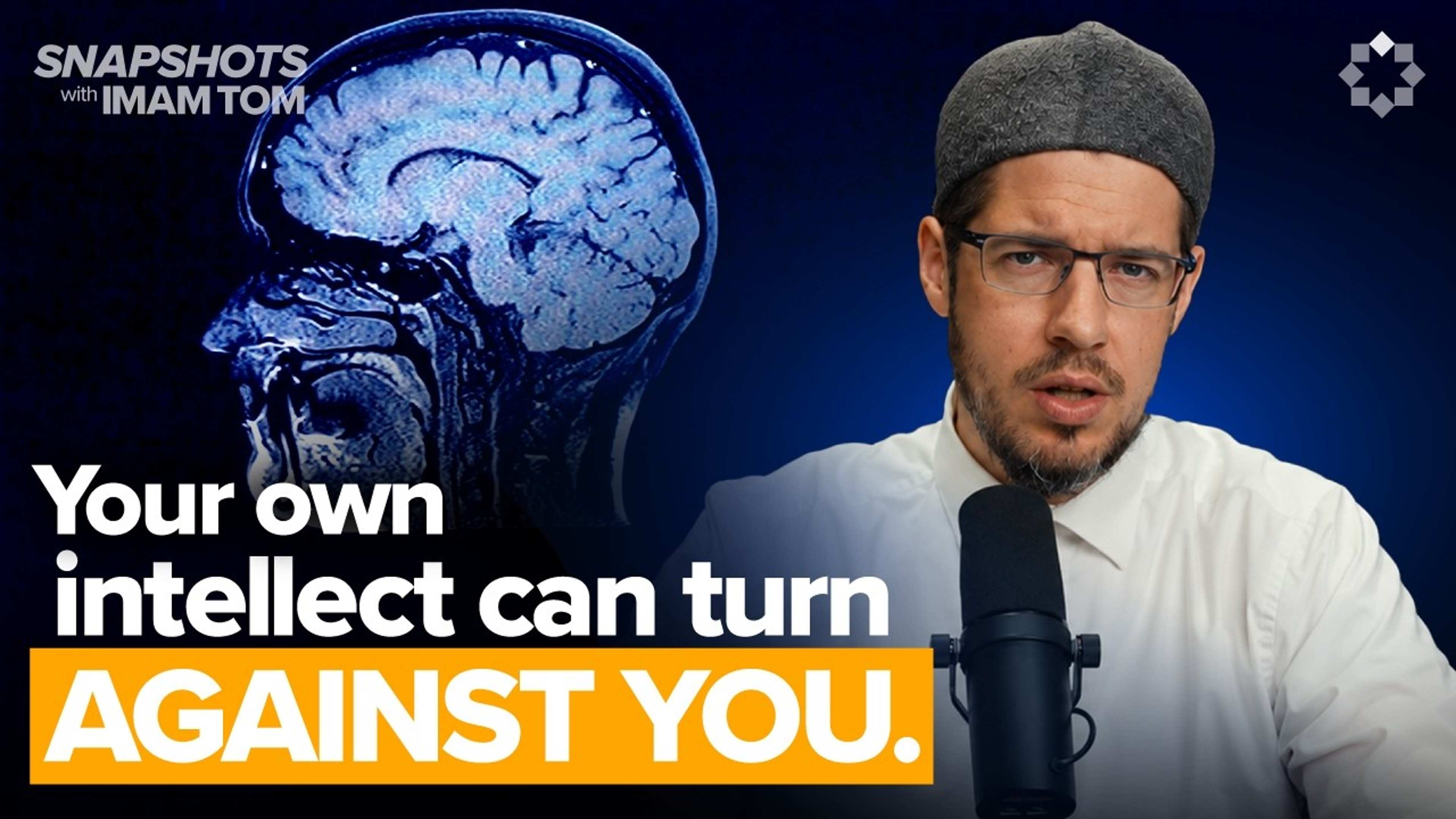
Sometimes, the most dangerous ideas aren’t the ones that sound irrational. They’re the ones we can make sound reasonable when our desires, insecurities, or need for approval pull us into a certain direction. In this Snapshot, Imam Tom Facchine explores what happens when the intellect becomes detached from taqwa and when the nafs learns to use our intelligence to defend what it wants. This episode explores:
—Why intelligence alone isn’t enough
—How the nafs can turn intellect into a tool for rationalization
—Why “nuance” and so-called sophistication aren’t always signs of deeper thinking
—What it means to have an intellect without a qiblah
This transcript was auto-generated using AI and may contain misspellings.
00:00Intelligence does not protect a Muslim from bad ideas. Sometimes it just makes the bad idea sound more sophisticated. We have a concept in Islam called the 'aql, which is often translated as the intellect.
00:14But many scholars such as al-Raghib al-Asfahani talk about how the intellect is not quite the same as just being smart. It actually has to do with your ability to tell right from wrong. Al-Raghib al-Asfahani's whole thing is that, listen, there is no contradiction between the intellect and the deen.
00:27You can't imagine that there are opposing forces, right? And that you just have to believe, don't ask questions, don't think, you know, whatever. He is trying to get us to realize that they both complete each other.
00:37And one of the ways he makes this argument is that, look at how Allah ﷻ guides people. It's push-pull, okay? You could say the push is that a lot of people have this internal push to want to seek and to want to strive.
00:50And actually, one of the hopeful things about America is that you find this in people. I was just at the cafe this morning, you know, and there were some guys, young guys, early 20s, you know, late teens or whatever. And they're talking about metaphysics and talking about the books that they're reading.
01:04And, oh, I'm reading this book and this book and that book or whatever. Now, the problem is, and we'll get to that in a second, once they start listing the books, you realize that they have no idea what they're talking about. Because they don't have a structure, they don't have a system. But we can't necessarily just, you know, shut them down like that.
01:17They have this thing in them that they want to know. They have a thirst for knowledge. They're not satisfied with just, you know, Netflix and making money and whatever, you know, like they actually want something higher. They are searching for transcendence. And that's half the equation, right?
01:32That's the thing that Allah ﷻ put in every single one of us. And if it's still alive, alhamdulillah, thank Allah that it's still alive in you. Because for a lot of people, it dies.
01:41It gets blunted by the attachment to the dunya and the things that you want and your pleasures and your appetites and your attachments and these sorts of things. But that can't be it. You can't simply stay at that level where you're just going off of that. And this is the problem with the guys in the cafe.
01:55Because when they start listing their book list, you realize that they're just reading the same New York Times bestseller trash that everybody else is reading, right? They have no idea how to systematically go about studying metaphysics or philosophy or 'aqidah or anything, right? You need help.
02:09You can't do it on your own. And that's where prophets come in. That's where revelation comes in. Something that's outside of yourself. Something to show you the way. And I should say that if you can't benefit from the latter, you'll never benefit from the former.
02:22I mean, if you can't find an external guide—the prophets, Qur'an, something outside of yourself—you won't benefit from the first. You won't benefit from your intellect, that sort of internal sort of thing. And that makes a lot of sense.
02:34Because if intelligence was just simply what it took to be a good Muslim, then all smart people would be in Jannah and all dumb people would be in the hellfire. And we know that that's not true.
02:45What's dangerous is when desire takes control of the 'aql, whether it's corrupt leaders or people who do sin or harm other people. Sometimes we have a very simplistic idea of how that works.
02:56We might think of these people as arch-narcissists, Firaun types that are very fully cognizant and aware of what they're doing the whole time and manipulating other people. A lot of times they're just deluded. A lot of times they're just misled.
03:09Many, many people sincerely believe that they're doing something that's okay and justify it. And that is a sign of what happens when the desire takes control of the 'aql, that it uses all of the resources of the human intellect to justify and explain why what they're doing is not so bad.
03:24And that can come in the form of spiritual abuse or corrupt leaders. Sometimes it can take the form of fake nuance and sophistication that people say, which is really just a stand-in for an inferiority complex.
03:37Some people, they crave the approval from elites or from non-Muslims so much that they make them the qibla. And then in social media, it's the opposite. People can be so addicted to the approval of the masses and basically approval from anybody else except Allah.
03:50We also find it sometimes with fake compassion. People acting as if things within the deen itself are not compassionate. Well, we would ask them, who's more compassionate than Allah, subhanahu wa ta'ala?
04:00So intelligence becomes dangerous when it's detached from taqwa, when it's detached from piety, and it's used by the nafs to rationalize surrender either to sin or to meet one's desires in some sort of illicit way.
04:13Practical steps, how you can fight this is think through what's a position that you're tempted to soften up because of somebody who might disapprove.
04:22Ask yourself whether you adopted an idea because it's true or because it helps you belong to a group or climb the ladder. Try building a habit of consulting other people who are rooted, not only in credential.
04:33This is really important for accountability and for building out an ecosystem of other people that will keep you in line. And as a take-home question, we'd like to hear your thoughts in the comments. Whose approval are you afraid of losing? Because the question is not whether you're smart.
04:46The question is whether your intelligence has a qibla.
04:59www.yaqeeninstitute.org