Jump to:
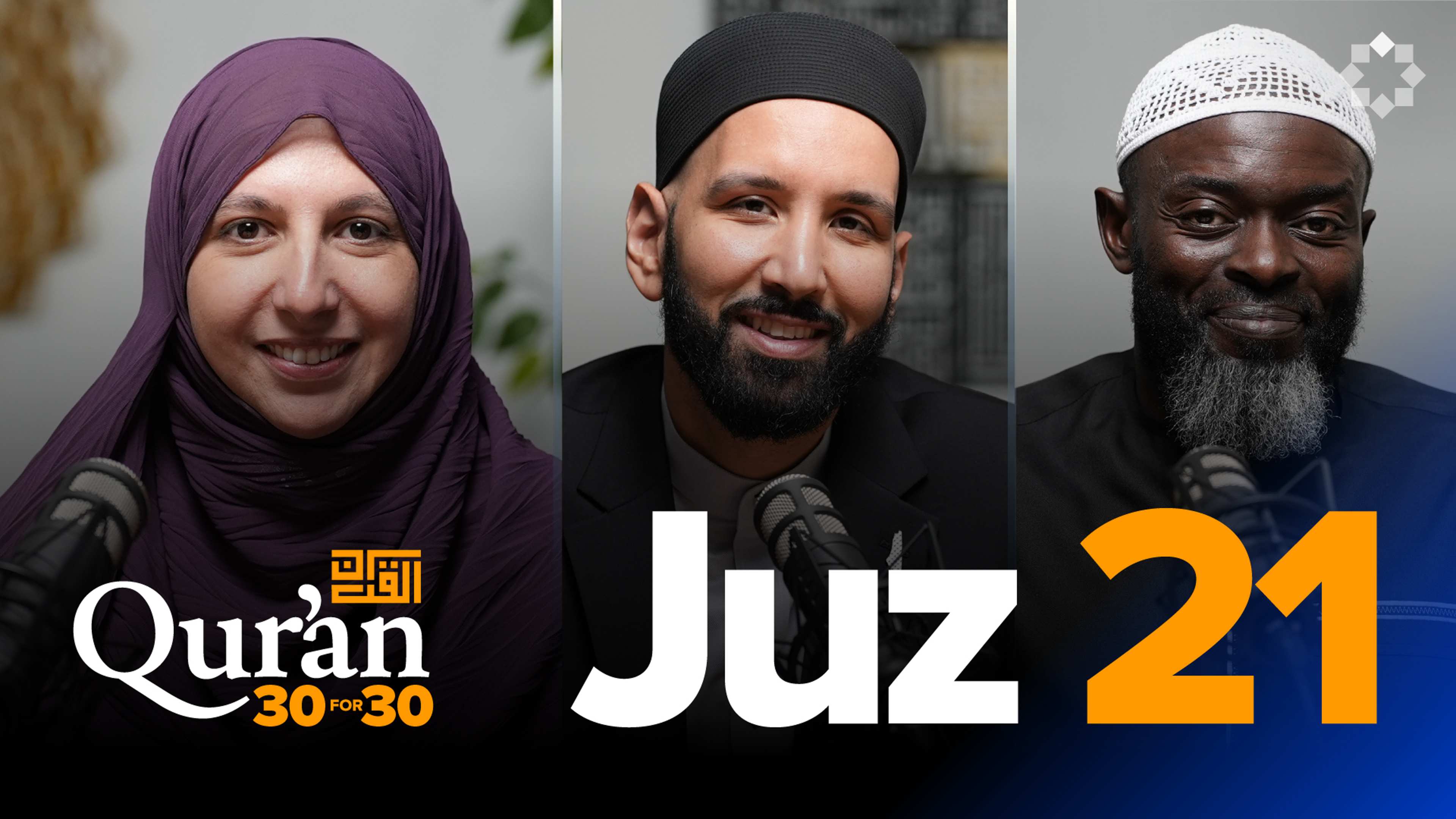
Qur’an 30 for 30 | Season 7
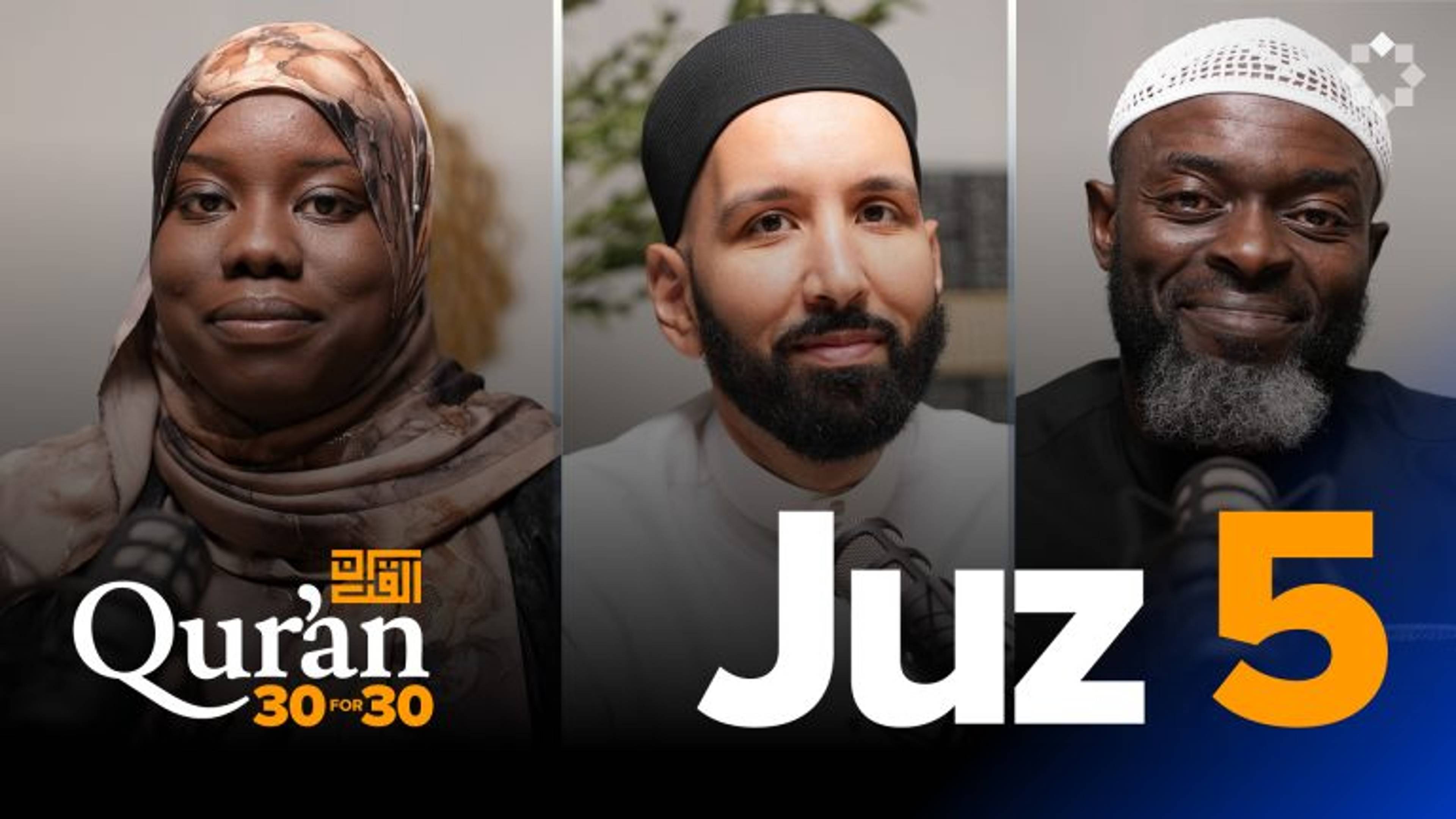
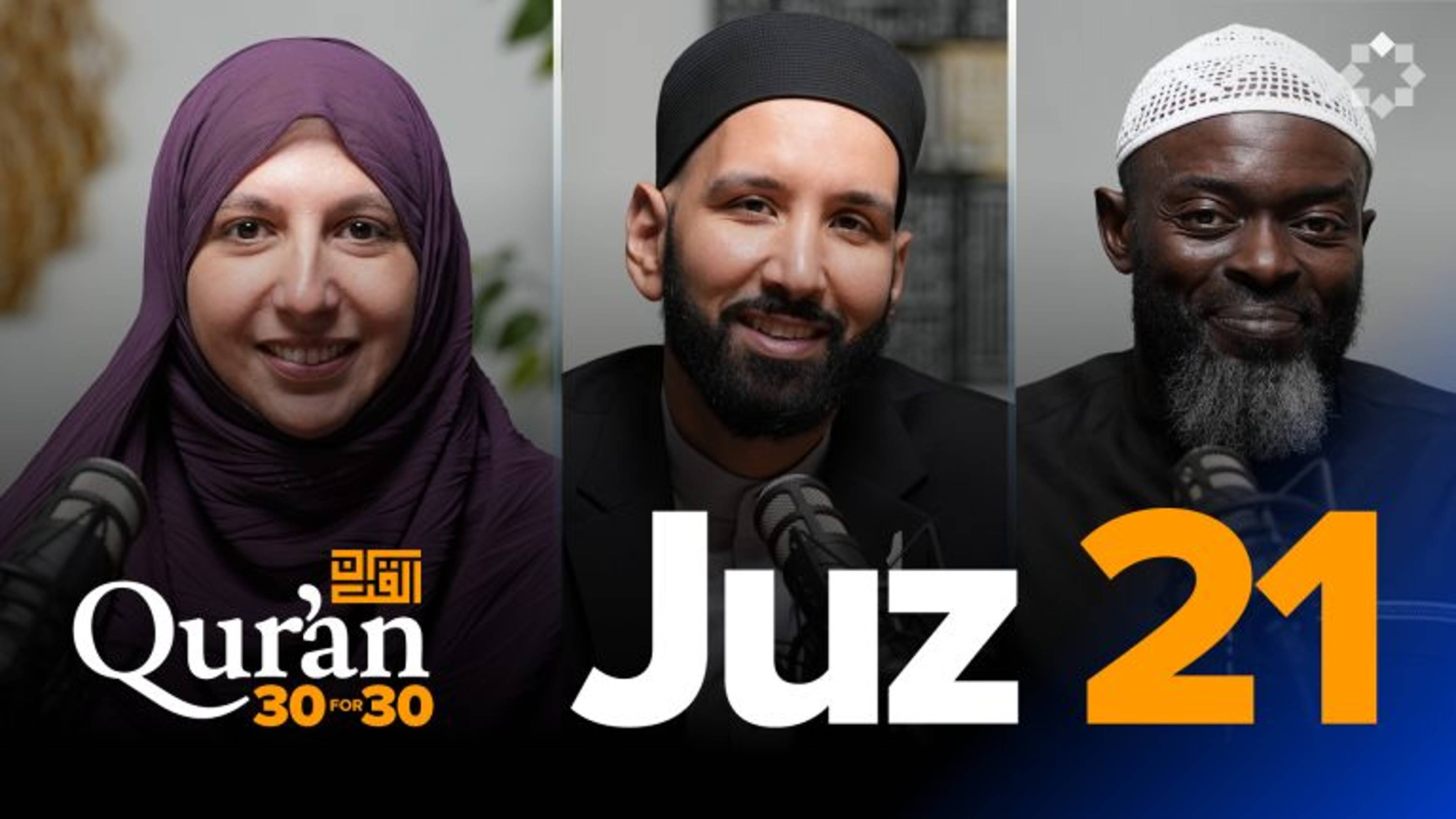
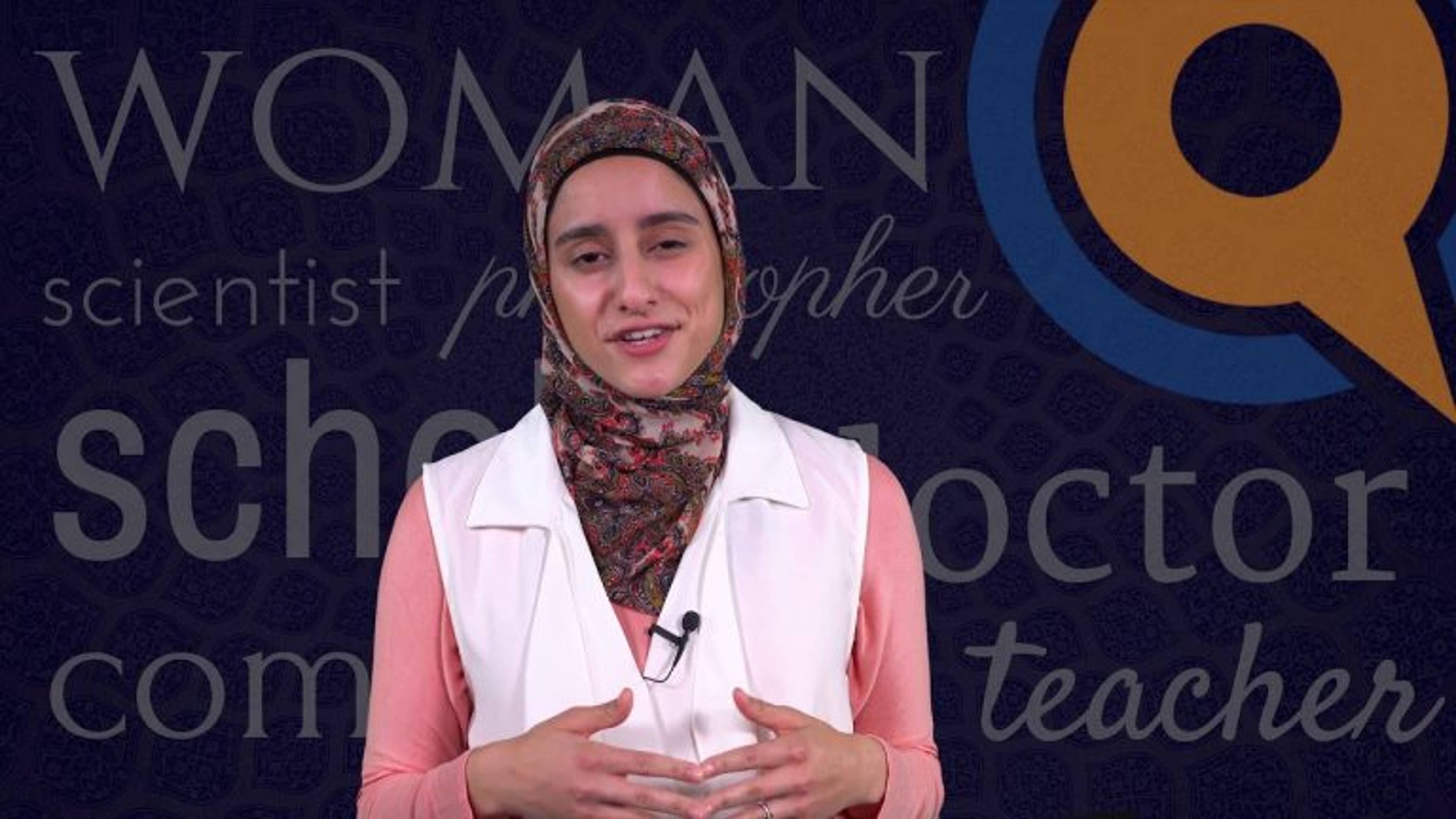
Juz 21: Allah Is The Author of History | Sr. Sarah Sultan
What does it truly mean to live your truth? Sr. Sarah Sultan unpacks the nature of truth and how we ground ourselves in an unchanging reality, challenging the idea of following feelings over revelation.
Names of Allah mentioned: Al-Lateef, Al-Shakoor, Al-Haqq, Al-Aliyy, Al-Kabeer
This transcript was auto-generated using AI and may contain misspellings.
00:05In today's world, we often hear people saying, "I'm living my truth." A lot of times, we end up chasing false, quote-unquote, "truths." They are not truths at all. You know, like when kids will be like, "Man, he's the truth," or, you know, like—or they'll say, "What's
00:20the—he's him." What does it mean when they say, "He's him," or "He's the truth," right? That means that that person showed up on the court or showed up wherever they did in a way that, like, they cannot be denied. All right, well, of course, when it comes to Allah 'Azza wa Jall,
00:32He is always Al-Haqq. He is the truth, no matter what. And that's what makes Islam so beautiful, because it is submission only to Allah Subhanahu wa Ta'ala. And that's what I think made me come into Islam.
00:50As-salamu alaykum wa rahmatullahi wa barakatuh, everyone. Welcome back to Quran 30 for 30. Alhamdulillah rabbil 'alamin. We now enter into the most precious and blessed of nights, of the last 10 nights of Ramadan. May Allah Subhanahu wa Ta'ala accept them from you all. May Allah 'Azza wa Jall allow you all and all
01:05of us to find Laylatul Qadr and to be embraced by Allah's mercy on that special night. And may Allah 'Azza wa Jall accept all of the good deeds that have been done thus far and forgive all of the sins before. Allahumma amin. I want to remind you all, this is the time
01:18in which we truly count on you, bi'idhnillahi Ta'ala, to contribute. What you can do, insha'Allah Ta'ala, is go ahead and plug in any donation, insha'Allah Ta'ala, for the last 10 nights of Ramadan, and that will automate throughout the last 10 nights, bi'idhnillahi Ta'ala. And this is a
01:31major source of support for the work of Yaqeen. And so, by doing so, think about how many lives, how many hearts you are changing, how many people you're connecting to Allah Subhanahu wa Ta'ala, all of that being from your scale of good deeds, bi'idhnillahi Ta'ala. So please do, insha'Allah Ta'ala, whatever amount it is, there
01:46is no insignificant amount. And we need your du'as as well for acceptance. May Allah 'Azza wa Jall reward you all, and I pray that we're able to continue to benefit you by the permission of Allah Subhanahu wa Ta'ala, and we certainly benefit from your du'as, your feedback, and
02:01your support. With that, alhamdulillahi rabbil 'alamin, we have with us Sister Sara Sultan, alhamdulillah, from Houston. May Allah Subhanahu wa Ta'ala bless you and elevate you. Allahumma amin. Jazakumullahu khayran. I was sharing with her that subhanAllah, that one of the early books—might be
02:15the earliest book publication that we actually had—was the book "Your Lord Has Not Forsaken You," with yourself and Sister Najwa. And, subhanAllah, that book, I've actually been giving it to people in prison, printing
02:28it out and giving it to them, and they've come back with how much they love that book and how much comfort they found in it. And that has been the case. So may Allah reward you for that work, you and Sister Najwa. And also, of course,
02:41the series we did a few years ago about attaching to Allah Subhanahu wa Ta'ala, very relevant to this year's series as well, how Ibrahim (عليه السلام) teaches us how to connect to Allah 'Azza wa Jall in different vulnerabilities. And everything else that you're doing, may
02:55Allah 'Azza wa Jall reward you, and may Allah Subhanahu wa Ta'ala reward your family. May Allah 'Azza wa Jall allow it to be a source of comfort and acceptance for you. Allahumma amin. Allahumma amin. Is there anything you'd like to share about the work that you're doing, the work that's in the pipeline? Well, jazakumullahu khayran.
03:08First, I want to convey my gratitude that you're sharing our book with just people who are so incredible that I can't believe that, you know, them have—reading my words, can't believe that, you know, them reading my words,
03:22if I can get one du'a, if Najwa and I and our families can get one du'a from them, we're just protect them and free them and elevate them in status and in rank. And I'm going to tell Najwa that. She's going to be so appreciative to hear that too, insha'Allah. In terms
03:37of the work that I'm doing, alhamdulillah, I'm really grateful to continue to work with Yaqeen. Najwa and I are co-writing a parenting series right now. We're, I think, about three papers in. Alhamdulillah. Alhamdulillah. And
03:50it's about raising children who are connected to Allah Subhanahu wa Ta'ala, who grow in strong Muslim identity, to be able to face the trials of this world, the trials of the next, to raise
04:05them in that way. And then, alhamdulillah, I'm blessed to do the work that I do with Al-Maghrib Institute, the classes and the videos that I'm able to record with them too. So I'm grateful for those opportunities, alhamdulillah. May Allah Subhanahu wa Ta'ala bless you and
04:19put barakah in it all. Allahumma amin. Sister Sara, really quick, is there a favorite name of Allah Subhanahu wa Ta'ala that you have? Yes. Okay, it's very hard to pick one, but it's a tie between two. So the first is
04:32Al-Latif, which is the subtly kind, the gentle guiding hand of Allah Subhanahu wa Ta'ala, where, like, we see it in the story of Yusuf (عليه السلام), where in the end he calls Allah Subhanahu wa Ta'ala Al-Latif after
04:45everything that he's been through, where he is put in the well by his brothers, he is sold into slavery, he is imprisoned, he is lied about by someone of high status. And then all of this culminates
04:58in the end of his story to him being in one of the highest positions in the land. And if only one step had been missed, then he wouldn't have gotten that position. And that is the subtly kind nature of Allah Subhanahu wa Ta'ala and the way that Allah Subhanahu wa Ta'ala uses His, like,
05:13gentleness to guide us. So sometimes we don't realize the grand scheme, like the tapestry that Allah Subhanahu wa Ta'ala is creating for us. And when plans, mishaps happen, we find them really unfortunate. But in the end, that's
05:28actually creating the trajectory that we need for success. So that's one of my favorite names. The other one is Ash-Shakur, because as a mom, knowing that I have the appreciation of Allah Subhanahu wa Ta'ala, even if there's no appreciation elsewhere, I find it
05:41very powerful also for intention, you know, that when you know that Allah Subhanahu wa Ta'ala appreciates what you do, it allows you to do things without needing that validation or appreciation from people. So those are my two favorites, alhamdulillah. Jazakumullahu
05:56khayran, Allahu ybarik fikum. Alhamdulillahi rabbil 'alamin. We are in Juz' 21, and subhanAllah, it actually fits the nature of the book that you all wrote. You know, last Juz', there is a lot of "a-ilahun ma'Allah?"— is there another God beside Allah Subhanahu wa Ta'ala?
06:11And the things that Allah Subhanahu wa Ta'ala does for us on an individual level that no one else could do, and the things that Allah 'Azza wa Jall does for this universe that no one else could do, and the way that we call out to Allah Subhanahu wa Ta'ala in desperation, in darkness, and He's always
06:23there, "a-ilahun ma'Allah?"—which is both, is there any God besides Allah Subhanahu wa Ta'ala? And would you want a God besides Allah Subhanahu wa Ta'ala because of who Allah 'Azza wa Jall is to you and what He can be to you? This Juz', subhanAllah, I was thinking
06:36about something entirely different. I'm going to frame it, bi'idhnillahi Ta'ala, with this one sentence: Allah 'Azza wa Jall is the author of history. Allah is the author of history. Why? Because if you read this
06:48Juz', it goes from Al-'Ankabut and then Surah Ar-Rum, right? Luqman, As-Sajdah, and then to Al-Ahzab. So from the closing of Surah Al-'Ankabut, but really you're looking at Surah Ar-Rum to Surah Al-Ahzab. So if the last Juz' is
07:02more on like a personal level of "a-ilahun ma'Allah?"—is there any God beside Allah Subhanahu wa Ta'ala that could have done this or that could do this for you? You also look at history. Is there any God beside Allah Subhanahu wa Ta'ala that is privy, Al-Latif, to
07:14everything that is happening and that is controlling everything that is happening and that anticipates and waits and knows the outcomes and knows what is coming and is always on the side of the believers? So let's kind of just sit with this for a little bit,
07:29insha'Allah Ta'ala, then we can have a brief discussion about it, bi'idhnillah, and then we'll get into a very specific ayah. These surahs are the Alif Lam Mims. They're part of the Lawamim that were revealed
07:41in Mecca. They kind of come one after the other. I teach Tafsir Surah As-Sajdah with Al-Maghrib, and so we sort of talk about this grouping of surahs. They're very,
07:54you know, pronounced with the power of Allah Subhanahu wa Ta'ala. Like these surahs, Allah 'Azza wa Jall is really putting us in our place, like constantly as humanity, right? You need to expect test. You need to expect trial.
08:08You need to expect that there are going to be times where you can't see the light at the end of the tunnel, and none of that matters because Allah Subhanahu wa Ta'ala's promise is true, and Allah 'Azza wa Jall is going to bring you out of it. And the focus should be on your sajdah. You're humbling yourself to Allah Subhanahu wa Ta'ala. Collectively, what does it
08:22look like as an Ummah when we're in sajdah? Collectively, right? An Ummah that submits itself to Allah Subhanahu wa Ta'ala, submits itself to His will, submits itself to His power. But then there's one connection that I
08:35was thinking about, subhanAllah. It starts off with Surah Ar-Rum. The Romans thought they were done, right? The Romans thought they were done. Ghulibat ar-Rum. And Allah Subhanahu wa Ta'ala gave them victory over the Persians when they thought they were done. And the end of the juz'
08:49is Surah Al-Ahzab, where the Muslims thought they were done in the Khandaq, in the trench. And Allah Subhanahu wa Ta'ala showed them the light, not just outside of the trench, but a light that spreads throughout the entire world through the hand of the Prophet (ﷺ) that you are not done. This is, in fact, the beginning
09:04of your victory. And indeed, after Khandaq, there's a turn that takes place, a very palatable turn that takes place. What comes next in terms of the major incidents are Hudaybiyyah, right? Victory over the hypocrites on the inside and those that betrayed them on
09:18the inside, Banu Qurayza. And then, you know, of course, I'm skipping some events in between, but Hudaybiyyah and Hudaybiyyah was a fath. It was a great conquest and opening. And of course, it preceded the great opening of Makkah,
09:31Fath Makkah. Now, subhanAllah, also with the Romans and the Persians, Allah 'Azza wa Jall said fi bid'i sinin that it's between three and nine years. If you actually read what happened between those three and nine years, there were openings that were happening before the
09:44big opening, right? And that's how victory actually takes place. It's never just this one boom, and then there is an opening. It goes from place to place. And so Allah 'Azza wa Jall is the author of history, and He presents Himself as such in this particular
10:00juz'. And Allah Subhanahu wa Ta'ala promises when the Romans will be defeated, but He also says yabda'ul khalqa thumma yu'iduhu. He originates creation, and then He repeats it. One of the fawa'id,
10:13one of the benefits of that is He repeats history as well, right? You know, one set of heroes and villains dies, the next set comes. One generation dies, another generation comes. There are problems, and their promises are
10:27eerily reminiscent of the generations of the past. And through that, the lessons are timeless. And so Allah 'Azza wa Jall says yabda'ul khalqa thumma yu'iduhu. And then He also says 'indahu 'ilmus sa'ah that He has the knowledge
10:40of the hour, that it's not just history that Allah knows. Allah knows the hour, and no one else knows the hour, right? So it's like He takes you to the very beginning, and He takes you to the very end, and commands you to just be in a state of submission
10:52everywhere in between. And that is His promise to us, that if we do so, that He will make of us a great Ummah. So Shaykh Abdullah, I'd love for you to start, insha'Allah, any reflections you have on that, bi'idhnillahi Ta'ala, and then Ustadh Asara.
11:07Bismillah, was-salatu was-salamu 'ala Rasulillah. Yeah, it's beautiful. I mean, like how just when pondering over Allah Subhanahu wa Ta'ala and His greatness and how He is the originator of all things and how when you look at history in and of itself, how Allah creates time and then He creates, as
11:22He says, wa tilkal ayyamu nudawiluha baynan nas, and these are the days that we cause to repeat one another. And it's for us to know more about ourselves individually, personally, but then collectively as an Ummah. We have to look at ourselves as an Ummah and then see what are we doing within this
11:36time that Allah has created, firstly recognizing that He is the creator of time and then seeing how we are acting in accordance to that knowledge. So when we see what has happened with the Romans, we see what has happened with the Prophet (ﷺ) throughout history, then we look at what's happened throughout ourselves
11:50and see what are those things that are consistent in the ways that they responded to the taqdeer of Allah, to the creation of Allah Subhanahu wa Ta'ala. And that is, foundationally speaking, our belief in Him, our creed, our connection to Him, firstly our knowledge of Him, and
12:04then how do we respond to that knowledge? That's what I think is the most important aspect of history. And this is why Allah Subhanahu wa Ta'ala tells us within these qisas, ya'ni these stories, they're 'ibrah, they're a lesson. And the lesson is not just to be something that is for education, but for enrichment,
12:18initially spiritual enrichment. And that's what I think is so beautiful, that when we look at history, we repeat what was good, and then we learn from what needed work from the creation, which also, as a result, reminds us that Allah is the one that is perfect and we are not, right? So that's the reflection that I have from
12:33that. MashaAllah, jazakAllahu khayran. MashaAllah, you know, what you were saying about Allah Subhanahu wa Ta'ala putting us in our place in these suwar, it's incredible because, you know,
12:46in a lot of the Quran, we see Allah Subhanahu wa Ta'ala talking about His creation, His signs, and for us to open our eyes and to reflect on them, right? And that only, only those who are righteous are actually going to be able to see
12:59those signs and reflect on them. And so the verse that I have for today is exactly this, is exactly Allah Subhanahu wa Ta'ala putting us in our place
13:12where in Surah Luqman, He says: "Dhalika bi'anna Allaha huwal haqqu wa anna ma yad'una min dunihi al-batilu wa anna Allaha huwal 'aliyyul kabir." And so Allah Subhanahu wa Ta'ala here is saying
13:25that that is because Allah Subhanahu wa Ta'ala is the ultimate truth. He is Al-Haqq, and what they invoke besides Him is falsehood. And Allah is the Most High and the All-Great. And just in this short verse, we see
13:37three incredibly powerful names of Allah Subhanahu wa Ta'ala that all put us in our place, right? We see Al-Haqq, that Allah Subhanahu wa Ta'ala is the ultimate truth, and Al-'Aliyy, that He's the Most High, and Al-Kabir, that He is the Most Great. And when we understand them, we
13:51look at the context of where they're showing up in this Juz', in this surah, and just before this verse, Allah Subhanahu wa Ta'ala is reminding us of His power. He is telling us how He alternates the night and the day, how He resurrects and creates, how He commands
14:05the sun and the moon, and then He says that He is Al-Haqq, the ultimate truth. And when I read this verse, the first thing that popped into my head, because, you know, a lot of times when we hear
14:16the word truth, in today's world, we often hear people saying, "I'm living my truth." You know, "I'm just living my truth. This is my personal truth." And a lot of times we end up chasing false, quote-unquote,
14:31truths. They are not truths at all. And we chase false comforts, false refuges, instead of prioritizing Allah Subhanahu wa Ta'ala over everything. And so when He tells us that He is Al-Haqq, that He is the truth,
14:45it is something that is so powerful because when we submit to Allah Subhanahu wa Ta'ala, when we humble ourselves to Allah Subhanahu wa Ta'ala, we anchor ourselves in a reality that doesn't change. We anchor ourselves in stability when the world is constantly in motion and
15:00constantly changing, subhanAllah. And so when people say, "I'm living my truth," usually what they mean is, "I'm doing what feels good right now. I'm living in accordance with my emotions, right? And I'm not living in accordance with revelation. And it reminded me of the verse where
15:13Allah Subhanahu wa Ta'ala says, "Have you seen the one who takes his desires as his god?" in Surah Al-Furqan. Because do we consult our feelings first, or do we consult Allah first? And, you know, as a therapist, I get it. Feelings
15:28are important. I view feelings as very important, you know, but they're not the most important. And sometimes, sometimes we have to put our feelings aside to do what's right. We have to put our comfort aside to choose what
15:40Allah Subhanahu wa Ta'ala wants for us. And so allowing our feelings to become our guide, that's us choosing our ego and putting our ego above what Allah Subhanahu wa Ta'ala wants for us, rather than actually submitting our
15:54ego to Allah. And that's what Iblis did, right? When Allah Subhanahu wa Ta'ala commands him to bow down to Adam, and he decides, "I don't want to." That doesn't feel good because you made him from clay and you made me from fire. I'm better than him. So it doesn't
16:08feel right. That's not my personal truth that I should bow down to this man. But he prioritized his understanding, his rationale over Allah Subhanahu wa Ta'ala.
16:20And that is the essence of arrogance, right? And when the Rasul (ﷺ) was asked about arrogance, one of the ways he defined it was, "It is rejecting the truth," right? Because Allah Subhanahu wa Ta'ala is
16:32Al-Haqq, right? Rejecting the truth of placing the self above Allah Subhanahu wa Ta'ala. And so I want to pause there before I talk a little bit more about some thoughts I have, insha'Allah, to hear your thoughts. No, there's a lot of fawa'id and jewels there, mashaAllah. I
16:46mean, I love how you mentioned Al-Haqq and you mentioned how people say their truths, especially in a day where it's a day of hedonism and, you know, people just saying, you know, just follow your feelings and do what
16:58you feel and how you feel, and that's your truth, and it's subjective, right? So, you know, when the name Al-Haqq, as some scholars say, means ath-thabit, that which is firm and doesn't move, is mustaqirr, ya'ni. But when you
17:10look at batil, you know, Allah says, wa anna ma yad'una min dunihi huwal batil—what they call other than Him, it's batil. It's not thabit. It's not firm. It's not that which will stay forever. It's not timeless. And that's beautiful how you are mentioning that because if we were just to rely on
17:25our feelings, it would be we'd be destroyed. That ruins the essence of 'ubudiyyah, of servitude, because servitude from servitude, as a part of servitude or within the process of servitude, is jihadun nafs, is fighting
17:40the self, right? The self, the nafs, which some scholars mention that there's three different types or three different scenarios of the nafs, which we won't go into, but one of those is to where, you know, the nafs al-ammarah bis-su', the self, the part of the self
17:53that calls you consistently to do evil or to do that which is not ultimately in your benefit, because immediately we may see the immediate benefit, but our fitrah knows that, okay, this may not be the best for me, but the hawa, the desires,
18:07the feelings that you talked about cause us to indulge upon those things, which if we were to sit and think about Allah Subhanahu wa Ta'ala and ponder over, where is this going to take me, right? Where is this going to take me in this life, in the next
18:21week, the next month, the next year, or in the afterlife, which the Muslim is a pillar of his or her belief, we would say, okay, we would fight ourselves to do the things that's better for ourselves. So when you realize Allah Al-Haqq, it reminds me as well as
18:35how Allah Subhanahu wa Ta'ala says, inna hadhal Qurana yahdi lillati hiya aqwam. Allah Subhanahu wa Ta'ala says that this Quran calls to that which is most upright. And this is, you know, sighat tafdhil, meaning that this is the best. That doesn't mean that there are not
18:50other ways that you may view as upright, and there may not be other ways. There are other ways that may be upright in reality, but the Quran is the best. So when Allah is Al-Haqq, He is calling you, He is the truth, and He is calling you
19:02to the truth over every and anything that you may view as true. But if it's contradictory to what the truth has revealed in the system that He's revealed, that's where we have to do some self-reviews, some self-renewal,
19:15some purification of the self. And the best purification is understanding who Allah Subhanahu wa Ta'ala is and trying your best consistently, consistently of that purification through actions and through remembrance with all the limbs, the tongue, the heart, and the limbs as well. So that's
19:28beautiful. I like how you really just, you know, just unpacked that name. May Allah Subhanahu wa Ta'ala make it easy upon us. It's really interesting that, like, even when you translate this to, like, what it means societally, what is true without moral
19:43objectivity today was not true, right, last generation, right? Like, when you say that Al-Haqq means that He is ath-thabit, that He's firm, falsehood
19:55is so trendy. You know, it's—there's trend versus truth, right? So falsehood is based on trend, and there are all sorts of factors that create that truth for the moment, right? Society sets different standards.
20:10There are people that profit off of those different standards. There are, you know, all sorts of incentives to believe this to be the truth because you benefit from taking this as a truth, right? So I think about someone
20:23that was deeply devoted to an idol in Mecca, you know? You benefit from that. You don't really believe that the idol has power, but you benefit from that. But when Allah Subhanahu wa Ta'ala says, huwal haqq, and you know, subhanAllah, when you think about arrogance, like most
20:36people, and the Prophet (ﷺ) said, batarul haqqi wa ghamtun nas—to deny the truth and to look down upon people or to belittle the people, which has a very specific, you know, application
20:49here in this hadith. But the first one, which is batarul haqq—like people don't usually think about that in terms of arrogance, right? Like the person that completely denies revelation, denies the existence of God, but is humble and nice and courteous, people
21:03won't call that person arrogant. But there's no greater arrogance than denying the truth, right? Than denying your creator. Just like if a person denied their parents, it doesn't matter how good they are to everyone else.
21:16But if they treat their parents like, you know, you know, like dirt, then at the end of the day, there's a denial. There's a component of denial that is there as well. So Allah 'Azza wa Jall elevates Himself as the truth. That has multiple connotations. Wa'dullahi
21:29la yukhlifu Allahu wa'dah. This also shows up in this Juz', that the promise of Allah, Allah does not betray His promise. So He is the truth. His promises are true. Anta al-haqqu wa wa'duka al-haqqu wa qawluka al-haqqu wa liqa'uka haqqun—to the end of the hadith. Like
21:44it has all sorts of connotations that He is true, His promise is true, His reward is true, His meeting is true, His Jannah is true, His hellfire is true, the Prophet (ﷺ) is true, right? So truth emanates from Him. I was thinking about this like in
21:57terms of modern lingo, like, you know, like when kids be like, "Man, he's the truth," or, you know, like or they'll say, "What's the 'He's him'?" What does it mean when they say "He's him" or "He's the truth," right? That means that that person showed up on the court
22:09or showed up wherever they did in a way that, like, they cannot be denied. All right, well, of course, when it comes to Allah 'Azza wa Jall, He is always Al-Haqq. He is the truth no matter what, right?
22:21Subhanahu wa Ta'ala. SubhanAllah. So when you go through the rest of the ayah, Sister Sara, like this part at the end, Mm-hmm, that that He is Al-'Aliyy, Al-Kabir, to pair that off with the Most High, the Most
22:35Great, like what more do we derive from that? I think that it's one of the, like, I think that those two names being paired at the end makes it so much easier for us to accept Allah Subhanahu wa Ta'ala as Al-Haqq, as the truth, right? Because, you
22:48know, what you were mentioning, Shaykh Abdullah, about quelling our desires. Ibn al-Qayyim says that whoever wishes to purify his heart must prefer Allah above his own desires, right? And so when we think of those
23:01moments where we decide that Allah is Al-'Aliyy, He is the Most High, that Allah is Al-Kabir, that He is the Most Great, when we say Allahu Akbar in salah, we say Allah is greater. Greater than what? Greater than everything, right? So in those moments when you wake up for
23:16Fajr and you get out of your warm bed or you tell the truth, even though that truth might cost you, right? Or you walk away from a sin, even though you're, you're like, there's such an intense desire for it, those are the moments that you're accepting that Allah
23:30Subhanahu wa Ta'ala is higher than my ego, higher than myself, and I'm going to put Him in that position and that He is greater, greater than everything that's standing in my way of worshiping Him, and that His truth is the truth that I hold onto. So I think
23:44that those two names, when they're paired, they really, they really form an antidote for us against our ego, and it really helps us to, you know, in the following verse in Surah Luqman, I love the way
23:59it transitions from Al-Haqq, Al-'Aliyy, and Al-Kabir, that when we talk about the ego, it's all about me, myself, and I. It's all about looking inward. And the following verse, Allah Subhanahu wa Ta'ala says, "Do you not see that the ships sail through the sea
24:14by the grace of Allah so that He may show you His signs?" And He is bringing our attention outward, externally, away from like the inners of our ego. And then He ends this verse by saying that surely in
24:27this are signs for those who are sabbarun shakur, the ones who are steadfast. Like sabr, I know people define as patience, but I think it's more perseverance,
24:39discipline, steadfastness, right? And shakur, the ones who are grateful. And those are two antidotes to our ego as well, to help us to be humble, right? Because you need, like sabr is an essential
24:53part of the equation, to put Allah above your desires, to really decide that Allah is Al-'Aliyy, and if I want any lofty status, then I turn to Al-'Aliyy.
25:07And shukr also is necessary because a lot of times we do something and we're like, you know, I did that. And we pride ourselves on our capability, but where did that capability come from? It came from Allah
25:19Subhanahu wa Ta'ala. And so shukr is another antidote to help us be humble and to realize that Allahu Akbar, right? Allah is greater than my ability, than any capability, because He is the source of that capability, right? And so
25:34when we tie those two names to Al-Haqq, it makes us so much easier to accept the truth of Allah rather than the false, fleeting truths that we might have based on our desires, based on our feelings,
25:47because it really helps us to remember that Allah is higher than my ego and I choose to have that supersede. My worship of Allah, my purpose in worshiping Allah, supersedes whatever desire I have. And He
26:00is greater than any obstacle that might get in the way of me fulfilling that purpose. Right, right, right. And that's why it's important, subhanAllah, to always, subhanAllah, you know, the dhikr of Allah Subhanahu wa Ta'ala, even dhikr bil-lisan as, you know, is
26:14mentioned, just always mentioning His names. And when you mention that name, you try your best through continuously mentioning that name to ponder over it. And when you ponder over it, you start to look at your life, and that's when the introspection takes place. And all this
26:28is a process. And that's, you know, I used to always wonder, subhanAllah, when we at the end of the salawat, why is it 33 times? Why do we say it over and over and over and over again? And, you know, subhanAllah, maybe not the first, second, third, or 15th time that you say it, but hopefully, eventually,
26:42especially after just finishing the salah, you know, you think of Allahu Akbar. What does that really mean? Ya'ni, subhanAllah, glorification to Allah. What are the differences between the two, ya'ni, alhamdulillah? What's the difference between subhanAllah and alhamdulillah and
26:56Allahu Akbar? Ya'ni, and each one of these names has the sifat al-'uluw. You know, Allah Subhanahu wa Ta'ala is above all of these other forms of creation, above everything other than Him. He is greater than that. And subhanAllah, when you think of that, Allah, as you mentioned
27:11in the next verse, He talks about His creation. And what was mentioned about that when, you know, Allah ends it with as-sabr and ash-shukr, you know, some scholars mentioned that when you're in the fulk, in the bahr, in the sea, that if there are the waves that are
27:24very, very strong and impactful and it's hitting you, whether literally or figuratively, you know, it will require what? It will require patience, the turbulence of life. But when the sea is, ya'ni, khashi', when there's a level
27:38of sakinah, when it's tranquil, that's when it's time for you to what? To show shukr. And in both times, you need to mention the names of Allah Subhanahu wa Ta'ala to bring forth that sakinah in your heart or to make you more thankful, the tranquility in your heart
27:51from being patient, or to make you more thankful from what you are currently seeing. And that's why, subhanAllah, when we look at these names of Allah Subhanahu wa Ta'ala in this particular situation where He's talking about what they call on is batil, because the previous verses were speaking about how they made inkar of the ba'th,
28:06how they would deny resurrection and denying of these things, as you mentioned, qawluka al-haqq, denying what the Prophet said, denying prophethood, and some of them knowing prophethood, but their desires still caused them to deny,
28:19whether it's the ego of them themselves or their tribe or whatever the case may be, you know, recognizing that Allah is the truth does take an element of taking from yourself and submitting to Allah Subhanahu wa Ta'ala. And that's the essence of Islam. And that's what makes Islam so beautiful, because it is submission only
28:35Mm-hmm to Allah Subhanahu wa Ta'ala. And that's what I think made me come into Islam. You know what I'm saying? Everything else has a level of a level of greatness, whether I, in me internally, with my personal experience with that thing, that person, that experience, or
28:50generally on a communal level, we may view this as great, but Allah is greater than all of it because He is the originator of it. He's the one that brought it into existence, and He can easily take it away. SubhanAllah, beautiful reflection. You know, I was thinking about subhanAllah, like Surah Luqman,
29:04even as Luqman al-Hakim is teaching his son adab, he's connecting every one of those small adab to the greatness of Allah Subhanahu wa Ta'ala, right? The way you talk, the way you walk, the way you carry yourself, that there's a humility that comes through submission to
29:18Allah Subhanahu wa Ta'ala, the way you treat your parents, the way you treat everyone around you, right? There's a humbling impact of that submission. And then Surah As-Sajdah, right? Innama yu'minu bi'ayatina alladhina
29:30idha dhukiru biha kharru sujjadan, right? Like this imagery of like the revelation hitting a person and they immediately fall in humility in their worship and they're, you know, prostrating to Allah
29:44Subhanahu wa Ta'ala, bowing and prostrating to Allah Subhanahu wa Ta'ala. You look back at Iblis, right? His denial of the truth led his back to straighten up when he was commanded to bow and to prostrate, right? So those things of batarul haqq and ghamtun
29:58nas are greatly connected. Batarul haqq, which is denial of the truth, is largely in the domain of 'ibadah, the domain of worship, and ghamtun nas, belittling people, largely in the domain of character.
30:11And this juz' really does address both. Jazakumullahu khayran for coming and being a part of this and for your continuous work and helping people to make sense of the world around them and their feelings and then channeling
30:24that to submission to Allah Subhanahu wa Ta'ala. May Allah 'Azza wa Jall reward you and elevate you. Jazakumullahu khayran, Shaykh Abdullah, as always, for the beautiful reflections. And to everyone else, please keep us in your du'as in these last 10, insha'Allah. And again, please do donate, insha'Allah Ta'ala, whatever amount it's going to be
30:38in the link below. Barakallahu fikum, was-salamu alaykum wa rahmatullahi wa barakatuh.