Jump to:
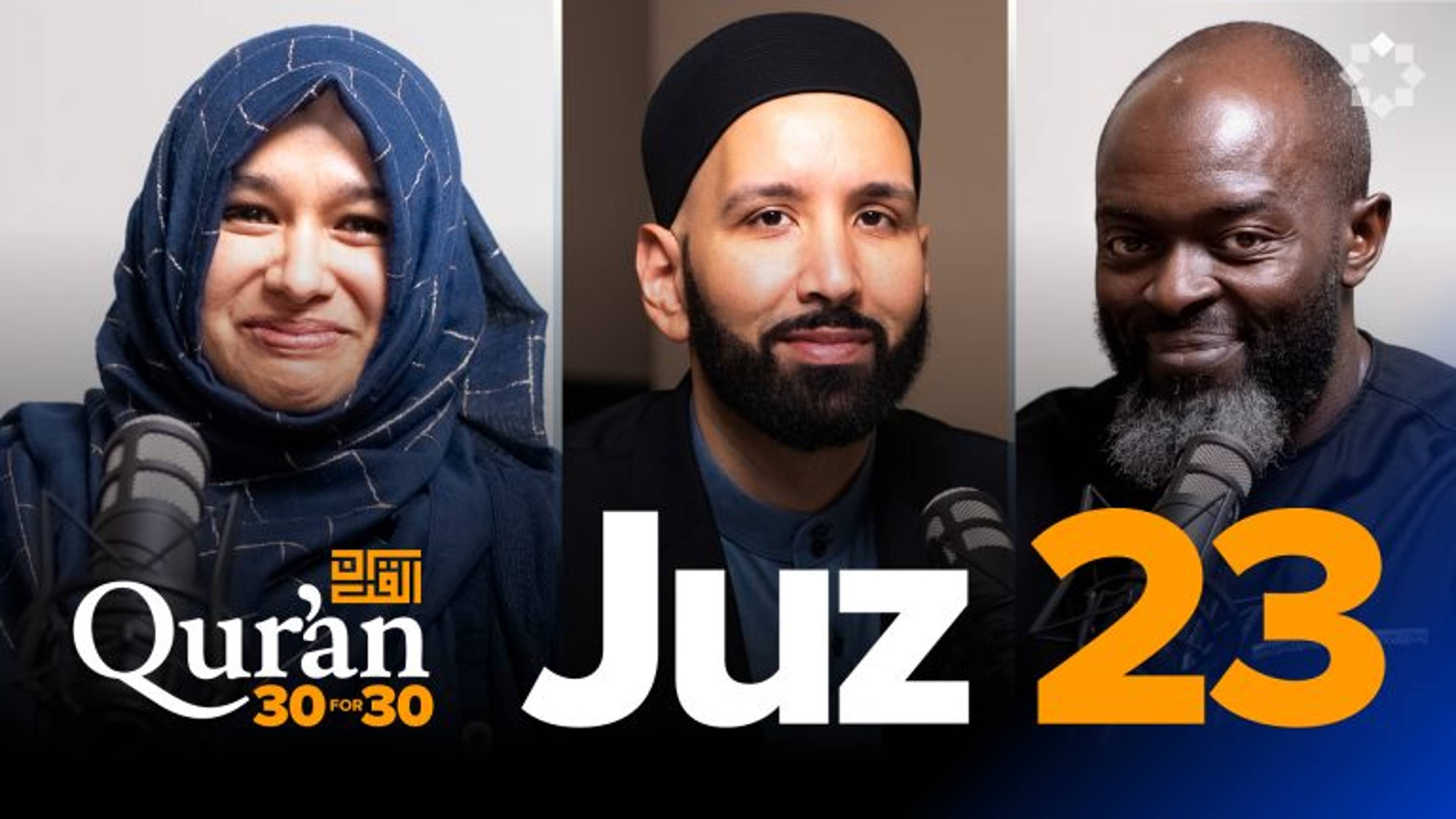
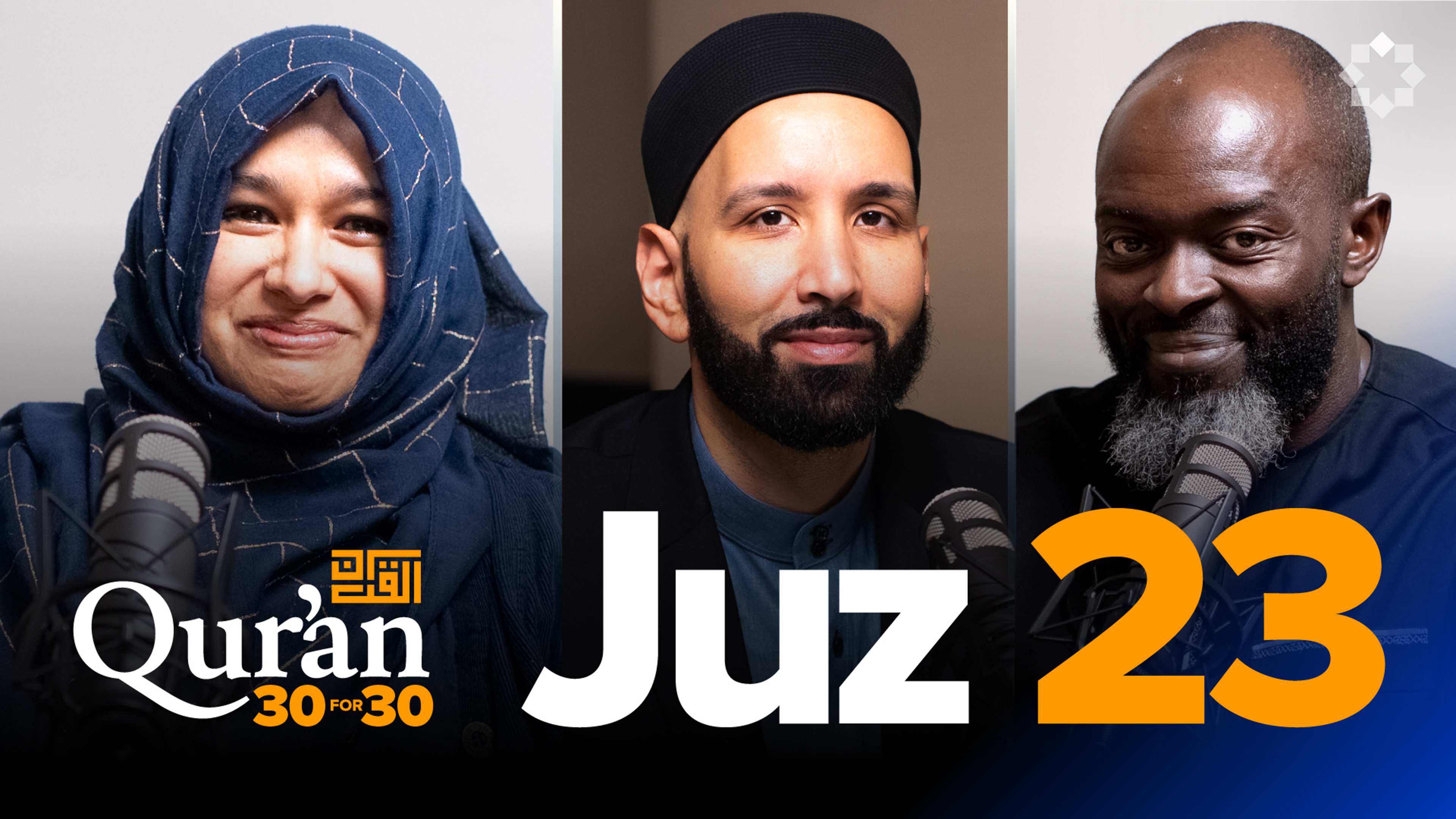
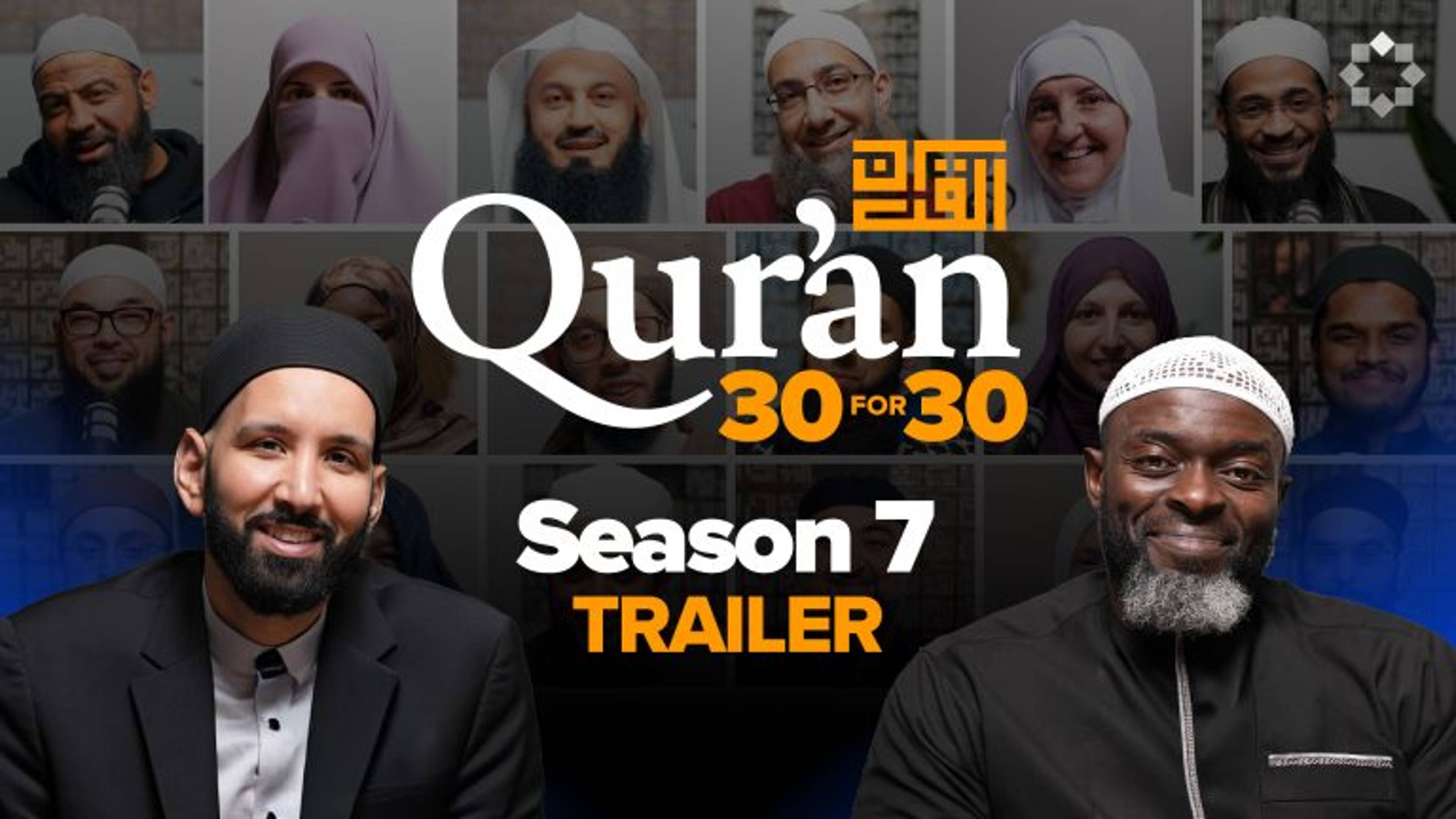
Qur’an 30 for 30 | Season 7
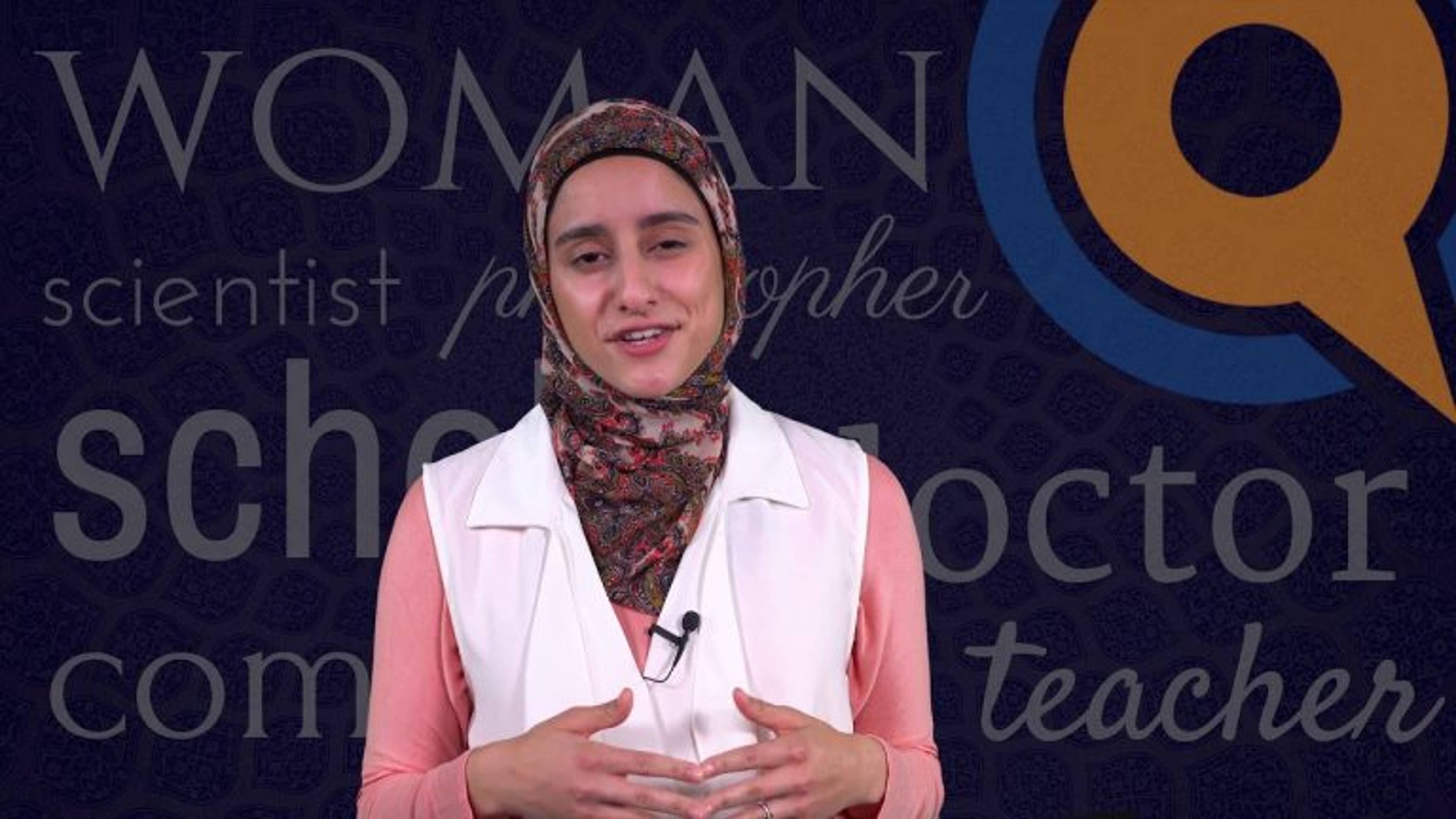
Juz 23: Facing Your Trials With Honor | Dr. Farah Islam
“If only… would my life be better?” We all ask this question at some point in our life.
Dr. Farah Islam reminds us not to waste our years longing for a life we don’t have. What feels like defeat may, in reality, be a hidden victory. Al-Wahhab, the Ultimate Giver, knows exactly what to withhold and what to grant, and every gift carries wisdom.
Names of Allah mentioned: Al-Rahman, Al-Raheem, Al-Azeez, Al-Ghaffar, Al-Wahhab
This transcript was auto-generated using AI and may contain misspellings.
00:00And I also love, you know, maybe they're not just, they're not really names necessarily, but epithets, I guess, of Allah, like, Ya Mujriya al-Sahab, O Mover of the clouds,
00:14or the One who splits the grain and the date stone, right? There's such poetry in calling upon Allah that way. Allah says, Salamun ala al-mursaleen. You think of the mursaleen, the ones that have been sent by Allah and the sacrifices
00:28they made. Ask yourself, what sacrifices, really, really, really, for Allah have I made? You know, Surah Yaseen goes from this man that is warning his people and calling them to Allah subhanahu wa ta'ala.
00:42And they are rejecting and saying, ma anzala ar-Rahmanu min shay', no, the Most Merciful didn't send anything.
00:48Assalamu alaikum wa rahmatullahi wa barakatuh, welcome back to Quran 30 for 30, alhamdulillah As we are now in Juz 23, as we're in the last 10 nights, we want to remind you all to please
01:02keep us in your du'a, bi idhnillahi ta'ala, and of course, to support the work of Yaqeen, this may be an odd, it is an odd night, it may be Laylatul Qadr, of course, and as you're pursuing inshallah ta'ala, the reward from Allah subhanahu wa ta'ala, we hope that this
01:16content has been rewarding to you. And so, whatever is left of these nights, bi idhnillahi ta'ala, or if you like to give on the odd nights alone, please do inshallah ta'ala, click the link below, and donate generously
01:27bi idhnillahi ta'ala, and we are blessed, walhamdulillah, to have Dr. Farah Islam with us. SubhanAllah, the benefit that we get every time you join us is tremendous, walhamdulillah,
01:39so we're really looking forward to hearing your remarks, I know Sheikh Abdullah, masha'Allah, was really happy that you were going to be coming back and giving us some wisdom, some nasiha, walhamdulillah, and some reflections, so, welcome back, I was asking about your
01:53son who you referenced on the first Quran 30 for 30, who I guess was 5 years old at the time, you know, and now he's 10, right? Yes, subhanAllah, right, alhamdulillah, no, no.
02:03We should start telling like our kids' ages by Quran 30 for 30. How old is he, you know, in 2020, he was, walhamdulillah, may Allah bless your family,
02:14may Allah subhanahu wa ta'ala, always surround them with mercy and tranquility and righteousness, Allahumma ameen. Dr. Farah, if you don't mind me asking you, putting you on the spot, we're asking every guest, what's your favorite name of Allah, subhanahu wa ta'ala, at the moment, is there
02:28one that immediately comes to mind? Oh, I love that question, so, alhamdulillah, this year, we got to go for Umrah, this is the first year that we got to take our son, alhamdulillah, so, you know, we hoisted him
02:41up on our shoulders, let him see the Maqam Ibrahim, like there are these special moments, alhamdulillah, right? So, the name, I think that kept coming back to me, because I think when you're in the
02:51sacred lands, I think you can't help but be overwhelmed by the splendor of your Lord, it's like you're in the palace of the Majestic King, and so, Ya Malik, so, Ya Malik, I am
03:04in your court, awaiting your command at your service, right, these are the kinds of du'as that felt really powerful at that time, and yeah, so, I hold on to those, absolutely, and I also love, you know, maybe they're not just, they're not really names, necessarily,
03:17but epithets, I guess, of Allah, like, Ya Mujriya as-Sahab, O Mover of the clouds, or the One who splits the grain and the date stone, right, there's such poetry in calling upon Allah that way.
03:30Allahu akbar, subhanAllah, you know, that's, and that's, we find that precedent in the sunnah of the Prophet, sallallahu alayhi wa sallam, to relate to not just the asma' and sifat, but also the af'al, and the doings of Allah subhanahu wa ta'ala, and that's a
03:44way to bring something really specific into your life as well, may Allah bless you, jazakAllah khayran for that powerful reflection, unique, I don't think anyone else has said it, walhamdulillah,
03:55may Allah bless you, so this is a juz', subhanAllah, Juz' 23 is a juz' truly of majesty, like Allah azza wa jal's majesty, and it starts in the middle of Surah Yaseen, goes into az-Zumar,
04:09which, you know, these are two surahs that have so much love in the hearts of the believers, Surah Yaseen, you know, truly, subhanAllah, is reflected upon and recited probably of
04:23the longer surahs more than any other surah, it's like Surah Yaseen, Surah Rahman, Surah Yaseen itself, right, and Surah az-Zumar, the later part of it has the famous verse of forgiveness, but between
04:37these two surahs, there were just a few that I wanted to look at, you know, Surah Yaseen goes from this man that is warning his people, and calling them to Allah subhanahu wa ta'ala,
04:49and they are rejecting, and saying ma anzala ar-Rahmanu min shay', no, the Most Merciful didn't send anything, right, and the scholars have multiple reflections on that idea of them
05:01even mocking the caller, right, mocking the messengers, with the names that they are introducing the people to Allah subhanahu wa ta'ala with, like, oh, this Rahman you're telling us about
05:11did not reveal anything, right, this forgiving God of yours doesn't really exist, so the way that they were mocking the messengers to Allah subhanahu wa ta'ala, of Allah subhanahu
05:23wa ta'ala, and this man is killed, and of course he says the famous words, ya layta qawmi ya'lamun, right, bima ghafara li rabbi, right, if they knew, if only my people knew how forgiving
05:34my Lord was to me, and how much He honored me, right, if they could see where I'm at right now, this is after they beat a man to death, right, the man is killed by these people,
05:45and he immediately, qeela adkhuli al-jannah, enter into Jannah, right, and he says, ya layta qawmi ya'lamun, if only my people knew better, and there's something subhanAllah beautiful about that, because it shows the heart of da'wah, that he wishes that his people would
05:57still gain salvation, and there's also a part of, like, he wishes his people who mocked him and who disposed of him could see how Allah azza wa jal honored him, but fast forward
06:08a little bit, since we're focusing on how Allah talks about Himself, verse 58, salamun qawlan min rabbin rahim, I love this ayah, salamun qawlan min rabbin rahim, right, peace,
06:23a word from the Merciful Lord, right, that this is the greeting of every single person into Jannah, that this is not unique to the entrance of this man into Jannah, and of course
06:33ar-Rahim, as Ibn Abbas mentioned, Rahmanun fi al-dunya, Rahimun fi al-akhira, the Rahman in this world, wa kana bil-mu'mineena rahima, Rahim is specific to the believers, the customized
06:47mercy of the Lord to the believers, you also go into as-Saffat, subhana rabbika rabbi al-'izzati 'amma yasifoon, to your point about mentioning very particular actions of Allah subhanahu
06:59wa ta'ala, glory be to your Lord, the Lord of Might, far above what they attribute to Him, wa salamun 'ala al-mursaleen, walhamdulillahi rabbi al-'alameen, right, and peace be upon the messengers of Allah, and all praises belong to Allah subhanahu wa ta'ala, the Lord of
07:14all the worlds, His majesty again, He's praising it, and then one more thing that I noticed, subhanAllah, is actually a repetition, but with similar context, in Surah Sad, Allah
07:23subhanahu wa ta'ala mentions, rabbu al-samawati wa al-ard, wa ma baynahuma al-'Azizu al-Ghaffar, the Lord of the heavens and the earth and whatever is between them, al-'Aziz al-Ghaffar, the Almighty, the All-Forgiving, Ghaffar is intense, and then, in Surah az-Zumar, in
07:38the beginning, yukawwiru al-layla 'ala al-nahar, wa yukawwiru al-nahara 'ala al-layl, wa sakhkhara al-shamsa wa al-qamar, kullun yajri li-ajalin musamma, ala huwa al-'Azizu al-Ghaffar, He wraps
07:49the night over the day and the day over the night, He subjected the sun and the moon, each runs for an appointed term, is He not al-'Aziz al-Ghaffar, the Almighty, the All-Forgiving, so it's subhanAllah, like His precision, He knows His creation, He knows you, He created
08:04you in a way that you're going to fall, but He also, you know, just the hadith, the Prophet sallallahu alayhi wa sallam, that if you were not to sin, Allah would replace you with a creation that would sin, so that He could forgive them, so they could call upon Him,
08:15so that He could forgive them, so it is truly a juz of majesty, right, but majesty and mercy at the same time, like paired together so beautifully, Sheikh Abdullah, I'd love to hear any thoughts, bi idhnillahi ta'ala, from you first and Dr. Farah inshallah, then we'll get
08:30to a very specific portion of the juz. I like how you mentioned majesty and mercy, actually even the majesty of His mercy, it's majestic, being that the mercy of Allah subhanahu wa ta'ala is far
08:41beyond our implementation of mercy, even if we have it at the right time, sometimes we're merciful for the wrong, the wrong person or our reasons at the wrong time, and sometimes we're not merciful
08:52to the person that needs mercy, it's always, you know, because it's within that element or within that foundation of us being human, that we will make mistakes, that we will be negligent, that we
09:03will not hit the mark, but ar-Rahman, the Merciful, is the One that will supply us and grant His mercy to us in all situations, but it's important, again, the common theme of the Qur'an, Allah is telling
09:16you about Himself to remind you, again, this goes back to dhikr, the remembrance, which that remembrance can bring forth the mentioning of Allah through your tongue, the remembrance in the mind, the remembrance of Allah in the heart, which brings life to the heart, which can bring, further
09:30bring life to the actions, but it's that connection of the heart with Allah subhanahu wa ta'ala, by knowing who He is and knowing who He says that He is not, and in worshiping Him based on that, and
09:40then also the sacrifice, as we see in Surah as-Saffat, the sacrifice of Ibrahim alayhi as-salam, you know, when Allah says, when they both submitted, Allah subhanahu wa ta'ala, I love, that's one of my, it's so
09:52refreshing at the very end of Surah as-Saffat, then he just, alhamdulillah, man, every time I hear that,
10:01I recite it, it's like, man, alhamdulillah for Islam, I'm so happy to be a Muslim, walhamdulillah, you know, you just see, Allah says, salamun 'ala al-mursaleen, you think of the mursaleen, the ones
10:13that have been sent by Allah, and the sacrifices they made, do you think about yourself, what sacrifices, really, really, really, for Allah have I made, you know, what sacrifices have I made, and then I
10:25attributed it to myself, if I'm a father, if I'm a mother, but I don't thank Allah subhanahu wa ta'ala, I don't attribute the goodness that I've done for someone in front of that person, attributing it
10:34back to Allah subhanahu wa ta'ala, and then just seeing the graciousness of Allah, the mercy of Allah, the bounty of Allah, the greatness of Allah, the love of Allah, the protection of Allah, all these
10:45manifestations of Allah subhanahu wa ta'ala, you just say, alhamdulillah, when you recite Surat al-Fatiha, the next time we recite it, you say, alhamdulillah, and you just think of everything that Allah has
10:57given you, and everything that He's taken away from you, that you know, but imagine that which you don't know, which is much more, just knowing that there's much more that He's given you and
11:10taken away from you, the fact that there's much more of that, that you're not aware of, is another reason for you to say alhamdulillah, so when you just say alhamdulillah, just know that
11:20there are many people out there that are suffering, and I'm not really suffering right now, compared to those people, like frankly, I mean, you know, obviously goes without saying, our brothers and sisters in Gaza, brothers and sisters in Sudan, brothers and sisters in Yunnan, in different parts of the world that
11:34are suffering physically, but subhanAllah, the death of some of those hearts brings life to our hearts, inshallah, so we think about what they're going through, what they face, the strength that they've had, the wherewithal that they've had, and how that has brought them closer to Allah
11:49subhanahu wa ta'ala, and we're able to see it real-time, we're able to see it days later, months later, and it's going to be in the history books, obviously, which always serves as a means to show us the mercy of Allah subhanahu wa ta'ala manifested in different ways, but in the end of the day, in
12:04the end of the day, when you see this, do you say, alhamdulillah, you know, and that's really the responsibility for each and every single one of us individually, and collectively as communities.
12:17Dr. Farah, any thoughts about just the overview of the juz before we get to the specific question? SubhanAllah, no, that's, that's a beautiful reflection, both of you, mashallah, mashallah, oh,
12:27subhanAllah, no, there's so much to say about the majesty of our Lord, that His mercy is interlaced with everything that He does, and everything that we are given every day, subhanAllah, I can't
12:41comprehend that. So, Dr. Farah, on that note, there is something great, the greatest that was given to the greatest, that being the Prophet sallallahu alayhi wa sallam, which is the Qur'an being revealed
12:56to the Prophet sallallahu alayhi wa sallam, and when the mushrikun asked, you know, how come the mercy of your Lord, the treasures of the mercy of your Lord, right? Why would they come to you? Why not us? Allah
13:08azza wa jal responds with, He is al-'Aziz al-Wahhab in this juz. Can you tell us a little bit about the context of this ayah, and what are some of the wisdoms of Allah azza wa jal emphasizing His might
13:18and His generosity in this ayah? It's a phenomenal verse, it's a powerful verse, it's a question posed back, it's a counter to the Quraysh, you know, how delusional can you be to think that
13:32the gifts of God would be dictated by you, right? And Allah subhanahu wa ta'ala, He refers to His khaza'in ar-rahma, which I love, this idea that Allah has a depository, a treasure house of His
13:44mercy. And what is that gift that He's telling us, He's giving to us every day from that treasure house? He's speaking of the Prophet sallallahu alayhi wa sallam, that He chose the Prophet sallallahu
13:57alayhi wa sallam out of this depository or treasure house of mercy, to be the mercy to all the worlds. That's the gift that the Infinitely Giving chose to give us every day. Number one, the very Word of
14:12God. And number two, His example as He was the walking Qur'an sallallahu alayhi wa sallam. And so in
14:20this way, our Wahhab, the Infinitely Giving, gives to us every day. And we can't comprehend the
14:29boundlessness of His gifts. You know, there's that beautiful quote from Ibn 'Ata'illah rahimahullah who reminds us, he tells us, you know, that Allah subhanahu wa ta'ala chose the Hereafter to be the
14:42abode where He rewarded His believing servants, because this dunya is too limited, right? Only in
14:49eternity, can He give us all that He wants to give. And oftentimes, we live in the if only, right? We
14:58think, you know, if only I married that person, if only I was born into a different family, if only I, you know, had gotten Bitcoin. That's my favorite one right now. Then my life would be
15:11better, right? But that isn't where, al-Wahhab, that isn't where the Infinitely Giving placed you. Don't
15:20waste your years longing for a life you didn't have. What looks like defeat can actually be victory from the
15:29Divine. All those years when you thought that you only saw poverty and missed opportunities, He has only
15:38been giving to you. You know, my sisters and my brothers, you know, maybe there will come a day when the veil of the unseen will be lifted for us. Maybe one day, we'll see that that illness that afflicted you in
15:53this life was really the angels coming as heralds of good news to you, telling you that if you took this tribulation with, with the, with the, you know, with honor, with, you know, with steadfastness, with
16:07perseverance, and you held on to Allah through it, this could be your ticket to Jannah. And so maybe, maybe when that illness afflicted you, that moment when it did, maybe it was actually the angels bathing you in
16:20gold from the heavens. And subhanAllah, we can't comprehend what Allah subhanahu wa ta'ala has been giving to us all
16:29this time, that if that veil were lifted, you would be overwhelmed by the gifts of your Lord. And, you know, this
16:38reflection, this meaning making, this turning back, this reframing, I understand that oftentimes it comes after the
16:45fact, right? And it doesn't take away the pain or the loss or the grief, but it can help give you a capital R reason for
16:55why you went through what you did. And we need that, that solace makes all the difference. You know, Allah is
17:02teaching us through this, to strip ourselves of the illusion of this dunya, right, that this clinging to this worldly
17:12life is exactly what brings us pain. And it's weirdly counterintuitive, I know, but I'm telling you that Allah subhanahu wa ta'ala
17:20is training us not to feel as much pain by putting us through pain. But that's the exact logic that we use when we, in strength
17:29conditioning, right, when we work out, we create micro tears in our muscle fibers. And when our muscle fibers repair and grow
17:36back, they don't grow back to baseline, they grow back stronger. And the same is true of the believer. You know, Allah will keep
17:47sending you His gifts until you wake up. They're not going to feel like gifts to you. But He will keep
17:55sending you His gifts of tribulation until you get the message, right? Because if you don't learn the inherent lessons wrapped in
18:04those gifts of tribulation, they will be wasted upon you. They will wash off you like runoff washes off the land. But Allah will
18:13keep sending you those gifts because Allah loves you that much. He is telling you, I need you to wake up. And so this is not a
18:24removed God. This is not a wrathful God. This is a Giving God who loves you. Satan gifts you with poverty. Allah gifts you with His
18:35forgiveness and an unending eternal garden. So return, dear soul to your Lord. Return to al-'Aziz al-Wahhab.
18:45MashaAllah. MashaAllah. MashaAllah. It's hard to follow that. May Allah bless you. It's always hard. It's always hard. Truly always hard. SubhanAllah. I'd love to hear. What do you?
19:00No, mashaAllah. I mean, you know, al-'Aziz al-Wahhab, you know, these beautiful names that Allah is the Mighty and He bestows with might, you know,
19:12His bestowment of His blessings and His granting of His mercy is always with might and with authority, which shows the authoritative nature,
19:20if you will, of the Creator of the heavens and the earth. And I love how you just mentioned turning back to Allah. I mean, we're in the month of Ramadan.
19:28This is the time to really ponder, to think, to hold yourself accountable, to ask those crucial questions that you haven't asked. And let's be honest,
19:38you've probably denied asking those questions alone because you haven't had the time to be alone because you never wanted to be alone in order to face that.
19:49But when you are, it serves as a huge opportunity. I forgot who mentioned it, but it was basically when you are silent, the mind starts to speak.
19:57You start to talk. Your heart starts to cry out. And that's what Allah wants from you. He wants your heart to cry out to Him.
20:05He wants you to be vulnerable to Him. He wants you to think about those sins that you've covered up and don't want to think about.
20:12But that time that you're alone with Allah, subhanahu wa ta'ala, serves as a huge opportunity to recall and have that history of what you've done and what you didn't do.
20:22And then to face it, to face it. And when you face it, you realize, subhanAllah, OK, I'm here now. I feel horrible.
20:31Nobody's watching. Nobody's listening to me. You know, years ago, Sheikh, you mentioned some of those. I think we were in the old Yaqeen. You were just talking about making du'a and you just stopped and you were like, just go, just go.
20:45When you're making that du'a, just go. Don't worry about the Arabic. Don't worry about it. Just go. And that's what Allah wants. He just wants you to just go. And remember that He is al-'Aziz. He is the Almighty. He has the might.
20:59He has the strength to overpower any obstacle that you're facing by granting you that tranquility that you never thought that you would get. That's sakinah, the closure even. I mean, how many of us have relatives that have passed away?
21:13And we think about, wow, I was not good to that person. I didn't make amends with that person. I didn't think this person would die of COVID, for example. I was so surprised.
21:22I didn't visit that person when I said I was going to, when they were in the hospital, when they were in the ICU. Now they're out of the ICU and they give me salams and they're happy. But when I see that person, it's like I didn't even visit him. I told him I was going to come and visit them.
21:36Those that have been locked up, for example, I never sent them a letter. And then they see you and it's like, yeah, he's smiling. But I know inside I didn't do what I wish would have been done for me if I was in that situation.
21:48Right. You know, so it's important for us to realize this month of Ramadan is a huge opportunity for you to wake up,
21:57for you to ask Allah subhanahu wa ta'ala for forgiveness, for you to think about your life, the good, the bad, the ugly. And each one of these situations that you face in your life to think of Allah subhanahu wa ta'ala and His names
22:09and attributes and realize that Allah can overpower any obstacle that you're facing and He can transform it into something that is good.
22:17But it takes that small effort, that small effort, that step to run towards Him, to walk towards Him. You walk towards Allah subhanahu wa ta'ala, Allah yuharwil.
22:30And yuharwil is like to make a brisk run, meaning basically He will give you more than you expect and more than, let's be honest, than we deserve.
22:38Right. I almost feel like not spoiling the last 10 minutes with any reflections. It's beautiful. Mashallah, extremely beneficial.
22:48Just two dimensions that come to mind, like Allah gifts, al-Wahhab gifts du'a. So even like the way to call upon Him, the way that our story starts as humanity is tawbah and du'a.
23:02Fatalaqqā Ādam min rabbihi kalimat Adam alayhi as-salam was given the words to call back to Allah subhanahu wa ta'ala.
23:10Like you made the mistake and the One that you made the mistake towards is going to give you the words, inspire you with the right words to say so that He can forgive you. That's the story of human beings.
23:24So sometimes, like I see in Arafah that just go. People come and they're like, they got their whole list. You know, I'm like, all right, I got to make this du'a. I'm like, listen, at some point you just put that list away and just go.
23:37Like subhanAllah, the du'a will come. And people are like, how am I going to make du'a for six hours? And then subhanAllah, the sunset comes in Arafah. And I can't tell you how many times people come up to me like that went by so quick. Yep.
23:49Where did it go? Where did the six hours go? Right? I can't believe that happened, you know, when you were in tawaf, right? That seventh round came so quick, like, wait, I still have more to give, right?
24:00And Allah is giving you to give and asking Him because at the end of the day, the bounty will be rewarded, provided for and with His blessing and with His might and with His mercy. So that's one dimension of this.
24:13But the other one, which is just from the ayahs, subhanAllah, I was thinking about, because we're talking about the pairing of might and mercy, right? There's an element of Quraysh looking at the Prophet ﷺ like, he doesn't deserve that.
24:25He has great character, sure. I mean, he's al-Sadiq al-Ameen, we love him, wonderful man. But he's not like us, like, he doesn't deserve all that. You know, we deserve the revelation. So why didn't the Qur'an come to us?
24:38Why didn't this happen to us, right? Like, why him? And so that is an abuse of the concept of majesty, right? You're trying to limit the mercy of Allah subhanahu wa ta'ala
24:52and you're trying to extol yourself at the same time, right? So you're making yourself bigger than you actually are and you're belittling that person and you're trying to limit the mercy of Allah subhanahu wa ta'ala as well, all at the same time.
25:03So you are violating every single principle that's coming within these verses. That's Quraysh with the Prophet ﷺ. But sometimes we have to also be honest with ourselves. Like, you know, one of the questions that comes up,
25:15and I think it's a particular theological problem is, why is Allah letting evil people get away with things? And, you know, there's a whole, you know, pathway to answer that and to reckon with that from the Qur'an and the Sunnah.
25:29And we've had to do so in the wake of the genocide, right? If not before that. But there's also another one, which is, you know,
25:39this person doesn't seem to be that great, but great things are happening to them, right? And they're not exerting themselves, but like the mercy of Allah just seems to be descending upon them.
25:50And there's so many wisdoms and the 'ulama will go down like trajectories. And so they could say, perhaps that person needs, just like the Prophet ﷺ was taught, mu'allafatu al-qulub, right? Like, yeah, he gave a bunch of camels to certain people
26:02that did not sacrifice that much for Islam, right? In fact, they were enemies to Islam for 20 years and the Ansar are looking at that like, wait a minute, why? But they were worried that perhaps that was a sign of the favoring of the Prophet ﷺ to those people.
26:16They weren't worried about the bounties themselves, they were worried about what the bounties represented. Allah could be giving someone more sometimes because they need that softening of the heart, like they can't handle a greater test. And that's one possibility,
26:30but there are a hundred other possibilities you don't know. Focus on yourself with Allah subhanahu wa ta'ala and the mercy that He gives you that you're taking for granted and the blessings that you are not paying attention to.
26:42And don't try to limit and don't try to interfere with the domain of the Divine and allotting or judging who deserves what. That's all with Allah subhanahu wa ta'ala at the end of the day. And I think that's an element of this.
26:55Of course, on the basis of character, what do they call it when they do the scholarships, when they do financial aid, stuff like that, they have merit-based. If it was merit-based, the Prophet ﷺ is deserving.
27:09Like on pure merit, I mean 40 years, spotless, if there was a way to apply for prophethood, like the Prophet ﷺ is the most worthy person. But prophethood is not applied for,
27:22prophethood is chosen by Allah subhanahu wa ta'ala. That's why Allah azza wa jal mentions Musa ﷺ. Ikhlas is to choose a path of sincerity and to earn. Mukhlasan is to be chosen by Allah subhanahu wa ta'ala.
27:36Al-Mustafa ﷺ, he's chosen. But even if it was merit-based, he still would be the most deserving of the people. But Allah azza wa jal chooses and Allah subhanahu wa ta'ala has wisdom and do not interfere with His might and with His mercy.
27:50Dr. Farah, if you have any thoughts on that, if not I want to ask you another question if I can squeeze one in. But I'd like to give you the floor first, if you have any thoughts on anything else that was said. No, no, you put the question in so it's beautiful.
28:03My question actually builds on what you said and what we were talking about here. You actually have one of the rare spots of dealing with the community at a grassroots level, counseling but also teaching.
28:16So it's theory, it's practice. It's sort of like the imam versus the academic, right? Versus the pastoral versus the 30,000 foot view which sometimes doesn't give you some of those intricacies.
28:30If someone were to ask you like, hey, I'm sure you get asked this question all the time by the way because we get asked those as imams, right? We both serve as imams in communities too. Hey, what are you seeing right now amongst Muslims and what should we be thinking about? What should we be considering right now?
28:44What are you seeing in terms of a rise amongst Muslims that people really need to pay attention to? What would that be? Subhanallah, it's huge. I think I'm being fascinated over and over again
28:56by the fact that it's women obviously mostly who come. That they oftentimes at this kind of midpoint of life come to a crossroads.
29:06That maybe the life that I've built for myself isn't serving me. All the people pleasing, the precedences basically that I've set up has set me up for failure and I want to change.
29:20A lot come in thinking that that means I need to change my husband or I need to change. You know what I mean? That's oftentimes. But then through reflection and talking together, it is about, well, wait a minute.
29:32What are the patterns that I set up for myself in my life? What were the destructive things that I did and that I kind of built this life for me? I built this road. But you know what?
29:45I can build a different road now. I can take a different path and that's going to be painful. It's going to have to be going back and unlearning all these terrible kind of habits that I've learned
29:58that I thought would help me get through life and relearning, but then reforging that path. It is a rebirth. And so I'm seeing that over and over again in various confirmations. Subhanallah. Yeah, it's painful.
30:12And it's painful to hear all those stories as well. Is there something on the tip of your tongue you're thinking of as he's saying that? Do they feel that you said painful? Yeah. What's the percentage of them that just say, you know what?
30:26Bismillah, I'm going to do it. And some of them just kind of stay back and dwell in their, I guess in their current stressful situation. They will continue to dwell for a long time. It's true.
30:40It's true. Subhanallah. It's changing yourself. Defeating your nafs. I mean what you're seeing, for example, which you mentioned, Shaykh, not putting those sins under the rug.
30:53Lifting that rug. Seeing all the closets or all the skeletons I've been carrying in that closet all my life. That requires courage.
31:04And I think the vast majority prefer not to do that in our lives. That's right. We will continue just on the path that we've built. It is easier. It's comfort. That's what we seek.
31:15But we can, insha'Allah, push each other to more. Insha'Allah. May Allah bless you. Jazakumullah khayr. Powerful reflections. May Allah reward you. And may Allah allow us to heed this advice. Dear brothers and sisters, please, insha'Allah,
31:29keep us in your du'a in these last 10. Push yourselves to change. May Allah guide our hearts to Him. And we'll see you tomorrow, insha'Allah. Insha'Allah. Over to you, Shaykh.